Does it work?
Tremella (Snow Mushroom) for Dry & Dehydrated Skin
The frilly snow mushroom of Chinese beauty soups, for skin that feels plump, dewy and soft, never sticky.
The short answer: Its water-binding, film-forming behavior is well established in the lab and plausible on skin, but published independent human trials of topical tremella are essentially absent; skin-hydration data come mainly from suppliers.
Our Dry & Dehydrated Skin guide does not rank Tremella (Snow Mushroom) for this use yet, so this is the overall grade for Tremella (Snow Mushroom).
What Tremella (Snow Mushroom) can do for Dry & Dehydrated Skin
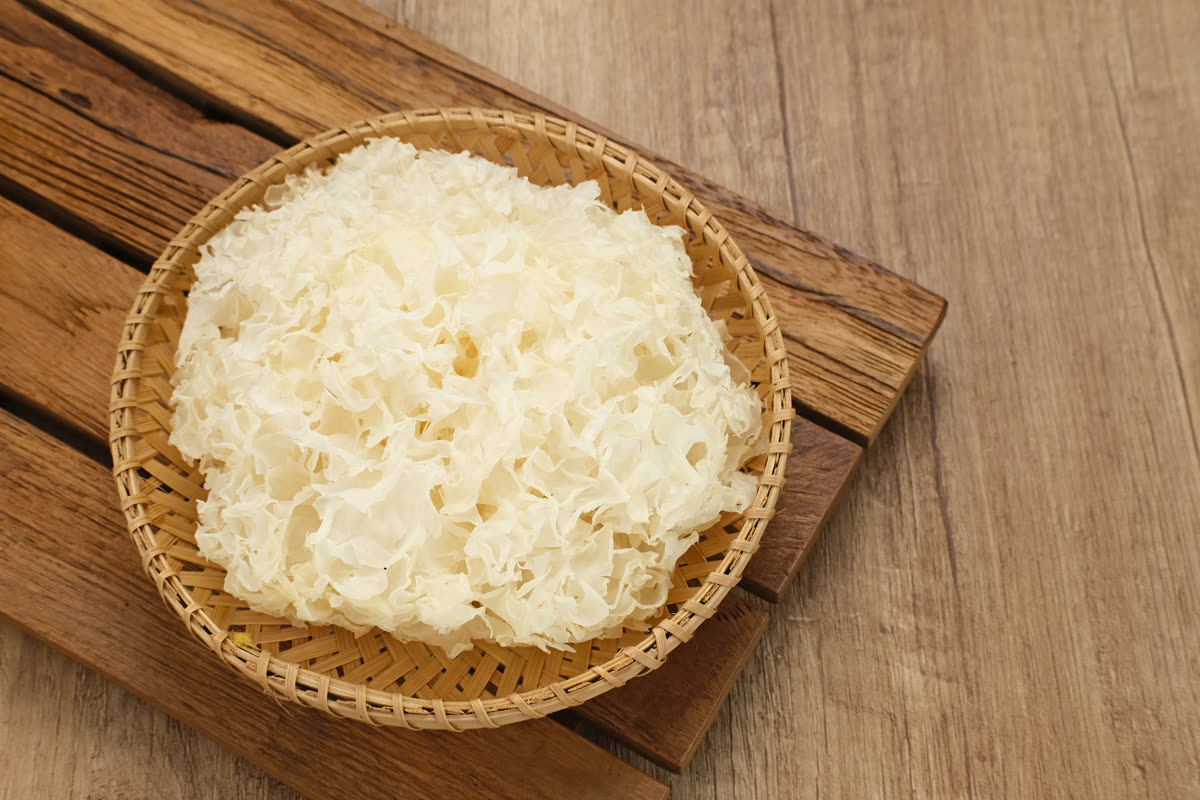
Tremella is a translucent, frilly jelly fungus long eaten in Chinese sweet soups as a beauty food. Its extract is dominated by a large, water-loving polysaccharide that forms a soft, slightly cushiony film on skin and holds water, much like hyaluronic acid. It is a genuinely useful hydrating humectant, but headline claims that it “holds 500 times its weight in water” or “outperforms hyaluronic acid” come from laboratory tests and marketing, not head-to-head trials on human skin.
Why people reach for it
- Lightweight, water-binding hydration. Tremella polysaccharide is a humectant: it attracts and holds water and leaves a thin, flexible film that reduces surface dryness. In a serum or toner it gives a plump, dewy finish without stickiness at low use levels, which suits dry and dehydrated oily skin alike.
- A gentle option for reactive skin. It is a large sugar-based molecule with no fragrance chemistry and a low irritation profile, so it fits minimalist routines for sensitive skin. As with any new product, patch test first.
- Texture and film-forming. Formulators value tremella for its silky, slightly elastic skin-feel and for thickening water phases. It layers well under creams and can soften the tacky feel some hyaluronic acid serums have.
- Antioxidant activity in the lab. Tremella polysaccharide extracts scavenge free radicals and protect skin cells from oxidative stress in vitro. That is a reasonable bonus, not a proven anti-aging effect in people.
How to use it
Try it today
A dewy damp-skin layer
- Patch test a new tremella serum, then mist or splash your clean face.
- Pat a few drops onto your still-damp skin.
- Seal it in with your moisturizer or a light oil such as squalane.
| Form | Typical use | Notes |
|---|---|---|
| Tremella polysaccharide powder | 0.05–0.5% of a serum, toner or gel (start around 0.1%; higher levels thicken noticeably) | Sprinkle into the water phase with stirring (or pre-disperse in glycerin to avoid clumps) and allow it to hydrate fully. Like any water-based product it needs a broad-spectrum preservative and pH check (DIY Safety: Water, Microbes & Preservatives). |
| Ready-made tremella solution or extract | 2–10% of a formula, per the supplier’s concentration | Pre-dissolved solutions are easier for small-batch makers. Combine with glycerin and a little aloe juice for a classic hydrating toner. |
| Finished serum or essence | A few drops on damp skin, morning and/or evening | Apply to damp skin, then seal with a moisturizer or a light oil such as squalane, especially in dry or air-conditioned environments where humectants work best under an occlusive layer. |
Use it safely
- Very low irritation potential. Allergy to tremella is rare, but people with known mushroom allergies should patch test first (How to Patch Test).
- Polysaccharide gels are an excellent food for microbes. Homemade tremella gels or “mushroom water” made from soaked dried fungus spoil within days and must not be used as leave-on products without proper preservation.
- A mushroom extract is not a live fungus. Purified tremella polysaccharide contains no oils for Malassezia yeast to feed on and is not known to worsen fungal folliculitis (“fungal acne”).
Pregnancy and breastfeeding: Topical tremella is considered safe during pregnancy and breastfeeding; it is also a traditional food.
New to an ingredient? Patch test first.
When to see a doctor
- Dryness with intense itch that disturbs sleep, or red, inflamed patches (possible eczema or another dermatitis).
- Cracked, bleeding or weeping skin, or signs of infection (pain, warmth, yellow crusts, pus).
- Fish-scale-like dryness present since childhood (possible ichthyosis).
- New, persistent dryness with fatigue, weight change, feeling cold or hair thinning (thyroid), or with excessive thirst and urination (diabetes).
- Severe dryness in older adults with widespread itch that does not respond to moisturizers.
Other plants for Dry & Dehydrated Skin
| Ingredient | Grade | What the evidence shows |
|---|---|---|
| Colloidal Oatmeal | B | Multiple clinical studies show colloidal oatmeal creams and baths reduce dryness, scaling and itch; it is an approved skin protectant in the US. |
| Sunflower Oil | B | Linoleic-rich sunflower seed oil preserved stratum corneum integrity and improved hydration in a comparative study with olive oil, and supports barrier function in neonatal studies. |
| Coconut Oil | B | A randomized trial found virgin coconut oil as effective and safe as mineral oil for mild to moderate xerosis of the legs. |
| Shea Butter | C | Rich emollient and mild occlusive with anti-inflammatory triterpene esters; small studies of shea-containing creams support hydration. |
| Squalane | C | A skin-identical, stable, lightweight emollient that reduces roughness; excellent tolerability but limited trial data on its own. |
| Jojoba | C | A liquid wax ester that resembles skin’s own wax esters; small studies support barrier repair and softness. |
| Aloe Vera | C | A humectant gel that improved skin hydration in small studies; on its own it is not enough for very dry skin and needs an emollient on top. |
| Marshmallow Root | D | Mucilage polysaccharides form a soothing, humectant film; evidence is traditional and lab-based. |