Does it work?
Mastic & Lentisk for Dry & Dehydrated Skin
What the research says about mastic & lentisk for dry & dehydrated skin, how to use it at home and how to stay safe.
The short answer: Recognized in Europe as a traditional herbal remedy; skin effects rest on lab and animal studies, and the human trials that exist are oral (digestion), not cosmetic.
Our Dry & Dehydrated Skin guide does not rank Mastic & Lentisk for this use yet, so this is the overall grade for Mastic & Lentisk.
What it does
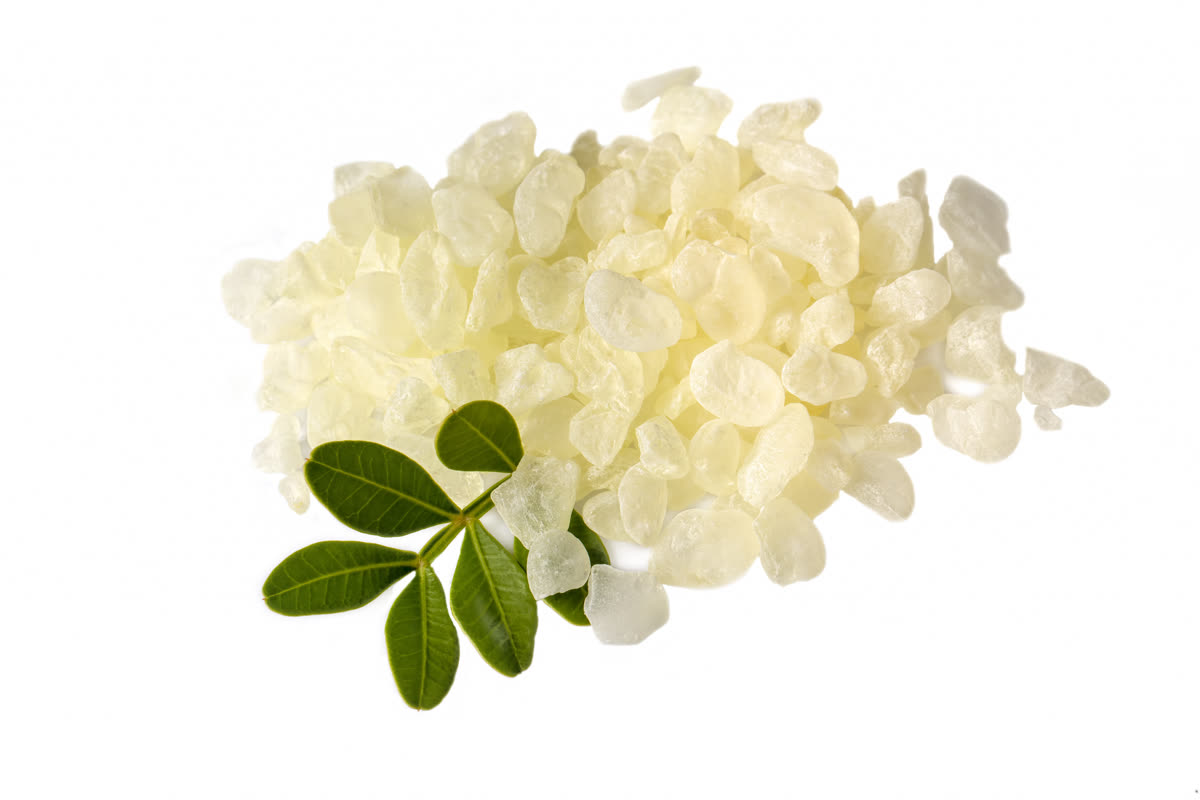
One Mediterranean shrub, two beauty traditions. On the Greek island of Chios, a local variety of lentisk is scored each summer to weep mastic, a pale aromatic resin protected as a PDO and chewed, cooked and used in perfume for centuries. Across North Africa and Andalusia, wild lentisk berries are pressed into a green, pungent lentisk oil traditionally rubbed onto burns, cracked skin and hair. Both have intriguing lab and animal data, but almost no human skin trials.
Why people reach for it
- Traditional comfort for cracked skin. Lentisk berry oil is a household remedy across the Maghreb for chapped hands, cracked heels and minor burns; it is a rich emollient, though healing claims are untested in people. See Dry & Dehydrated Skin.
- A luminous, piney-balsamic scent. Mastic resin and its essential oil bring a fresh, resinous, slightly sweet note to perfumes, balms and lip care.
- Antimicrobial and anti-inflammatory in the lab. Mastic triterpenes and the essential oil inhibit bacteria and inflammatory mediators in vitro, supporting traditional use on minor skin problems — a rationale rather than proof.
- Officially recognized traditional use. Europe’s herbal medicines committee has a traditional-use monograph for mastic, including application to minor skin inflammation and small wounds — a status based on long use, not on trials.
How to use it
| Form | Typical use | Notes |
|---|---|---|
| Lentisk berry oil in hand, foot and body care | 5–30% of an oil blend or balm; neat on small areas such as cracked heels | Its smell is strong; blending with olive oil or shea butter softens it. Not for serious burns or open wounds. |
| Mastic essential oil | 0.25–1% on the face, up to 2% on the body | Buy fresh, keep it cold and tightly closed, and add tocopherol to blends; oxidized oil is more likely to sensitize. See Essential Oil Safety: The Complete Guide. |
| Mastic resin in balms and lip care | 0.5–2% (finely ground resin melted into warm oil, or a mastic resin extract) | Mastic dissolves only partly in oil; warm gently, stir and strain. Adds a light, fresh-resinous scent and a little tack. |
Use it safely
- Allergic contact dermatitis to mastic is documented, mainly from medical adhesives that contain it. If you have reacted to such adhesives, avoid mastic on skin; otherwise patch test.
- Mastic shares its genus with pistachio and its family with cashew and mango; cross-reactivity is poorly studied, so people with severe pistachio or cashew allergy should ask an allergist before ingesting it.
- Lentisk oil is a traditional burn remedy, but large, blistering or facial burns, and burns on hands, feet or genitals, need medical care. Cool under running water for 20 minutes first.
- Mastic essential oil oxidizes; discard old oil that smells harsh or turpentine-like.
Pregnancy and breastfeeding: Mastic in culinary amounts is fine. There are no safety data for medicinal doses or concentrated essential oil in pregnancy or breastfeeding, so avoid them; lentisk oil applied to small areas is unlikely to be a concern.
New to an ingredient? Patch test first.
When to see a doctor
- Dryness with intense itch that disturbs sleep, or red, inflamed patches (possible eczema or another dermatitis).
- Cracked, bleeding or weeping skin, or signs of infection (pain, warmth, yellow crusts, pus).
- Fish-scale-like dryness present since childhood (possible ichthyosis).
- New, persistent dryness with fatigue, weight change, feeling cold or hair thinning (thyroid), or with excessive thirst and urination (diabetes).
- Severe dryness in older adults with widespread itch that does not respond to moisturizers.
Other plants for Dry & Dehydrated Skin
| Ingredient | Grade | What the evidence shows |
|---|---|---|
| Colloidal Oatmeal | B | Multiple clinical studies show colloidal oatmeal creams and baths reduce dryness, scaling and itch; it is an approved skin protectant in the US. |
| Sunflower Oil | B | Linoleic-rich sunflower seed oil preserved stratum corneum integrity and improved hydration in a comparative study with olive oil, and supports barrier function in neonatal studies. |
| Coconut Oil | B | A randomized trial found virgin coconut oil as effective and safe as mineral oil for mild to moderate xerosis of the legs. |
| Shea Butter | C | Rich emollient and mild occlusive with anti-inflammatory triterpene esters; small studies of shea-containing creams support hydration. |
| Squalane | C | A skin-identical, stable, lightweight emollient that reduces roughness; excellent tolerability but limited trial data on its own. |
| Jojoba | C | A liquid wax ester that resembles skin’s own wax esters; small studies support barrier repair and softness. |
| Aloe Vera | C | A humectant gel that improved skin hydration in small studies; on its own it is not enough for very dry skin and needs an emollient on top. |
| Marshmallow Root | D | Mucilage polysaccharides form a soothing, humectant film; evidence is traditional and lab-based. |