The ingredient encyclopedia · resin
Mastic & Lentisk
Pistacia lentiscus L. (Chios mastic comes from the local variety Pistacia lentiscus var. chia) · Anacardiaceae
From the groves of Chios to Maghreb homes, one shrub gives a piney-sweet resin and a rich oil for chapped hands and cracked heels.
FR Mastic ; pistachier lentisque (lentisque)ES Almáciga (la resina); lentisco (el arbusto)AR مستكة (مصطكى)؛ الضروMastiha (Greek); mska (Darija, the resin); zit ed-dro (lentisk berry oil, Maghreb)
- How well proven
- DTraditional wisdom
- Safety
- Low topical risk
- Sun-sensitive
- No
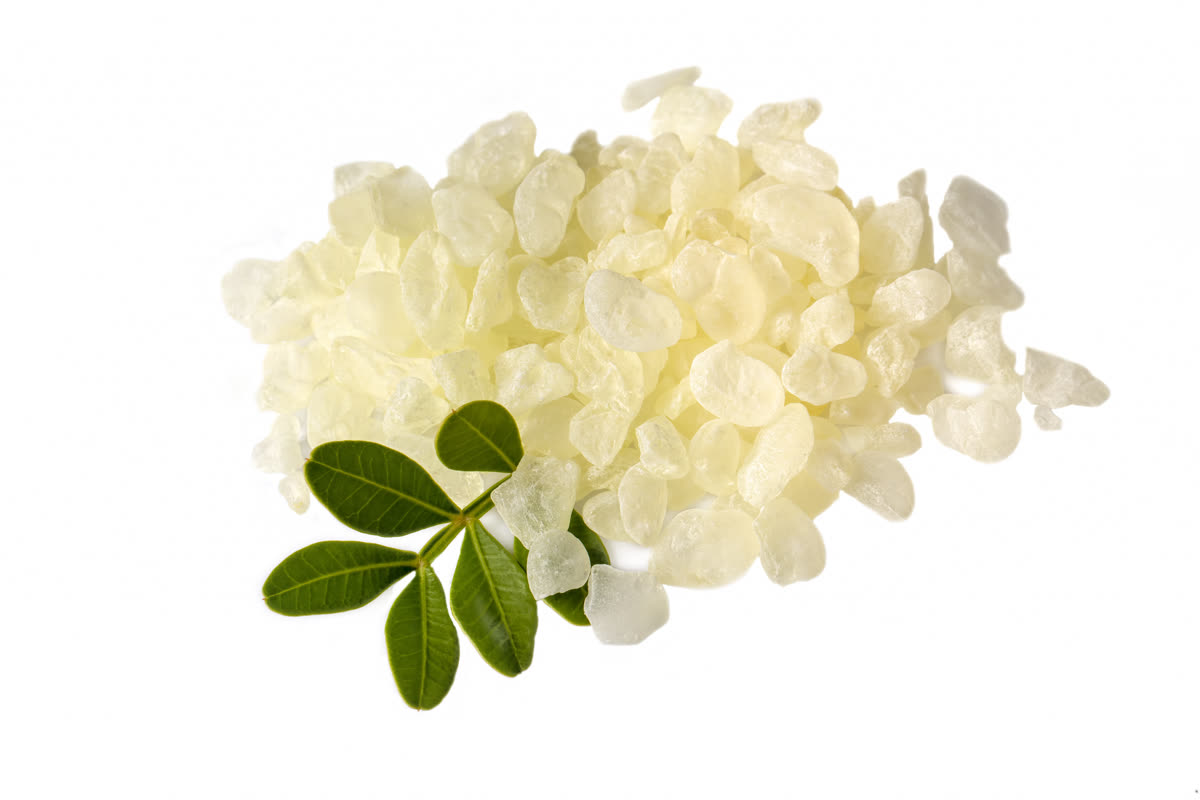
Also known as Pistacia lentiscus L. (Chios mastic comes from the local variety Pistacia lentiscus var. chia)
FR Mastic ; pistachier lentisque (lentisque)ES Almáciga (la resina); lentisco (el arbusto)AR مستكة (مصطكى)؛ الضروMastiha (Greek); mska (Darija, the resin); zit ed-dro (lentisk berry oil, Maghreb)
What the evidence says
Recognized in Europe as a traditional herbal remedy; skin effects rest on lab and animal studies, and the human trials that exist are oral (digestion), not cosmetic.
- What it does
- Traditional comfort for cracked skin. Lentisk berry oil is a household remedy across the Maghreb for chapped hands, cracked heels and minor burns; it is a rich emollient, though healing claims are untested in people.
- How to use it
- Lentisk berry oil in hand, foot and body care · 5–30% of an oil blend or balm; neat on small areas such as cracked heels
- Watch out for
- Allergic contact dermatitis to mastic is documented, mainly from medical adhesives that contain it.
Checked against 1 cited study and our safety review · Updated 26 November 2026 · How we grade
Why you’ll love Mastic & Lentisk
Why you’ll love it
- A fresh, piney-balsamic scent for balms and lip care
- Lentisk oil is a household comfort for chapped hands and heels
- A Mediterranean tradition recognized in Europe for traditional use
Best forChapped hands, cracked heels and lovers of fresh, resinous scents.
Try it today
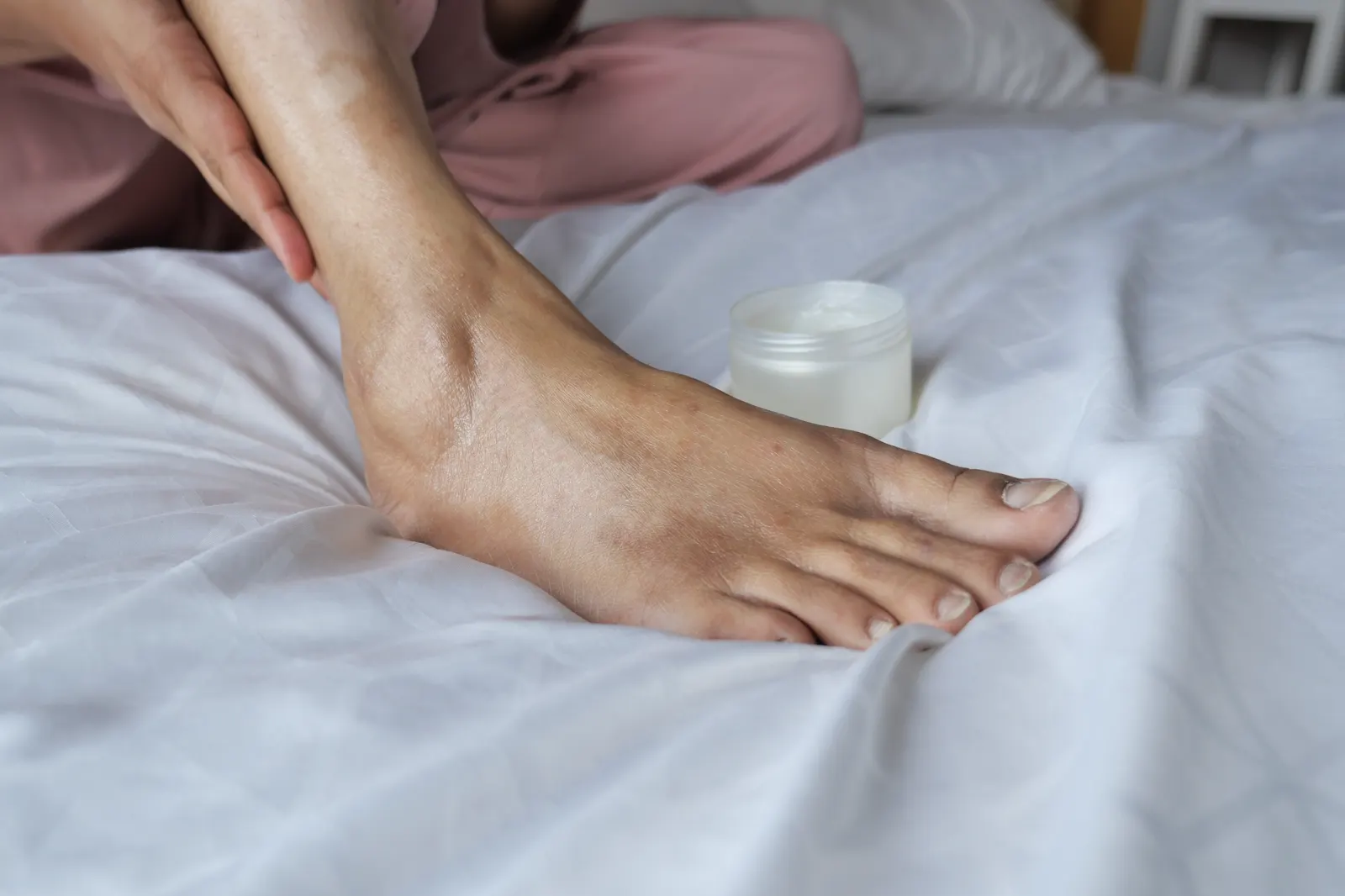
A cracked-heel night balm
- Patch test lentisk oil on your inner arm first, especially if adhesives have ever irritated you.
- Soften its strong scent by mixing a few drops into a spoonful of a gentler oil, such as olive.
- Massage into clean heels (not open or bleeding cracks) and pull on cotton socks overnight.
Good to know: If medical adhesives have ever given you a rash, avoid mastic on skin. Lentisk oil soothes chapped skin, but serious burns need a doctor.
At a glance
| Parts used | Resin (“tears”) from incisions in the bark; essential oil distilled from the resin or leaves; fixed oil pressed from ripe berries (lentisk oil); leaf extracts |
|---|---|
| Key actives | Masticadienonic and isomasticadienonic acids (triterpenes), Oleanonic and moronic acids, α-Pinene and β-myrcene (essential oil), cis-1,4‑Poly-β-myrcene (resin polymer), Oleic, palmitic and linoleic acids (lentisk berry oil) |
| INCI names | Pistacia Lentiscus (Mastic) Gum Pistacia Lentiscus (Mastic) Gum Oil Pistacia Lentiscus Leaf Extract |
| Skin types | dry, normal |
| Pairs well with | Olive OilMyrrhFrankincenseCalendula |
| Evidence grade | DTraditional wisdom Recognized in Europe as a traditional herbal remedy; skin effects rest on lab and animal studies, and the human trials that exist are oral (digestion), not cosmetic. |
What it does for skin and hair
Traditional comfort for cracked skin
Lentisk berry oil is a household remedy across the Maghreb for chapped hands, cracked heels and minor burns; it is a rich emollient, though healing claims are untested in people. See Dry & Dehydrated Skin.
A luminous, piney-balsamic scent
Mastic resin and its essential oil bring a fresh, resinous, slightly sweet note to perfumes, balms and lip care.
Antimicrobial and anti-inflammatory in the lab
Mastic triterpenes and the essential oil inhibit bacteria and inflammatory mediators in vitro, supporting traditional use on minor skin problems — a rationale rather than proof.
Officially recognized traditional use
Europe’s herbal medicines committee has a traditional-use monograph for mastic, including application to minor skin inflammation and small wounds — a status based on long use, not on trials.
How to use it
Start low, be consistent, and give it four to eight weeks. These are the amounts that work in real products and home recipes.
| Form | Typical use level | Notes |
|---|---|---|
| Lentisk berry oil in hand, foot and body care | 5–30% of an oil blend or balm; neat on small areas such as cracked heels | Its smell is strong; blending with olive oil or shea butter softens it. Not for serious burns or open wounds. |
| Mastic essential oil | 0.25–1% on the face, up to 2% on the body | Buy fresh, keep it cold and tightly closed, and add tocopherol to blends; oxidized oil is more likely to sensitize. See Essential Oil Safety: The Complete Guide. |
| Mastic resin in balms and lip care | 0.5–2% (finely ground resin melted into warm oil, or a mastic resin extract) | Mastic dissolves only partly in oil; warm gently, stir and strain. Adds a light, fresh-resinous scent and a little tack. |
Use it safely
Low topical risk
- Allergic contact dermatitis to mastic is documented, mainly from medical adhesives that contain it. If you have reacted to such adhesives, avoid mastic on skin; otherwise patch test.
- Mastic shares its genus with pistachio and its family with cashew and mango; cross-reactivity is poorly studied, so people with severe pistachio or cashew allergy should ask an allergist before ingesting it.
- Lentisk oil is a traditional burn remedy, but large, blistering or facial burns, and burns on hands, feet or genitals, need medical care. Cool under running water for 20 minutes first.
- Mastic essential oil oxidizes; discard old oil that smells harsh or turpentine-like.
- Pregnancy & breastfeeding
- Mastic in culinary amounts is fine. There are no safety data for medicinal doses or concentrated essential oil in pregnancy or breastfeeding, so avoid them; lentisk oil applied to small areas is unlikely to be a concern. Pregnancy guide
- Phototoxicity
- Not phototoxic at normal use levels.
- Declared fragrance allergens
- Limonene, Linalool
New to an ingredient? Patch test first. Stop and seek advice if you get burning, swelling, blistering or a spreading rash.
Buying well
Sustainability
True Chios mastic comes only from about two dozen villages in southern Chios (the mastichochoria). Masticha Chiou has been a PDO since 1997, and the know-how of mastic cultivation is on UNESCO’s Intangible Cultural Heritage list (2014). Production is small, labor-intensive and vulnerable to wildfire and drought. Lentisk oil is made from wild berries, often by rural women in Algeria, Tunisia and northern Morocco, and fair prices matter. See Sustainable & Ethical Botanical Sourcing.
How to choose quality
Chios mastic tears are pale yellow and translucent when fresh and turn more opaque and golden with age; they are graded by size and cleanliness. Look for the PDO seal and a producer cooperative, and be wary of very cheap “mastic” that may be other resins. Lentisk oil should be dark green with a strong resinous-herbal smell; because it is often traded informally, ask for a pressing date and buy from known producers, as dilution with cheaper oils is common. Store both cool and dark.
The research For professionals
The chemistry, the studies and the evidence by concern, for practitioners, formulators and the curious.
Mastic is an oleoresin. Its non-volatile part is dominated by triterpenoid acids — masticadienonic, isomasticadienonic, oleanonic and moronic acids — plus neutral triterpenes and an insoluble polymer, cis-1,4‑poly-β-myrcene, which gives the chewed gum its elasticity. A few percent of essential oil, typically dominated by α-pinene with β-myrcene, β-pinene, limonene and traces of linalool, carries the aroma.
Most clinical research on mastic is oral. Small randomized trials have tested mastic gum for functional dyspepsia and against Helicobacter pylori, with modest and mixed results. The European Medicines Agency’s herbal committee (HMPC) lists mastic as a traditional herbal medicinal product, for mild digestive complaints and, applied to the skin, for minor inflammation and as an aid in healing minor wounds — a status that rests on plausible, long-standing use rather than proven efficacy.
Lentisk oil is a different product: a fixed oil pressed from the ripe black berries, typically dominated by oleic acid with substantial palmitic and linoleic acids, plus chlorophyll and aromatic compounds that give its green color and pungent smell. In North Africa it is a classic remedy for burns; rabbit and rat burn and wound models report faster healing, but there are no controlled human trials. For any burn, the evidence-based first aid is cool running water for 20 minutes.
Mastic is also an ingredient of some medical liquid skin adhesives, and allergic contact dermatitis to these adhesives is well documented. Like other pinene- and limonene-rich oils, mastic essential oil becomes more sensitizing as it oxidizes.
Key studies
Randomized, placebo-controlled trial of oral Chios mastic gum in functional dyspepsia: symptom improvement versus placebo. Oral evidence, included for context — it does not test skin effects.
Dabos KJ, et al. J Ethnopharmacol. 2010 Read it in the bibliography Find on PubMed
MythLentisk oil heals burns better than hospital treatment.
EvidenceThe evidence comes from animal studies and tradition, with no controlled human trials. Proper first aid — 20 minutes of cool running water, a clean cover — and medical care for anything beyond a small superficial burn come first. Lentisk oil may comfort a healed, dry patch; it is not a burn treatment. See Scars, Wounds & Stretch Marks.
In tradition
Chios mastic has been chewed to freshen breath since antiquity and was prized in the Ottoman palace; it flavors Greek breads, Levantine ice cream and Maghrebi pastries (mska). Across Algeria, Tunisia and northern Morocco, zit ed-dro pressed from autumn lentisk berries is used on burns, cracked skin and hair — framed here as tradition, not proof.
Frequently asked questions
What is mastic gum used for in skincare?
What is lentisk oil good for?
Is Chios mastic the only real mastic?
Can mastic cause an allergic reaction?
Cite this page
Herbs.Beauty. Mastic & Lentisk (Pistacia lentiscus L.): evidence-based monograph. Updated 26 November 2026. https://herbs.beauty/ingredients/mastic.html