Does it work?
Ginseng for Dry & Dehydrated Skin
What the research says about ginseng for dry & dehydrated skin, how to use it at home and how to stay safe.
The short answer: Cell and animal studies are extensive and one randomized trial found an oral red-ginseng herbal mix improved wrinkles, but well-controlled trials of ginseng applied to skin are scarce and mostly manufacturer-run.
Our Dry & Dehydrated Skin guide does not rank Ginseng for this use yet, so this is the overall grade for Ginseng.
What it does
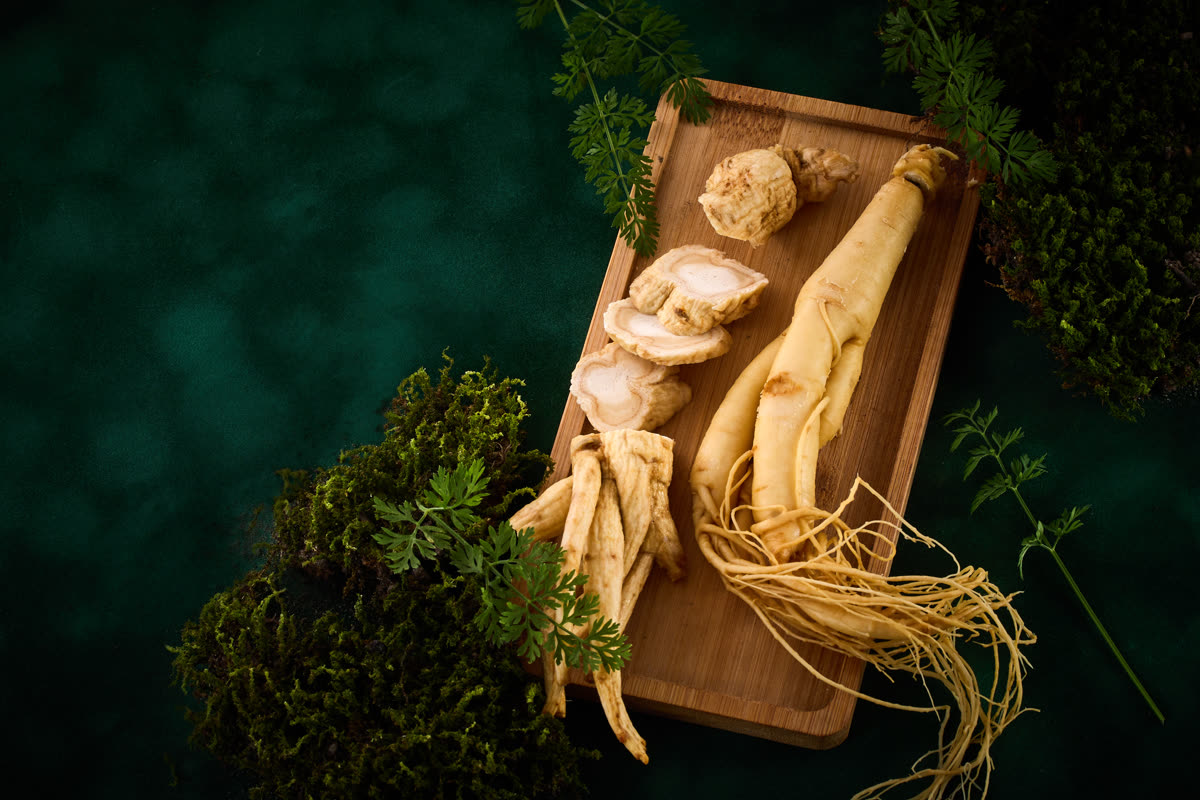
Ginseng is the forked root of Panax ginseng, a slow-growing woodland plant prized for two thousand years in Chinese and Korean medicine and now a signature of Korean skincare. Its signature compounds, the ginsenosides, show antioxidant and collagen-supporting effects in laboratory studies, and “red” ginseng is simply the root steamed before drying, which changes its chemistry. Human evidence for topical ginseng is thin, so think of it as a pleasant supporting active rather than an anti-aging treatment in its own right.
Why people reach for it
- Antioxidant support for aging skin. In laboratory models, ginsenosides and ginseng extracts reduce UV-induced oxidative stress and the collagen-degrading enzyme MMP-1. That makes ginseng a reasonable supporting ingredient in anti-aging formulas, alongside proven actives such as sunscreen and retinoids.
- May support collagen production. Several ginsenosides (including Rb1 and the red-ginseng compound Rg3) increase type I procollagen in cultured skin fibroblasts. In one placebo-controlled trial, an oral red-ginseng herbal blend increased procollagen in skin biopsies — but that was a supplement, not a cream.
- Comfortable, conditioning extracts. Ginseng extracts are usually water- or glycol-based and blend easily into essences, toners and creams. Their saponins and polysaccharides give a light, conditioning skin-feel, which is part of why they are so common in layered Korean routines.
- A scalp-care ingredient under study. Ginsenosides promote hair-follicle growth in lab models, and red ginseng has been tried as an add-on in small studies of hair loss. Evidence is preliminary; for genetic thinning, see Thinning Hair & Hair Loss for treatments with real data.
How to use it
| Form | Typical use | Notes |
|---|---|---|
| Ginseng root extract (water, glycol or glycerin) | 0.5–3% of a serum, essence or cream (or as the supplier recommends for its extract strength) | Add in the cool-down phase of emulsions or to the water phase of toners. Extracts vary hugely in ginsenoside content; reputable suppliers state a ratio or a total-ginsenoside figure. Water-based products need a broad-spectrum preservative — see DIY Safety: Water, Microbes & Preservatives. |
| Fermented or red-ginseng extract | 1–5% of an essence or serum | Choose these for the higher “rare ginsenoside” content if you want the Korean-style essence experience. Fermented extracts can carry a faint sour, earthy smell; pair with green tea or rice bran extracts for a classic East Asian antioxidant blend. |
| Scalp tonic or shampoo additive | 1–3% extract in a preserved tonic or rinse-off | Massage into the scalp; any benefit is likely modest. Combine with evidence-based care for thinning hair rather than relying on ginseng alone (Hair Science for Natural Hair Care). |
Daily rituals with Ginseng
Use it safely
- Topical ginseng is well tolerated; allergic contact dermatitis is rare. Patch test fermented or high-strength extracts if your skin is reactive (How to Patch Test).
- Oral ginseng is different. Supplements can cause insomnia, headache and digestive upset, may lower blood sugar, and have been linked in case reports to reduced warfarin effect. They can also interact with some antidepressants and diabetes medicines. Ask a pharmacist before taking ginseng by mouth with any prescription drug.
- Products sold as “Siberian ginseng” (Eleutherococcus) or “Indian ginseng” (ashwagandha) are unrelated plants with different chemistry and safety profiles.
Pregnancy and breastfeeding: Topical ginseng at cosmetic levels is not a known concern, though specific data are lacking. Oral ginseng supplements are best avoided in pregnancy and while breastfeeding.
New to an ingredient? Patch test first.
When to see a doctor
- Dryness with intense itch that disturbs sleep, or red, inflamed patches (possible eczema or another dermatitis).
- Cracked, bleeding or weeping skin, or signs of infection (pain, warmth, yellow crusts, pus).
- Fish-scale-like dryness present since childhood (possible ichthyosis).
- New, persistent dryness with fatigue, weight change, feeling cold or hair thinning (thyroid), or with excessive thirst and urination (diabetes).
- Severe dryness in older adults with widespread itch that does not respond to moisturizers.
Other plants for Dry & Dehydrated Skin
| Ingredient | Grade | What the evidence shows |
|---|---|---|
| Colloidal Oatmeal | B | Multiple clinical studies show colloidal oatmeal creams and baths reduce dryness, scaling and itch; it is an approved skin protectant in the US. |
| Sunflower Oil | B | Linoleic-rich sunflower seed oil preserved stratum corneum integrity and improved hydration in a comparative study with olive oil, and supports barrier function in neonatal studies. |
| Coconut Oil | B | A randomized trial found virgin coconut oil as effective and safe as mineral oil for mild to moderate xerosis of the legs. |
| Shea Butter | C | Rich emollient and mild occlusive with anti-inflammatory triterpene esters; small studies of shea-containing creams support hydration. |
| Squalane | C | A skin-identical, stable, lightweight emollient that reduces roughness; excellent tolerability but limited trial data on its own. |
| Jojoba | C | A liquid wax ester that resembles skin’s own wax esters; small studies support barrier repair and softness. |
| Aloe Vera | C | A humectant gel that improved skin hydration in small studies; on its own it is not enough for very dry skin and needs an emollient on top. |
| Marshmallow Root | D | Mucilage polysaccharides form a soothing, humectant film; evidence is traditional and lab-based. |