The ingredient encyclopedia · root
Ginseng
Panax ginseng C.A.Mey. (Korean or Asian ginseng; not to be confused with American ginseng (Panax quinquefolius) or “Siberian ginseng”, Eleutherococcus senticosus) · Araliaceae
The prized root of Korean beauty rituals, bringing antioxidant care to essences, toners and creams.
FR Ginseng (ginseng coréen)ES Ginseng (ginseng coreano)AR الجِنسِنغInsam 인삼, hongsam 홍삼 for red ginseng (Korean); rénshēn 人参 (Chinese)
- How well proven
- CPromising
- Safety
- Low topical risk
- Sun-sensitive
- No
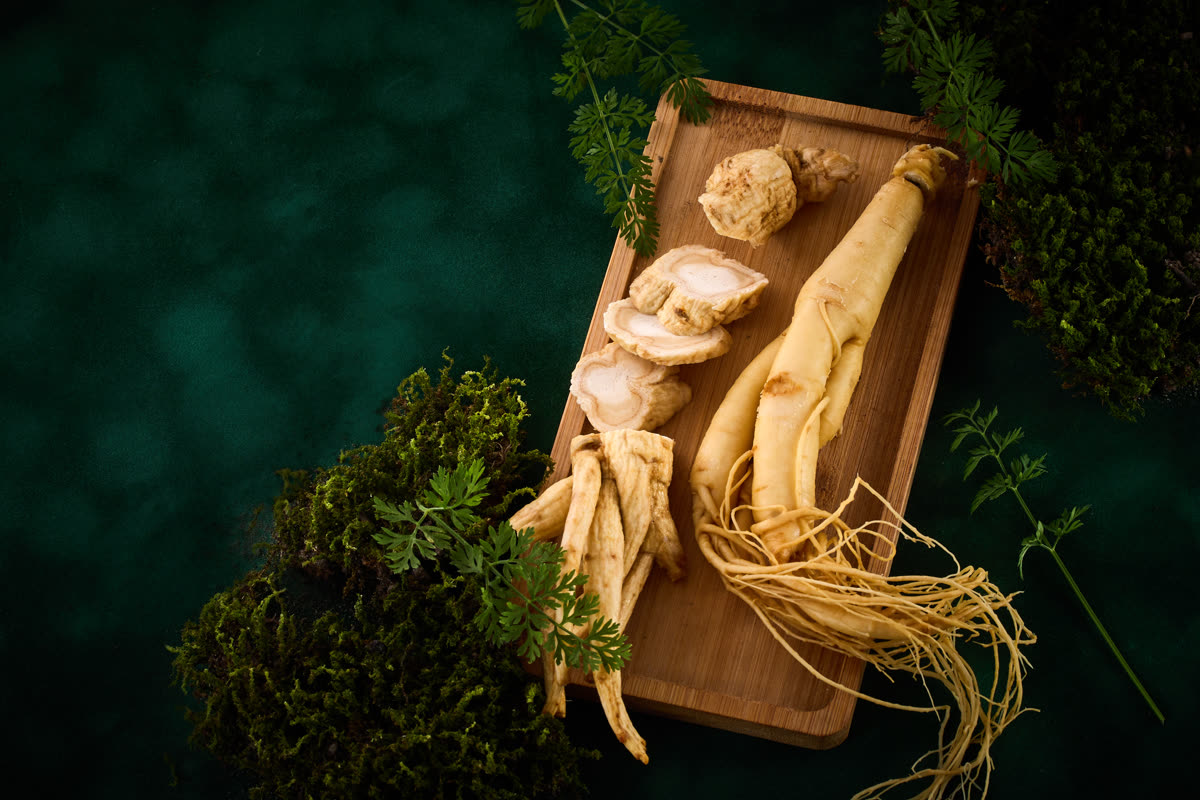
Also known as Panax ginseng C.A.Mey. (Korean or Asian ginseng; not to be confused with American ginseng (Panax quinquefolius) or “Siberian ginseng”, Eleutherococcus senticosus)
FR Ginseng (ginseng coréen)ES Ginseng (ginseng coreano)AR الجِنسِنغInsam 인삼, hongsam 홍삼 for red ginseng (Korean); rénshēn 人参 (Chinese)
What the evidence says
Cell and animal studies are extensive and one randomized trial found an oral red-ginseng herbal mix improved wrinkles, but well-controlled trials of ginseng applied to skin are scarce and mostly manufacturer-run.
- What it does
- Antioxidant support for aging skin. In laboratory models, ginsenosides and ginseng extracts reduce UV-induced oxidative stress and the collagen-degrading enzyme MMP-1.
- How to use it
- Ginseng root extract (water, glycol or glycerin) · 0.5–3% of a serum, essence or cream (or as the supplier recommends for its extract strength)
- Watch out for
- Topical ginseng is well tolerated; allergic contact dermatitis is rare.
Checked against 1 cited study and our safety review · Updated 26 November 2026 · How we grade
Why you’ll love Ginseng
Why you’ll love it
- A light, conditioning feel that layers beautifully under creams
- Antioxidant support that complements sunscreen and retinoids
- Brings a touch of Korean ritual to your daily routine
Best forLayered routines and aging-skin care, alongside proven actives like sunscreen.
Try it today
A Korean-style essence layer
- Patch test fermented or high-strength products, then cleanse and pour a little essence into your palms.
- Press it gently into your face and neck until it is absorbed.
- Follow with your moisturizer, and in the morning finish with sunscreen.
Good to know: Ginseng on skin is gentle, but supplements are different: they can interact with medicines such as warfarin. Ask a pharmacist first.
At a glance
| Parts used | Root (main root and fine root hairs), sold as white ginseng (peeled or unpeeled, air-dried) or red ginseng (steamed, then dried); also the berry, leaf and stem. Used as water, glycol and fermented extracts. |
|---|---|
| Key actives | Ginsenosides (dammarane saponins: Rb1, Rb2, Rc, Rd, Re, Rg1), Red-ginseng ginsenosides formed by steaming (Rg3, Rg5, Rk1, Rh2), Compound K (a deglycosylated metabolite produced by gut bacteria and fermentation), Polysaccharides, Polyacetylenes (panaxynol), Maillard-reaction products (in red ginseng) |
| INCI names | Panax Ginseng Root Extract Panax Ginseng Berry Extract |
| Skin types | mature, normal, dry, combination |
| Pairs well with | Tremella (Snow Mushroom)Green TeaRice BranCentella Asiatica (Cica) |
| Evidence grade | CPromising Cell and animal studies are extensive and one randomized trial found an oral red-ginseng herbal mix improved wrinkles, but well-controlled trials of ginseng applied to skin are scarce and mostly manufacturer-run. |
What it does for skin and hair
Antioxidant support for aging skin
In laboratory models, ginsenosides and ginseng extracts reduce UV-induced oxidative stress and the collagen-degrading enzyme MMP-1. That makes ginseng a reasonable supporting ingredient in anti-aging formulas, alongside proven actives such as sunscreen and retinoids.
May support collagen production
Several ginsenosides (including Rb1 and the red-ginseng compound Rg3) increase type I procollagen in cultured skin fibroblasts. In one placebo-controlled trial, an oral red-ginseng herbal blend increased procollagen in skin biopsies — but that was a supplement, not a cream.
Comfortable, conditioning extracts
Ginseng extracts are usually water- or glycol-based and blend easily into essences, toners and creams. Their saponins and polysaccharides give a light, conditioning skin-feel, which is part of why they are so common in layered Korean routines.
A scalp-care ingredient under study
Ginsenosides promote hair-follicle growth in lab models, and red ginseng has been tried as an add-on in small studies of hair loss. Evidence is preliminary; for genetic thinning, see Thinning Hair & Hair Loss for treatments with real data.
How to use it
Start low, be consistent, and give it four to eight weeks. These are the amounts that work in real products and home recipes.
| Form | Typical use level | Notes |
|---|---|---|
| Ginseng root extract (water, glycol or glycerin) | 0.5–3% of a serum, essence or cream (or as the supplier recommends for its extract strength) | Add in the cool-down phase of emulsions or to the water phase of toners. Extracts vary hugely in ginsenoside content; reputable suppliers state a ratio or a total-ginsenoside figure. Water-based products need a broad-spectrum preservative — see DIY Safety: Water, Microbes & Preservatives. |
| Fermented or red-ginseng extract | 1–5% of an essence or serum | Choose these for the higher “rare ginsenoside” content if you want the Korean-style essence experience. Fermented extracts can carry a faint sour, earthy smell; pair with green tea or rice bran extracts for a classic East Asian antioxidant blend. |
| Scalp tonic or shampoo additive | 1–3% extract in a preserved tonic or rinse-off | Massage into the scalp; any benefit is likely modest. Combine with evidence-based care for thinning hair rather than relying on ginseng alone (Hair Science for Natural Hair Care). |
Use it safely
Low topical risk
- Topical ginseng is well tolerated; allergic contact dermatitis is rare. Patch test fermented or high-strength extracts if your skin is reactive (How to Patch Test).
- Oral ginseng is different. Supplements can cause insomnia, headache and digestive upset, may lower blood sugar, and have been linked in case reports to reduced warfarin effect. They can also interact with some antidepressants and diabetes medicines. Ask a pharmacist before taking ginseng by mouth with any prescription drug.
- Products sold as “Siberian ginseng” (Eleutherococcus) or “Indian ginseng” (ashwagandha) are unrelated plants with different chemistry and safety profiles.
- Pregnancy & breastfeeding
- Topical ginseng at cosmetic levels is not a known concern, though specific data are lacking. Oral ginseng supplements are best avoided in pregnancy and while breastfeeding. Pregnancy guide
- Phototoxicity
- Not phototoxic at normal use levels.
- Declared fragrance allergens
- None expected
New to an ingredient? Patch test first. Stop and seek advice if you get burning, swelling, blistering or a spreading rash.
Buying well
Sustainability
Wild Panax ginseng is now extremely rare; the Russian Far East population is listed on CITES Appendix II, as is American ginseng (P. quinquefolius). Virtually all cosmetic ginseng is cultivated in Korea and northeast China, often in shaded fields that must then rest for years before ginseng can be replanted. Adulteration is common in the supplement trade, with cheaper roots or other Panax species substituted; ask suppliers for species identity and ginsenoside testing (Sustainable & Ethical Botanical Sourcing).
How to choose quality
Look for Panax Ginseng Root Extract listed in the first half of the ingredient list, not after the fragrance. Good suppliers state whether the extract is from white, red or fermented root and give a total-ginsenoside content. “Ginseng” on the label with only “American ginseng” or Eleutherococcus in the INCI is a different ingredient. Store extracts cool and dark, sealed.
The research For professionals
The chemistry, the studies and the evidence by concern, for practitioners, formulators and the curious.
Ginseng’s defining chemistry is its ginsenosides: triterpene saponins built on a four-ring dammarane skeleton with sugar chains attached. More than a hundred are known. Most belong to two families — the protopanaxadiol group (Rb1, Rb2, Rc, Rd) and the protopanaxatriol group (Re, Rg1) — and together they make up a few percent of the dry root, more in the fine root hairs than the main body. Ginseng also contains water-soluble polysaccharides, polyacetylenes such as panaxynol, phenolic acids and peptides. Content depends heavily on age at harvest (roots are typically dug at four to six years), growing region and processing.
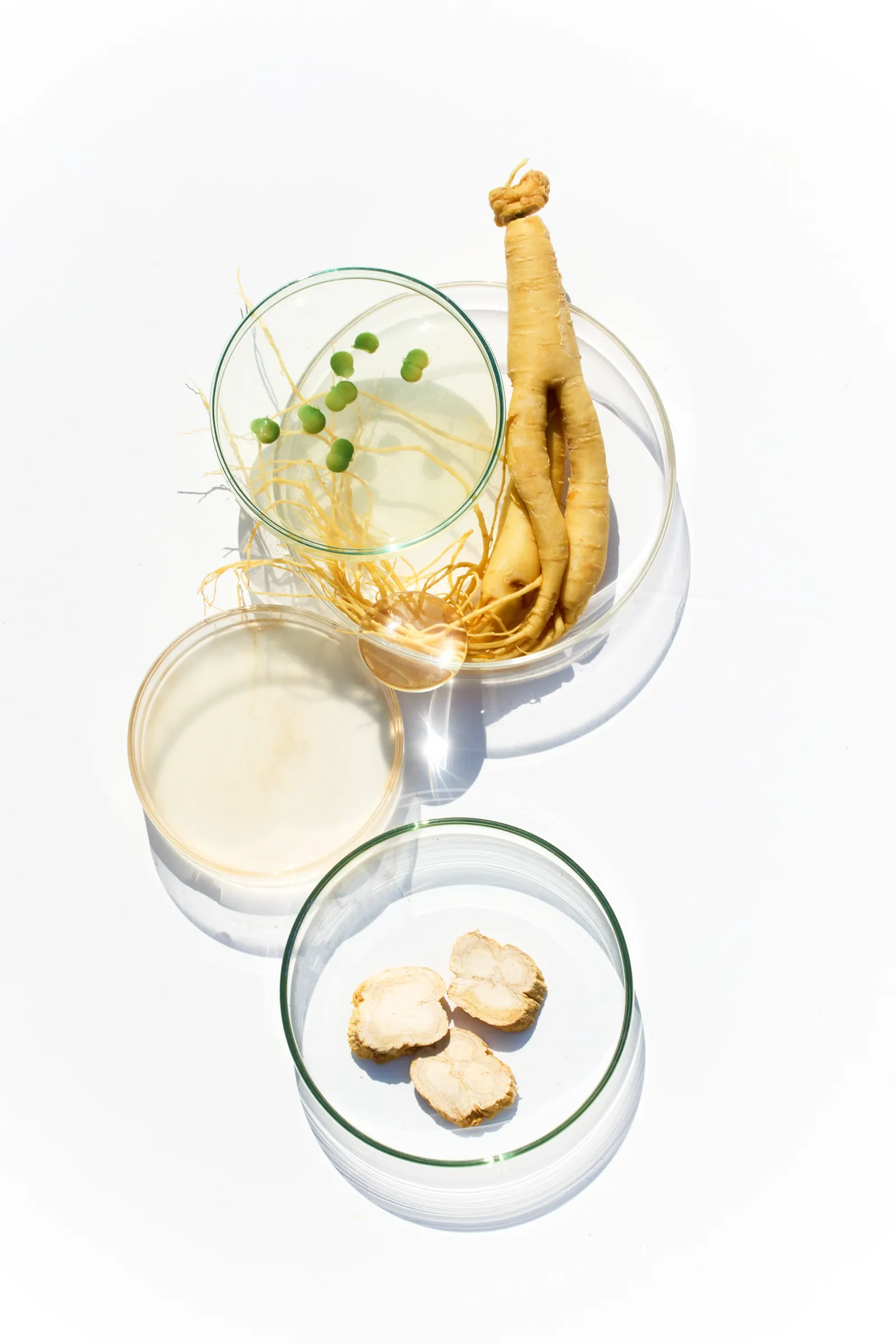
Red vs white. White ginseng is the root simply dried (often peeled); red ginseng is steamed, then dried, which turns it amber and changes the saponin profile. Heat strips sugars and water from the original ginsenosides, creating “rare” ones such as Rg3, Rg5, Rk1 and Rh2 that are almost absent from fresh root; Maillard browning adds new antioxidant compounds. Steaming also made the root keep, which is why red ginseng became Korea’s classic export form. “Fermented” ginseng goes further, using microbes or enzymes to cut ginsenosides down to smaller molecules such as compound K, which is also what gut bacteria produce after ginseng is eaten. Marketing often claims these smaller ginsenosides penetrate skin better; that is plausible chemistry but largely unproven in human skin.
In cultured skin cells and mouse models, ginseng extracts and individual ginsenosides reduce UVB-induced reactive oxygen species, suppress MMP-1 (the enzyme that breaks down collagen), increase type I procollagen synthesis, and in some studies affect melanin production — though different ginsenosides push pigmentation in different directions, so blanket “brightening” claims are not justified. Hair-follicle organ culture and mouse studies suggest some ginsenosides prolong the growth phase.
Human data are thinner than the marketing suggests. The best-known trial (Cho, J Med Food, 2009) gave women an oral mixture of red ginseng with two other herbs and found improved facial wrinkle measures and more type I procollagen in skin biopsies than placebo. Topical studies are mostly small, short, sponsored by manufacturers and test complete formulas, so the contribution of ginseng itself is hard to isolate. Ginseng is a credible antioxidant extract with a rich tradition — not a substitute for daily sunscreen or a retinoid.
Key studies
Randomized, double-blind, placebo-controlled trial in women over 40: an oral supplement combining red ginseng with Torilis and Cornus fruit extracts improved facial wrinkle measures and increased type I procollagen in skin biopsies compared with placebo. It tested an oral herbal mix, not topical ginseng.
Cho S, et al. J Med Food. 2009 Read it in the bibliography Find on PubMed
MythRed ginseng is a stronger, “more potent” ginseng for skin.
EvidenceRed ginseng is not stronger — it is different. Steaming converts some ginsenosides into others (such as Rg3), which behave differently in lab tests, but there is no head-to-head human evidence that red ginseng extracts improve skin more than white ones. Choose by formula quality and use level, not by color.
In tradition
Ginseng is listed among the superior tonics in the Shennong Bencao Jing, the classic Chinese materia medica, and Korean insam was for centuries a prized and state-regulated export. Ginseng-infused washes and creams have been part of Korean beauty culture for generations, long before the global K-beauty boom.
Frequently asked questions
What does ginseng do for your skin?
Is red ginseng or white ginseng better for skin care?
Can ginseng help with hair loss?
Is ginseng safe to use every day on the face?
Cite this page
Herbs.Beauty. Ginseng (Panax ginseng C.A.Mey.): evidence-based monograph. Updated 26 November 2026. https://herbs.beauty/ingredients/ginseng.html