The ingredient encyclopedia · oil
Rice Bran
Oryza sativa L. · Poaceae
Rooted in Japan’s nuka tradition, rice bran oil is a light, gentle oil that softens skin and melts away makeup and sunscreen.
FR Son de riz (huile de son de riz)ES Salvado de arroz (aceite de salvado de arroz)AR نخالة الأرزNuka or komenuka 米糠 (Japanese); ssal-gyeo 쌀겨 (Korean)
- How well proven
- CPromising
- Safety
- Low topical risk
- Sun-sensitive
- No
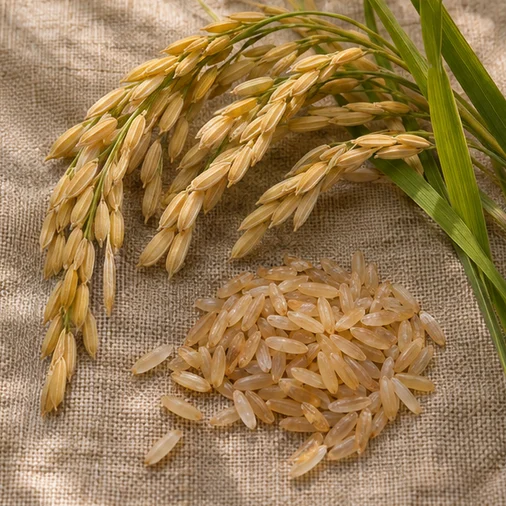
FR Son de riz (huile de son de riz)ES Salvado de arroz (aceite de salvado de arroz)AR نخالة الأرزNuka or komenuka 米糠 (Japanese); ssal-gyeo 쌀겨 (Korean)
What the evidence says
Two small human formulation studies (one with no vehicle control) plus cell and chemistry data; nothing yet shows that plain rice bran oil, rice water or a ferment visibly changes skin.
- What it does
- A light, comfortable emollient. Rice bran oil softens and smooths dry skin with a less greasy finish than olive or avocado oil, which makes it a sensible everyday oil for dry and normal skin.
- How to use it
- Face, body or hair oil · 2–4 drops neat on the face; 10–100% of a body or face-oil blend; 1–5% in leave-in hair products
- Watch out for
- Rice bran oil and its derivatives are generally very well tolerated; allergic contact reactions are rare.
Checked against 4 cited studies and our safety review · Updated 26 November 2026 · How we grade
Why you’ll love Rice Bran
Why you’ll love it
- Softens dry skin with a lighter finish than olive oil
- Lifts makeup and sunscreen, the classic base of Japanese cleansing oils
- Adds slip and shine to dry, frizzy lengths
Best forDry and normal skin, oil cleansing and dry hair; a stable everyday oil.
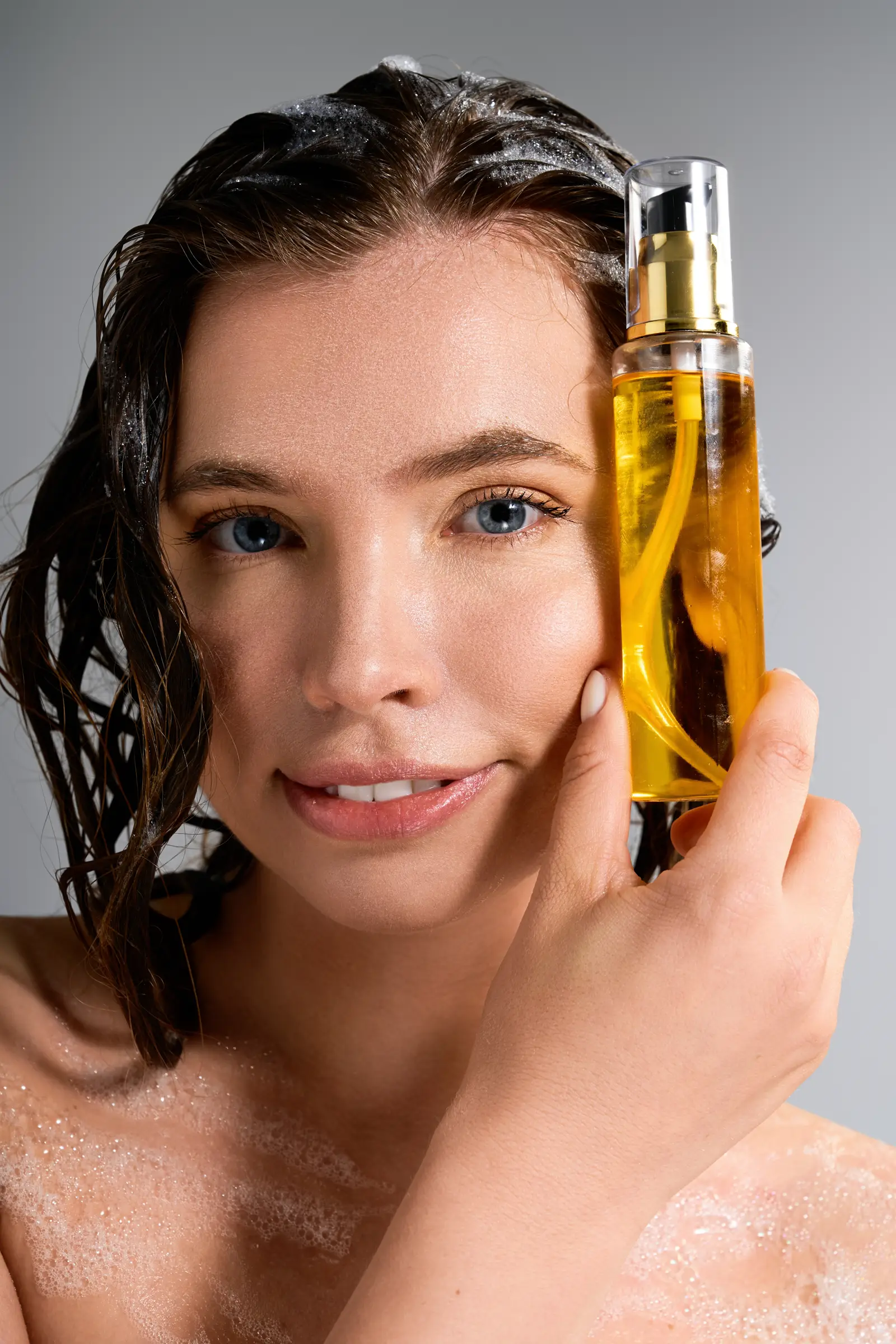
Try it today
A gentle evening oil cleanse
- With dry hands, massage a teaspoon of rice bran oil over dry skin to loosen makeup and sunscreen.
- Wipe it away with a soft cloth wrung out in warm water.
- Follow with your usual gentle cleanser if your skin feels oily or is prone to clogged pores.
Good to know: Homemade rice water has no preservative and spoils fast: make it fresh, keep it out of your eyes, and discard anything that smells sour.
At a glance
| Parts used | Bran (the outer layers and germ removed when brown rice is milled to white): oil, usually solvent-extracted and refined; dewaxed bran wax; water or hydroglycolic extracts; isolated constituents (γ-oryzanol, ferulic acid, phytic acid, tocotrienols). Rice water and rice ferments are separate, grain-derived preparations. |
|---|---|
| Key actives | Oleic and linoleic acids, γ-Oryzanol (ferulic acid esters of triterpene alcohols and plant sterols), Tocotrienols and tocopherols, Ferulic acid, Phytic acid (inositol hexaphosphate), Phytosterols |
| INCI names | Oryza Sativa (Rice) Bran Oil Oryza Sativa (Rice) Bran Extract Oryza Sativa (Rice) Bran Wax Oryza Sativa (Rice) Bran Oryzanol Ferulic Acid Phytic Acid Tocotrienols Saccharomyces/Rice Ferment Filtrate |
| Skin types | dry, normal, combination, mature, sensitive |
| Hair & scalp | fine, curly, color treated |
| Pairs well with | Green TeaLicorice RootCentella Asiatica (Cica)Squalane |
| Evidence grade | CPromising Two small human formulation studies (one with no vehicle control) plus cell and chemistry data; nothing yet shows that plain rice bran oil, rice water or a ferment visibly changes skin. |
What it does for skin and hair
A light, comfortable emollient
Rice bran oil softens and smooths dry skin with a less greasy finish than olive or avocado oil, which makes it a sensible everyday oil for dry and normal skin.
More stable than many face oils
A moderate share of saturated fat plus natural γ-oryzanol and tocotrienols make the oil slower to go rancid than very linoleic-rich oils such as rosehip oil.
Rinses clean in cleansing oils
Its fluid, non-tacky texture is why rice bran oil is a traditional base in Japanese cleansing oils and balms that lift sunscreen and makeup.
Source of formulation antioxidants
Rice bran is a commercial source of ferulic acid and phytic acid. Ferulic acid helps stabilize vitamin C and E serums; phytic acid is used as a gentle chelator that protects formulas from metal-driven spoilage.
Hair slip and shine
A few drops of the oil on lengths reduce friction and frizz — a cosmetic, surface effect for dry hair, not a growth effect.
How to use it
Start low, be consistent, and give it four to eight weeks. These are the amounts that work in real products and home recipes.
| Form | Typical use level | Notes |
|---|---|---|
| Face, body or hair oil | 2–4 drops neat on the face; 10–100% of a body or face-oil blend; 1–5% in leave-in hair products | Press onto slightly damp skin or over a water-based moisturizer. Introduce on its own for two to three weeks if you are prone to clogged pores. |
| Cleansing oil or balm | 30–80% of the oil phase | A good alternative to sunflower oil in a cleansing balm; add 0.1–0.5% tocopherol to protect the blend. Check the formula with the Formula & Cost Calculator. |
| Creams, lotions and lip products | Oil 2–15% of a formula; bran wax 1–10% in balms and sticks | Rice bran wax is a hard, high-melting plant wax used as a beeswax or carnauba alternative; melt it fully and adjust hardness in small steps. |
| Isolated actives and extracts | Ferulic acid 0.5–1% (usually with vitamins C and E); phytic acid or sodium phytate about 0.05–0.2% as a chelator; extracts and ferment filtrates per the supplier’s specification | Low-pH vitamin C–ferulic serums can sting, mostly because of the acidity. Water-based extracts and ferments need a full preservative system — see DIY Safety: Water, Microbes & Preservatives. |
Use it safely
Low topical risk
- Rice bran oil and its derivatives are generally very well tolerated; allergic contact reactions are rare. Patch test new leave-on products if your skin reacts easily, and stop if irritation develops.
- If you have a known rice allergy, seek individual advice before using rice-derived products, especially less refined extracts and powders that carry more protein.
- Arsenic is a dietary issue: paddy rice takes up inorganic arsenic from flooded soils and the bran concentrates it, which is why food regulators set limits for rice products and advise caution with rice bran supplements and rice-based foods for small children. Inorganic arsenic is water-soluble rather than fat-soluble, so refined oil carries very little, and absorption through intact skin is low. Buy cosmetic-grade materials from suppliers who test for heavy metals, and do not eat raw cosmetic bran.
- Homemade rice water contains no preservative and spoils quickly, especially when fermented. Use it fresh, keep it out of the eyes and off broken skin, and discard anything that smells sour-rotten or looks slimy.
- Oxidized oil is more irritating: discard oil that smells sharp, paint-like or crayon-like.
- Pregnancy & breastfeeding
- No specific concerns for topical rice bran oil, wax or extracts in pregnancy or breastfeeding. Skin can become more reactive in pregnancy, so patch test new products; see Skincare in Pregnancy & Breastfeeding. Pregnancy guide
- Phototoxicity
- Not phototoxic at normal use levels.
- Declared fragrance allergens
- None expected
New to an ingredient? Patch test first. Stop and seek advice if you get burning, swelling, blistering or a spreading rash.
Buying well
Sustainability
Rice bran is a by-product of milling white rice, so using it is genuine upcycling: in many rice-growing regions much of it is fed to animals or wasted because it turns rancid within days unless stabilized. The bigger footprint lies upstream, since flooded paddies use a lot of water and emit methane. Rice is not a threatened species. Most bran oil is solvent-extracted (usually with hexane) and refined; cold-pressed oil exists but is rare and costly. See Sustainable & Ethical Botanical Sourcing.
How to choose quality
Read the label precisely: Oryza Sativa (Rice) Bran Oil is the oil; Bran Extract, Bran Wax, Bran (the powder), Lees Extract, Hull Powder, a ferment filtrate and isolated Oryzanol, Ferulic Acid or Phytic Acid are all different materials. A wash-off rice mask may list bran, hull powder and lees extract as three separate entries, none of them the oil. The EU CosIng database is a useful reference for names and functions. Refined cosmetic oil is pale yellow and almost odorless; less refined oil is darker with a cereal smell and usually more oryzanol. Ask suppliers for a certificate of analysis (free fatty acids, peroxide value, γ-oryzanol content, heavy metals). If a brand quotes research, ask which extract and delivery system were tested and whether hydration was measured on the finished product. Store cool and away from light, and use within about 12–18 months.
The research For professionals
The chemistry, the studies and the evidence by concern, for practitioners, formulators and the curious.
Rice bran is about a tenth of the weight of harvested paddy rice and is rich in lipids (often 15–20%). The oil is roughly 38–48% oleic acid, 29–38% linoleic acid and 15–22% palmitic acid, with a small amount of stearic acid. Its distinction is an unusually large unsaponifiable fraction: γ-oryzanol, a mixture of ferulic acid esters of triterpene alcohols (cycloartenol, 24-methylenecycloartanol) and plant sterols (campesterol, β-sitosterol), plus tocotrienols alongside tocopherols. Rice bran, palm fruit and annatto are the main commercial sources of tocotrienols. Chemical (alkali) refining strips much of the oryzanol into the soapstock, so the content of finished oils varies widely; physically refined oils keep more.
Freshly milled bran contains an active lipase that starts splitting the oil into free fatty acids within hours, so bran has to be heat-stabilized quickly. Much of the world’s commercial ferulic acid is produced from rice bran oil by-products, and phytic acid (inositol hexaphosphate) is extracted from rice bran or corn. In the lab, ferulic acid and γ-oryzanol absorb ultraviolet light and quench free radicals, and phytic acid chelates iron and copper (tyrosinase is a copper-containing enzyme, which is the basis for brightening claims). None of these compounds is an approved sunscreen filter, and lab activity does not show a visible effect on skin.
Human evidence for rice bran itself is limited to small formulation studies. Manosroi and colleagues tested gels and creams containing semi-purified rice bran extracts (with ferulic acid, γ-oryzanol and phytic acid) loaded into niosomes in 30 volunteers over 28 days and reported changes in instrument-measured hydration, elasticity and roughness; the design cannot isolate a single compound or predict the effect of plain bran oil, an essence or a rinse. Bernardi and colleagues applied a nanoemulsion containing 10% rice bran oil to the forearms of 26 volunteers and saw a short-lived rise in skin capacitance (in the 17 healthy volunteers, at 30 and 60 minutes, then declining), compared only with baseline. A 2024 cell-culture study of soft and hard rice bran waxes measured melanogenesis, collagen content and enzyme inhibition — a different raw material, and not evidence of a visible change in people. The best-supported claim, therefore, is the ordinary emollient one.
Ferulic acid has its own, separate evidence: in a well-known study, adding 0.5% ferulic acid to a solution of 15% vitamin C and 1% vitamin E improved its chemical stability and doubled its protection against UV-induced redness and sunburn cells in pig skin. That supports ferulic acid as a formulation partner for vitamin C, not rice bran oil as a photoprotectant.
Key studies
Gels and creams containing semi-purified rice bran extracts in niosomes, tested in 30 volunteers over 28 days: reported changes in measured hydration, elasticity and roughness. Cannot isolate a single compound or predict the effect of plain bran oil.
Manosroi A, et al. Pharm Biol. 2012 Read it in the bibliography Find on PubMedA nanoemulsion containing 10% rice bran oil on the forearms of 26 volunteers raised skin capacitance briefly (at 30 and 60 minutes in the 17 healthy volunteers). Compared with baseline only, with no separate vehicle.
Bernardi DS, et al. J Nanobiotechnology. 2011 Read it in the bibliography Find on PubMedCell-culture study of soft and hard rice bran waxes measuring melanogenesis, collagen content and enzyme inhibition. Laboratory endpoints only; bran wax is a different material from the oil.
Chaikul P, et al. 2024 Read it in the bibliography Find on PubMedFerulic acid (0.5%) stabilized a 15% vitamin C plus 1% vitamin E solution and doubled its photoprotection in pig skin. Concerns ferulic acid as an additive, not rice bran oil.
Lin FH, et al. J Invest Dermatol. 2005 Read it in the bibliography Find on PubMed
MythRice water makes hair grow longer and faster.
EvidenceNo controlled study shows that rice water increases hair growth. Its starches and small amounts of protein and minerals can coat the hair, adding slip and reducing tangling, which may cut breakage — a cosmetic effect on the hair shaft. The famous long-haired communities who rinse with rice water also tend to avoid harsh styling and cutting. For thinning hair, see Thinning Hair & Hair Loss.
In tradition
In Japan, cotton bags of rice bran (nuka-bukuro) were rubbed over the face and body as a gentle cleanser in Edo-period homes and bathhouses, and rice-washing water was used to rinse hair; similar rice-water washes are part of Korean and Chinese beauty lore, while Japanese sake brewers’ smooth hands are a much-repeated anecdote behind modern rice-ferment products. Closer to home, rice reached Spain with al-Andalus — the Spanish arroz comes from the Arabic al-ruzz — and the paddies of Valencia’s Albufera and the Ebro delta still supply the rice for paella.
From the first-edition dossier
From study to shelf
The grain’s outer layers, and what distinguishes the oil, extract and ferment.
On this page
What the studies found
Manosroi et al. (2012) PubMed
- Study design
- Researchers studied gels and creams containing semi-purified rice-bran extracts in niosomes, tiny carriers used to deliver compounds. The human component included 30 volunteers over 28 days.
- Result
- The authors reported changes in instrument-measured hydration and other measures, including elasticity and roughness.
- Limitations
- The extracts contained ferulic acid, γ-oryzanol and phytic acid. The study cannot isolate an individual compound or predict the effect of plain bran oil, an essence or a rinse.
Bernardi et al. (2011)
- Study design
- The team applied one nanoemulsion containing 10% rice-bran oil to the forearms of 26 volunteers and measured skin capacitance before and for up to 150 minutes afterward.
- Result
- A short-term increase in measured hydration was seen. In the 17 healthy volunteers, the increase was observed at 30 and 60 minutes before declining.
- Limitations
- The human comparison was with baseline, without a separate vehicle. It cannot distinguish the oil’s contribution, prove day-long hydration or establish a treatment for a skin condition.
Chaikul et al. (2024) PubMed
- Study design
- Soft and hard rice-bran waxes were studied in cultured cells.
- Result
- The investigators measured laboratory endpoints including melanogenesis, collagen content and enzyme inhibition.
- Limitations
- Cell culture does not show whether a finished cosmetic visibly changes skin in people. The study concerned bran waxes, a separate preparation from the oil.
Oil, extract, wax or ferment?
Oryza Sativa Bran Oil points to the oil. A bran extract or bran wax describes a different raw material, and a ferment uses another preparation. If a brand cites research, ask for the exact extract and delivery system tested. CosIng is a reference for ingredient names and functions.
Checks before you buy
- Identify whether the label says Oryza Sativa Bran Oil, Bran Extract, a ferment or an isolated compound.
- For hydration claims, check whether the manufacturer measured moisture on the finished formula and how long the result lasted.
- Choose the texture that fits your routine. A grain-derived oil and a lightweight water-based serum can have very different finishes.
Questions readers ask
Does the study validate rice water rinses for skin or hair?
The study tested a specially formulated gel and cream on skin. A rinse delivers a different mix of materials and has a different contact time.
What does γ-oryzanol mean on a label?
It names a constituent mixture present in rice bran oil. Its presence alone does not show the formula used the same dose or delivery system as the study.
Compare the preparations
Rice bran oil is an emollient ingredient, while rice bran extract and fermented rice-derived materials have different compositions. A rice water rinse uses another preparation entirely.
| Preparation | What to check |
|---|---|
| Rice bran oil | Check the plant part or species declared and the manufacturer’s specification. |
| Rice bran extract | Check whether the same preparation appears in the study or the formula you are comparing. |
| Rice water or a rice ferment | Read this term separately and check the rest of the ingredient list. |
The research
A 28-day study reported changes with formulated rice-bran extracts. A different study found a short-lived hydration signal with a 10% rice-bran oil nanoemulsion. These products differ from straight oil, rice water and ferments.
Safety and tolerance
As with any leave-on cosmetic, stop using it if you develop irritation. If you have a known rice allergy, seek individual advice about the formula.
What to look for on the label
Look for “Oryza Sativa (Rice) Bran Oil”, “Bran Extract” or a separately named rice-derived constituent. Check whether the claimed outcome was measured with the finished product.
A real label example
Global (USD) ·
Beauty of Joseon Ground Rice and Honey Glow Mask
- Oryza Sativa (Rice) Bran
- Oryza Sativa (Rice) Hull Powder
- Oryza Sativa (Rice) Lees Extract
The mask lists rice bran, hull powder and lees extract as separate entries. The rice bran entry shown here is not rice bran oil.
Sources
- Manosroi et al. (2012) · Topical rice bran formulation study PubMed
- Chaikul et al. (2024) · Rice bran waxes in cultured skin cells PubMed
- Bernardi et al. (2011)
- European Commission · CosIng
Continue reading
First published in the original Herbs.Beauty atlas on 11 November 2026, with its sources as checked on that date.
Frequently asked questions
Is rice bran oil good for the face and acne-prone skin?
Does rice bran oil fade dark spots?
Is there arsenic in rice bran skin care?
What is the difference between rice bran oil, rice water and rice ferment?
Cite this page
Herbs.Beauty. Rice Bran (Oryza sativa L.): evidence-based monograph. Updated 26 November 2026. https://herbs.beauty/ingredients/rice-bran.html