Does it work?
Ginseng for Aging & Photoaging
The prized root of Korean beauty rituals, bringing antioxidant care to essences, toners and creams.
The short answer: Cell and animal studies are extensive and one randomized trial found an oral red-ginseng herbal mix improved wrinkles, but well-controlled trials of ginseng applied to skin are scarce and mostly manufacturer-run.
Our Aging & Photoaging guide does not rank Ginseng for this use yet, so this is the overall grade for Ginseng.
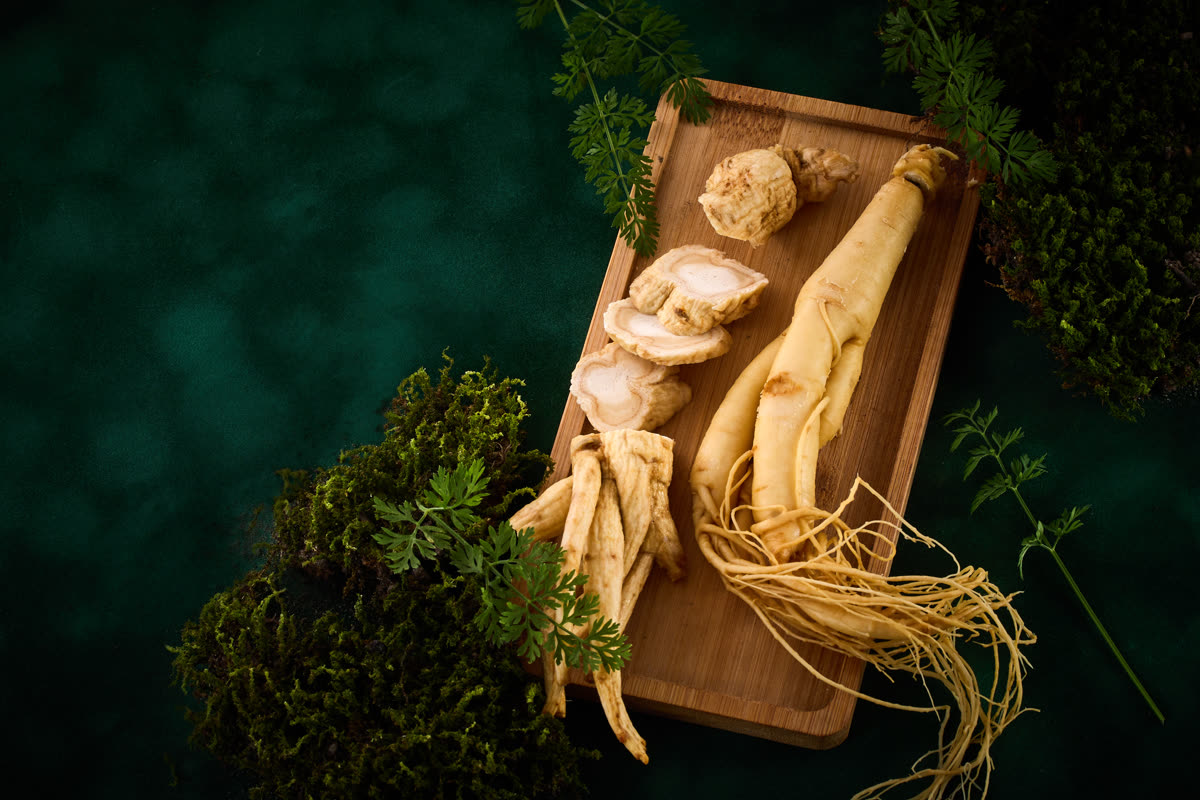
What Ginseng can do for Aging & Photoaging
Ginseng is the forked root of Panax ginseng, a slow-growing woodland plant prized for two thousand years in Chinese and Korean medicine and now a signature of Korean skincare. Its signature compounds, the ginsenosides, show antioxidant and collagen-supporting effects in laboratory studies, and “red” ginseng is simply the root steamed before drying, which changes its chemistry. Human evidence for topical ginseng is thin, so think of it as a pleasant supporting active rather than an anti-aging treatment in its own right.
Why people reach for it
- Antioxidant support for aging skin. In laboratory models, ginsenosides and ginseng extracts reduce UV-induced oxidative stress and the collagen-degrading enzyme MMP-1. That makes ginseng a reasonable supporting ingredient in anti-aging formulas, alongside proven actives such as sunscreen and retinoids.
- May support collagen production. Several ginsenosides (including Rb1 and the red-ginseng compound Rg3) increase type I procollagen in cultured skin fibroblasts. In one placebo-controlled trial, an oral red-ginseng herbal blend increased procollagen in skin biopsies — but that was a supplement, not a cream.
- Comfortable, conditioning extracts. Ginseng extracts are usually water- or glycol-based and blend easily into essences, toners and creams. Their saponins and polysaccharides give a light, conditioning skin-feel, which is part of why they are so common in layered Korean routines.
- A scalp-care ingredient under study. Ginsenosides promote hair-follicle growth in lab models, and red ginseng has been tried as an add-on in small studies of hair loss. Evidence is preliminary; for genetic thinning, see Thinning Hair & Hair Loss for treatments with real data.
How to use it
Try it today
A Korean-style essence layer
- Patch test fermented or high-strength products, then cleanse and pour a little essence into your palms.
- Press it gently into your face and neck until it is absorbed.
- Follow with your moisturizer, and in the morning finish with sunscreen.
| Form | Typical use | Notes |
|---|---|---|
| Ginseng root extract (water, glycol or glycerin) | 0.5–3% of a serum, essence or cream (or as the supplier recommends for its extract strength) | Add in the cool-down phase of emulsions or to the water phase of toners. Extracts vary hugely in ginsenoside content; reputable suppliers state a ratio or a total-ginsenoside figure. Water-based products need a broad-spectrum preservative — see DIY Safety: Water, Microbes & Preservatives. |
| Fermented or red-ginseng extract | 1–5% of an essence or serum | Choose these for the higher “rare ginsenoside” content if you want the Korean-style essence experience. Fermented extracts can carry a faint sour, earthy smell; pair with green tea or rice bran extracts for a classic East Asian antioxidant blend. |
| Scalp tonic or shampoo additive | 1–3% extract in a preserved tonic or rinse-off | Massage into the scalp; any benefit is likely modest. Combine with evidence-based care for thinning hair rather than relying on ginseng alone (Hair Science for Natural Hair Care). |
Daily rituals with Ginseng
Use it safely
- Topical ginseng is well tolerated; allergic contact dermatitis is rare. Patch test fermented or high-strength extracts if your skin is reactive (How to Patch Test).
- Oral ginseng is different. Supplements can cause insomnia, headache and digestive upset, may lower blood sugar, and have been linked in case reports to reduced warfarin effect. They can also interact with some antidepressants and diabetes medicines. Ask a pharmacist before taking ginseng by mouth with any prescription drug.
- Products sold as “Siberian ginseng” (Eleutherococcus) or “Indian ginseng” (ashwagandha) are unrelated plants with different chemistry and safety profiles.
Pregnancy and breastfeeding: Topical ginseng at cosmetic levels is not a known concern, though specific data are lacking. Oral ginseng supplements are best avoided in pregnancy and while breastfeeding.
New to an ingredient? Patch test first.
When to see a doctor
- A new or changing mole or spot, especially using the ABCDE signs (asymmetry, irregular border, uneven color, diameter over 6 mm, evolving).
- Rough, scaly patches on sun-exposed skin that persist (possible actinic keratoses).
- A pearly or shiny bump, a sore that does not heal within 3–4 weeks, or a lesion that bleeds easily.
- Sudden skin thinning, easy bruising or stretch marks that may be medication-related (e.g. long-term steroids).
- If you want prescription retinoids or in-office treatments, or are unsure which actives are safe for you.
Other plants for Aging & Photoaging
| Ingredient | Grade | What the evidence shows |
|---|---|---|
| Bakuchiol | B | A randomized, double-blind trial found 0.5% bakuchiol twice daily comparable to 0.5% retinol for wrinkles and pigmentation over 12 weeks, with less stinging; it is not a true retinoid and is less studied. |
| Green Tea | B | Topical green tea polyphenols reduce UV-induced redness and DNA damage in human skin; trials for wrinkles show mixed, modest results. |
| Centella Asiatica (Cica) | C | Madecassoside and asiaticoside stimulate collagen in the lab; small trials of centella-containing creams showed improved firmness, mostly in combination products. |
| Argan Oil | C | A small study in postmenopausal women found improved elasticity with argan oil (oral and topical arms); useful as an emollient. |
| Rosehip Oil | C | Rich in linoleic acid and carotenoids; small studies (mainly of oral rosehip powder) suggest improved skin texture. Topical anti-wrinkle data are thin. |
| Frankincense | C | One small trial of a Boswellia serrata extract cream reported improvement in photoaging signs; needs replication. |
| Sea Buckthorn | D | High in antioxidants and omega-7 (palmitoleic acid), but clinical anti-aging evidence is minimal; unrefined oil stains orange. |