Does it work?
Coffee for Thinning Hair & Hair Loss
What the research says about coffee for thinning hair & hair loss, how to use it at home and how to stay safe.
The short answer: Caffeine penetrates skin well and has plausible mechanisms with small human studies for under-eye and scalp products, but controlled evidence for lasting results — including cellulite — is weak.
Our Thinning Hair & Hair Loss guide does not rank Coffee for this use yet, so this is the overall grade for Coffee.
What it does
Coffee gives skincare two very different things: caffeine, a well-absorbed molecule with real but modest, mostly temporary effects on puffiness, and coffee grounds and oils, used in scrubs and body products. Caffeine creams can make skin look briefly tighter and less puffy; claims that coffee scrubs remove cellulite are not supported. Used grounds are a nice upcycling idea, but they mold quickly and clog drains.
Why people reach for it
- Temporarily de-puffs the eye area. Caffeine constricts superficial blood vessels and may reduce fluid puffiness, especially in a chilled gel or roller. Effects are mild and short-lived, and do not change puffiness caused by fat pads or aging.
- An antioxidant-rich ingredient. Coffee extracts, particularly from green beans and coffee cherry, are rich in chlorogenic acids and other polyphenols that are antioxidant in lab tests — a reasonable supporting role in anti-aging formulas.
- A satisfying body exfoliant. Coffee grounds in an oil or sugar base make an invigorating body scrub that leaves skin smooth. The smoothness is from exfoliation and oil; any “firming” is temporary.
- Scalp care under study. Caffeine stimulated hair follicles in lab studies, and an open-label trial found a caffeine liquid broadly comparable to minoxidil for male pattern hair loss. Evidence is still limited (Thinning Hair & Hair Loss).
How to use it
| Form | Typical use | Notes |
|---|---|---|
| Caffeine eye gel or serum | 0.5–3% caffeine (warmed or with glycols to stay dissolved above about 2%) | Pat a small amount around the orbital bone in the morning; store it in the fridge for extra de-puffing. A chilled green tea compress is a pleasant DIY alternative. |
| Coffee oil in body oils and balms | Green or roasted coffee seed oil: 5–20% of a body oil or balm | Roasted coffee oil adds a gourmand scent; green coffee oil is milder. Blend with cocoa butter or shea butter for a rich body balm. |
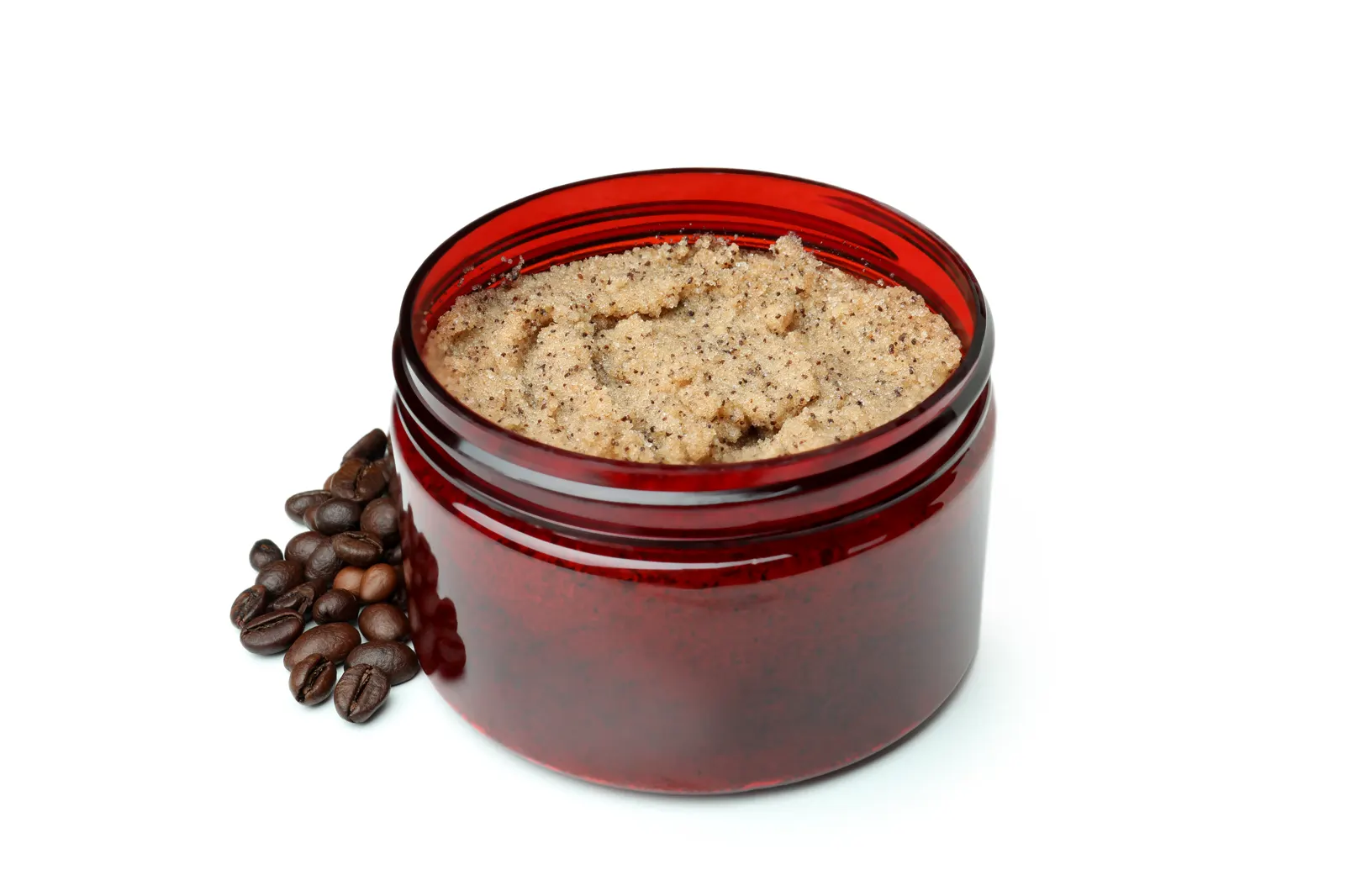
| Coffee body scrub | 1 part finely ground coffee to 1–2 parts oil (e.g. coconut or sweet almond), once or twice a week on the body | Massage gently on damp skin, then rinse. Too harsh for the face. Scoop out with a clean, dry spoon; if water gets in, use it up that day. Wipe off excess grounds into the bin before rinsing, and use a drain strainer. |
Recipes with Coffee
Use it safely
- Hygiene for used grounds: spent coffee grounds are wet and nutrient-rich — they are literally used to grow mushrooms — and grow mold within days. Use them fresh the same day, or spread them thin and dry them completely (a low oven works) before storing in an airtight jar. Discard any batch that smells musty or shows fuzz.
- Drains and showers: coffee grounds do not dissolve and combine with oils to block pipes; oily scrubs also make shower floors slippery and can stain pale grout and towels.
- Do not scrub over broken skin, active acne, sunburn, eczema or freshly shaved areas. Gritty grounds can cause micro-abrasions if used vigorously.
- Topical caffeine is very well tolerated; coffee allergy is rare. Patch test new products (How to Patch Test).
Pregnancy and breastfeeding: Topical caffeine and coffee scrubs are considered safe in pregnancy and breastfeeding; skin absorption is small relative to a cup of coffee. Be careful of slippery shower floors.
New to an ingredient? Patch test first.
When to see a doctor
- Sudden, patchy hair loss with smooth bald circles (possible alopecia areata).
- Hair loss with scalp itching, burning, pain, redness, scale or pustules, or a receding hairline with loss of eyebrows — possible scarring alopecia, which needs prompt specialist care.
- A child with scaly patches, broken hairs or black dots on the scalp (possible fungal infection).
- Rapid or heavy diffuse shedding lasting more than six months, or shedding with fatigue, weight change, heavy periods, feeling cold or palpitations.
- Hair loss with acne, excess body hair or irregular periods (possible androgen excess).
- Hair loss after starting a new medication — do not stop prescribed medicines without advice.
Other plants for Thinning Hair & Hair Loss
| Ingredient | Grade | What the evidence shows |
|---|---|---|
| Rosemary | C | One randomized comparative trial in androgenetic alopecia found rosemary oil gave similar hair-count gains to 2% minoxidil after six months, with less scalp itch; it was small, not placebo-controlled and has not been replicated. |
| Pumpkin Seed Oil | C | A placebo-controlled trial of an oral supplement containing pumpkin seed oil increased hair counts in men; it was a multi-ingredient product, and topical data are minimal. |
| Fenugreek | C | A small placebo-controlled trial of an oral fenugreek seed extract reported improved hair growth and thickness; topical use is traditional. |
| Peppermint | D | A mouse study showed hair growth with diluted peppermint oil; there are no meaningful human trials, and it can irritate the scalp. |
| Green Tea | D | EGCG inhibits 5-alpha-reductase and supports follicle cells in the lab; human evidence is lacking. |
| Stinging Nettle | D | Nettle root affects androgen pathways in prostate research, but there are no good hair-loss trials. |
| Castor Oil | D | A popular remedy with no published evidence of hair growth; it can coat hair and, rarely, cause severe matting. |