Head to head
Shea butter versus Cocoa butter
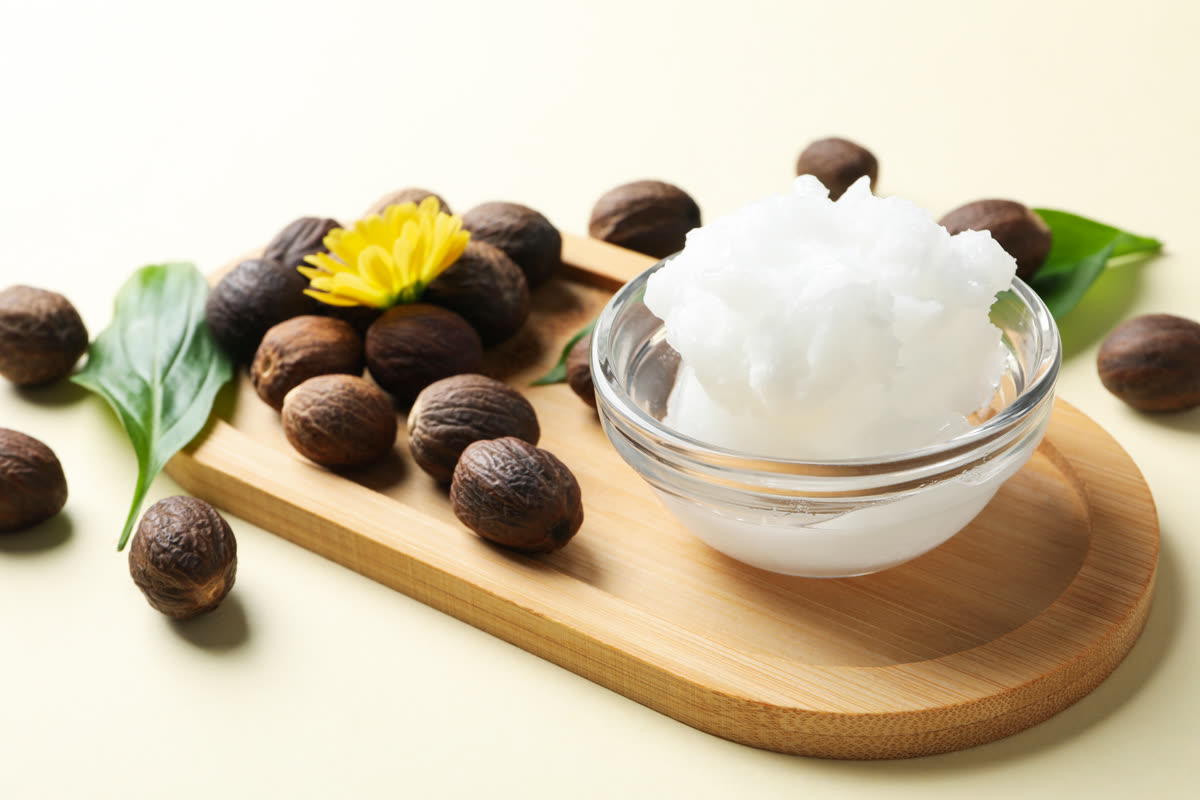 vs
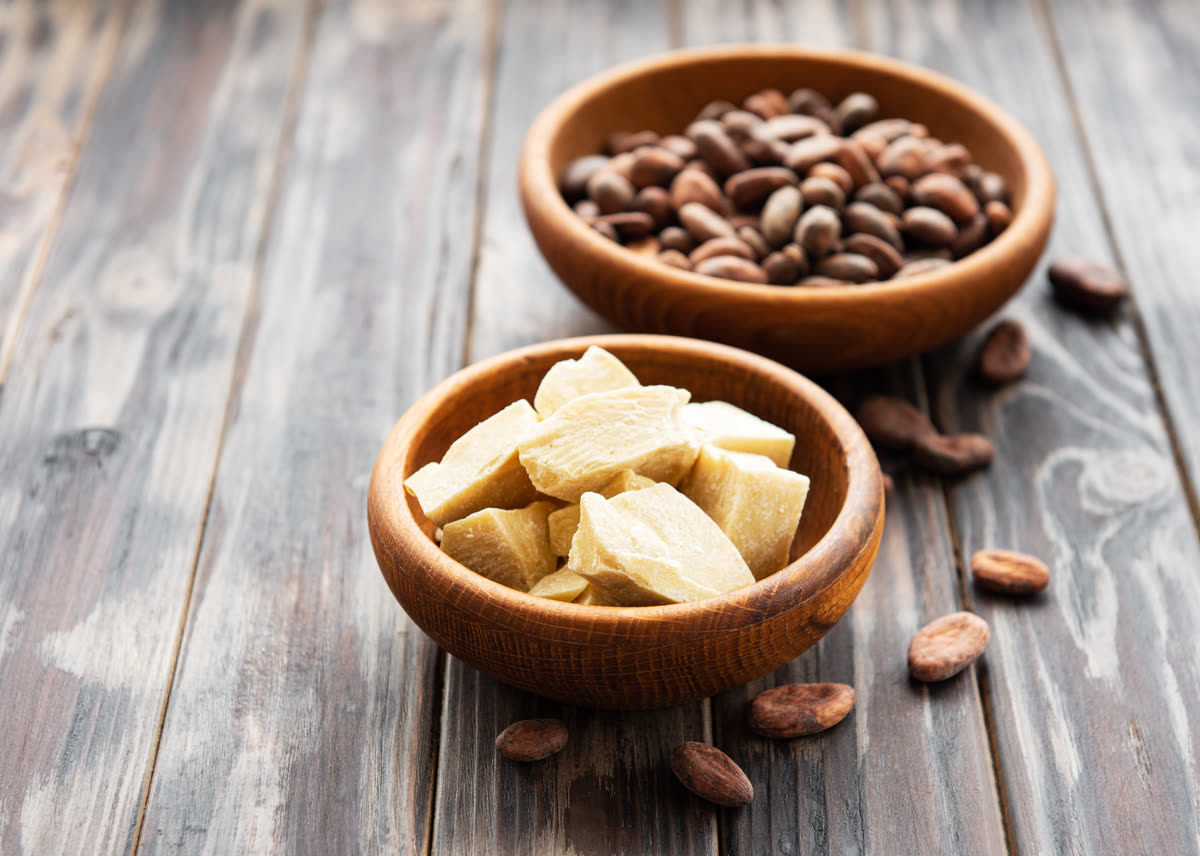
The verdict
Choose shea for soft, spreadable body butters and dry, rough skin; choose cocoa butter when you want firmness, a glossy melt and a chocolate scent in balms and bars. Both are good occlusive emollients, neither prevents stretch marks, and on acne-prone faces both are best kept to a minimum.
| Attribute | Shea butter | Cocoa butter |
|---|---|---|
| Evidence grade | C — well-understood emollient effects; few trials of shea alone | C for emollience; controlled trials show no benefit for preventing stretch marks |
| Source | Nuts of Vitellaria paradoxa, wild-harvested across the Sahel | Fat from fermented, roasted cacao beans (Theobroma cacao) |
| Key chemistry | Stearic and oleic acids; unusually high unsaponifiables (triterpene esters, tocopherols) | Roughly equal palmitic, stearic and oleic acids; polymorphic crystals |
| Texture and melt | Soft and spreadable; melts on contact with skin; can turn grainy if heated and cooled slowly | Hard and brittle at room temperature; melts just below body temperature with a glossy slip |
| Scent | Unrefined: smoky, nutty. Refined: nearly odorless | Unrefined: chocolate. Deodorized: faint |
| Best for | Body butters, rough elbows, heels and hands, dry hair ends | Lip balms, lotion bars, massage bars and firm balms |
| Breakouts | Lower risk than cocoa butter, but heavy on oily faces | Rated fairly comedogenic in older tests; avoid on acne-prone faces |
| Allergy | Reactions to refined shea are rarely reported, even in nut-allergic people; patch test | Rare; occasional contact allergy reported |
| Pregnancy | No concerns for topical use | No concerns for topical use; will not prevent stretch marks |
Choose Shea butter if
Choose shea butter if you want a soft, easy-to-spread butter for dry body skin, hands, heels or coily hair, or a richer night balm for dry facial skin, and you prefer little or no scent (refined).
Choose Cocoa butter if
Choose cocoa butter if you are making lip balms, lotion bars or firm balms that need structure and a glossy melt, or you simply love the chocolate scent, and you keep it off acne-prone areas.
Why one is soft and the other snaps
Both butters are triglycerides, solid at room temperature because they contain a lot of saturated stearic acid. Shea is softer because it also has plenty of liquid oleic acid and a large fraction of non-fat “unsaponifiable” compounds, including triterpene esters that may contribute to its soothing reputation.
Cocoa butter’s fatty acids are arranged in a very uniform way, which is why it forms stable crystals, feels hard and snappy like a chocolate bar, and then melts sharply at around skin temperature. Chocolatiers temper it to get the right crystal form; formulators sometimes do the same for balms, so they stay smooth.
That uniformity also explains shea’s one annoying habit: it can go grainy if melted and allowed to cool slowly, as different fats crystallize at different times. Heat gently and cool quickly (a fridge or ice bath) to prevent it.
The stretch-mark question
Cocoa butter is the traditional stretch-mark cream, so it is worth being clear: two randomized, placebo-controlled trials in pregnant women found that cocoa butter cream did not prevent stretch marks compared with a cream without it. Stretch marks are driven largely by genetics, hormones and how fast skin stretches. Massaging any rich moisturizer onto the belly can relieve itch and dryness, which is a perfectly good reason to do it, but no butter will reliably prevent them. See Skincare in Pregnancy & Breastfeeding.
Using them in practice
- Body: shea is the easier everyday choice. Warm a small amount between the palms and press onto damp skin after a shower. See Whipped Shea Body Butter.
- Lips: both work well; cocoa gives structure and gloss, shea gives cushion. Our Shea & Calendula Lip Balm uses shea; adding a little cocoa butter firms it.
- Face: keep both light if you are oily or acne-prone. Dry and mature skin can enjoy a thin layer of shea at night.
- Hair: a pea-sized amount of shea smooths dry, coily ends; cocoa butter is too hard for most hair use.
Both are stable, slow-to-oxidize fats; kept cool and dry, they last around two years.
Sourcing with care
Shea is gathered and processed largely by women in rural West Africa, often called “women’s gold” because it is a vital income source; buying shea from fair-trade or women’s cooperatives returns more value to them. Cocoa farming has a well-documented history of child labor in parts of West Africa; look for independently certified or traceable cocoa butter. See Sustainable & Ethical Botanical Sourcing.
Other plant butters sit between the two. Mango butter, for example, is softer than cocoa butter and less prone to graininess than shea, with very little scent. When building a balm, it helps to think of shea as the comfort, cocoa butter as the structure and a liquid oil as the slip, then adjust the ratio until the texture suits your climate. Warm kitchens and bathrooms call for more cocoa butter, or a little wax, to keep a balm firm; cold ones call for more liquid oil so it does not set rock-hard. Write down every ratio you try, so that a batch you love can be repeated exactly.
Grades, refining and buying
Both butters come in unrefined and refined grades, and the choice is mostly about scent and color rather than effectiveness.
- Unrefined shea is ivory to pale yellow with a smoky, nutty smell that some love and others find strong. It keeps more of the unsaponifiable fraction. Bright yellow shea has usually been tinted with a plant root, a West African practice, rather than being a different butter.
- Refined shea is white and nearly odorless, easier to scent and to use on the face. It is fine for most purposes.
- Natural (unrefined) cocoa butter is pale yellow and smells distinctly of chocolate; deodorized cocoa butter has a faint scent and suits products you plan to fragrance.
Red flags include a rancid, sour or cheesy smell, gray or green discoloration, and visible debris. Store both away from heat; cocoa butter can develop a harmless white “bloom” on the surface when temperatures fluctuate, just like chocolate.
Both butters are heavy on their own for warm weather or oily skin. Blending them with a liquid oil such as sunflower oil or jojoba gives a softer, faster-absorbing product, and whipping shea with a liquid oil as it cools gives a light, mousse-like texture. Our Carrier Oils: The Formulator’s Guide helps you choose the liquid oil, and Dry & Dehydrated Skin covers routines for dry skin.
Using them together
Yes, and they complement each other. A balm that is mostly shea with 20–30% cocoa butter is firmer, less grainy and melts beautifully. Melt gently, add any liquid oils, then cool quickly. Patch test before using a new butter widely (How to Patch Test).