The ingredient encyclopedia · butter
Mango Butter
Mangifera indica L. · Anacardiaceae
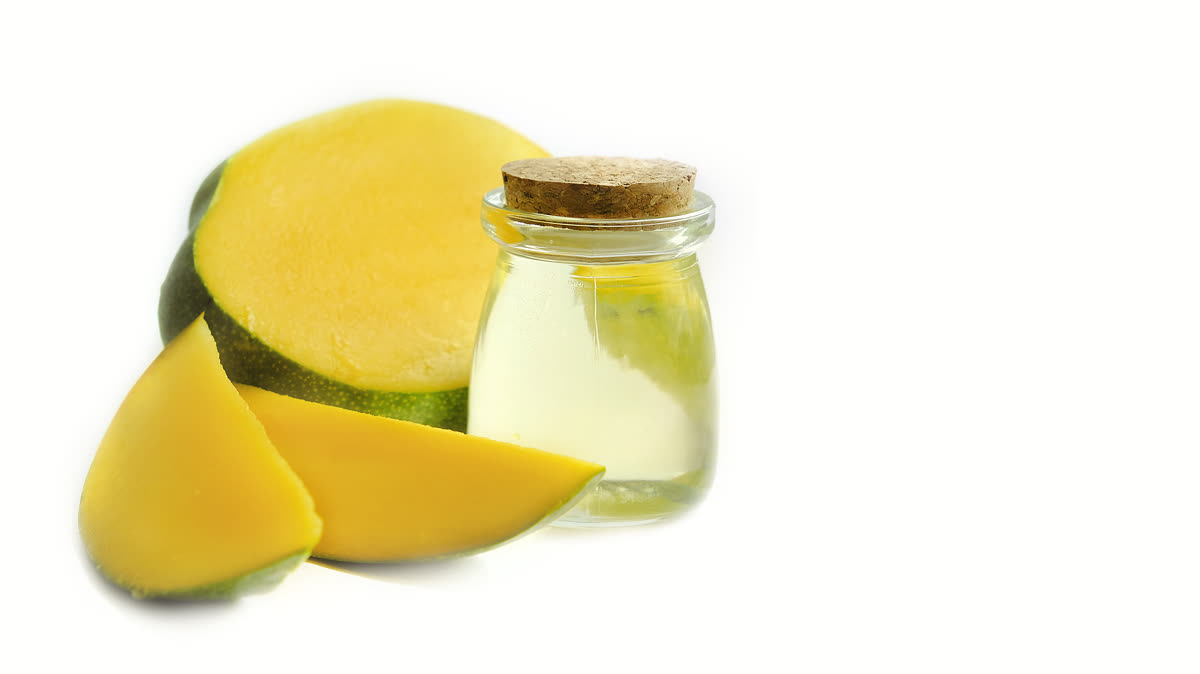
A soft, nearly scentless butter rescued from the mango stone, lighter and less greasy than shea.
FR Beurre de mangueES Manteca de mangoAR زبدة نواة المانجوAam (Hindi); āmra (Sanskrit)
- How well proven
- DTraditional wisdom
- Safety
- Low topical risk
- Sun-sensitive
- No
FR Beurre de mangueES Manteca de mangoAR زبدة نواة المانجوAam (Hindi); āmra (Sanskrit)
What the evidence says
No published human trials of mango butter alone; its emollient effects are inferred from its fatty-acid composition and its similarity to well-studied butters.
- What it does
- Smooth, non-greasy emollience. A soft butter that softens and protects dry skin with a lighter, less greasy finish than shea or cocoa butter.
- How to use it
- Whipped body butter · 20–60% of the formula
- Watch out for
- Mango is in the poison ivy family.
Checked against the available literature and our safety review · Updated 26 November 2026 · How we grade
Why you’ll love Mango Butter
Why you’ll love it
- Softens dry skin with a light, less greasy finish
- Almost scentless, perfect for fragrance-free body butters
- Seals moisture into the ends of curly and coily hair
Best forDry body skin and lips, fragrance-free routines, curly and coily hair.
Try it today
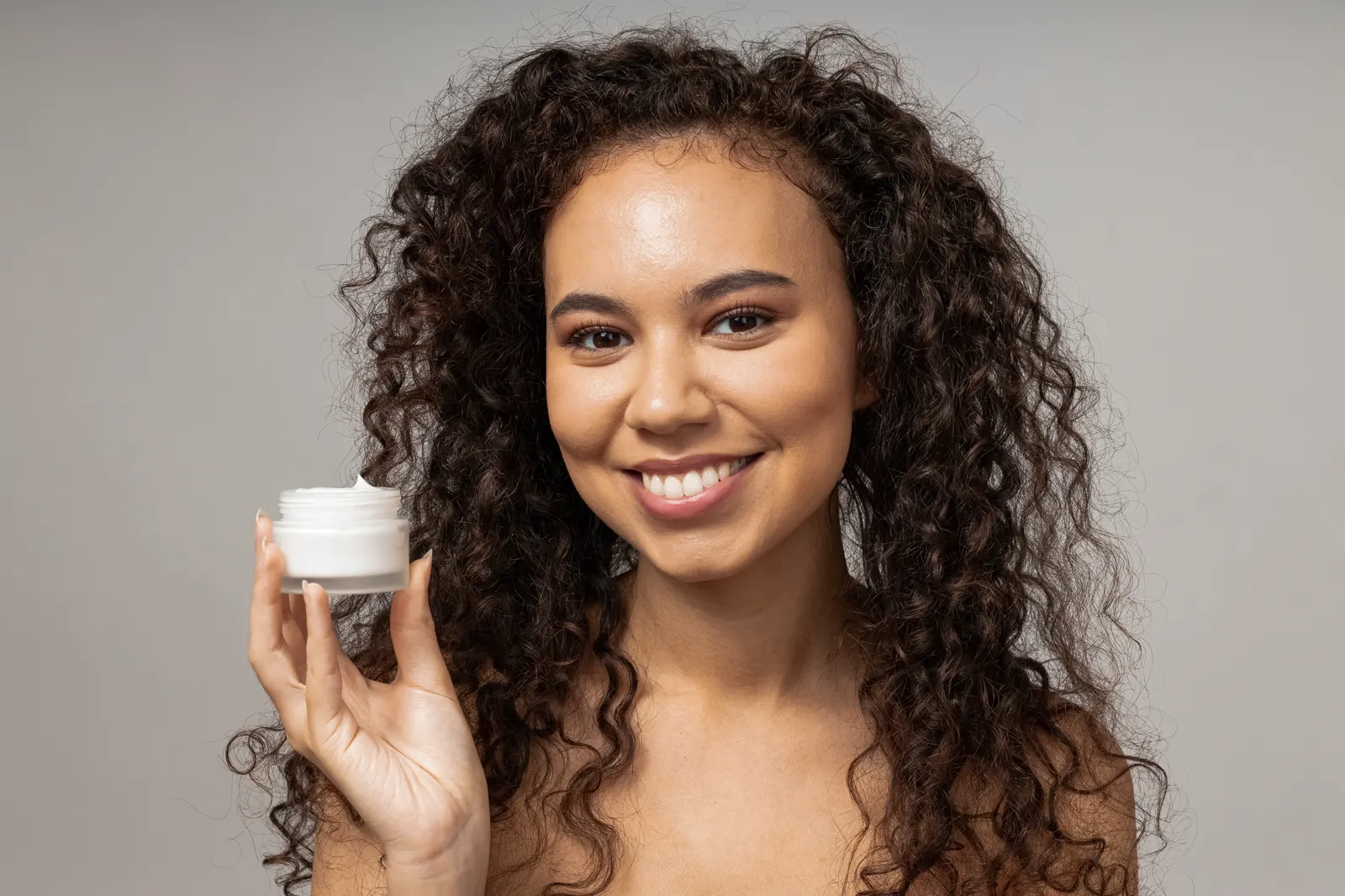
A silky curl seal
- Apply your usual leave-in conditioner to damp hair.
- Warm a pea-sized amount of mango butter in your palms until it softens.
- Smooth it over the ends only, keeping it away from fine hair and an oily scalp.
Good to know: Mango is in the poison ivy family. If mango skin, poison ivy or cashew shells have made you react, patch test first: twice daily for 7 days, read at 48 and 96 hours.
At a glance
| Parts used | Fat from the kernel inside the mango stone, usually solvent-extracted and refined; a by-product of fruit processing |
|---|---|
| Key actives | Stearic acid, Oleic acid, Palmitic acid, Symmetrical triglycerides (SOS, POS), Tocopherols, Phytosterols |
| INCI names | Mangifera Indica Seed Butter |
| Skin types | dry, normal, mature |
| Hair & scalp | curly, thick |
| Pairs well with | Shea ButterCocoa ButterCoconut OilSweet Almond Oil |
| Evidence grade | DTraditional wisdom No published human trials of mango butter alone; its emollient effects are inferred from its fatty-acid composition and its similarity to well-studied butters. |
What it does for skin and hair
Smooth, non-greasy emollience
A soft butter that softens and protects dry skin with a lighter, less greasy finish than shea or cocoa butter.
Low odor for fragrance-free products
Refined mango butter is almost scentless and pale, ideal for fragrance-free body butters and lip balms.
Good stability
Mostly stearic and oleic acid with little polyunsaturated fat, it resists rancidity and keeps well.
Softness for textured hair
A small amount on damp ends seals in moisture for curly and coily dry hair.
How to use it
Start low, be consistent, and give it four to eight weeks. These are the amounts that work in real products and home recipes.
| Form | Typical use level | Notes |
|---|---|---|
| Whipped body butter | 20–60% of the formula | Swap part or all of the shea in Whipped Shea Body Butter for a lighter, less greasy result. |
| Lip balm | 15–30% of the balm | Softer than cocoa butter; increase wax slightly for firmness in warm climates. |
| Creams and lotions | 3–10% of the formula (oil phase) | Adds body and a silky after-feel. Balance phases with the Formula & Cost Calculator. |
| Hair | A pea-sized amount warmed in the palms | Apply to damp ends after a leave-in conditioner; avoid on fine hair or an oily scalp. |
Use it safely
Low topical risk
- Mango is in the poison ivy family. If you have had reactions to mango skin, poison ivy, poison oak or cashew shells, patch test before use, as in our guide (twice daily for 7 days, read at 48 and 96 hours).
- Most commercial mango butter is solvent-extracted and refined; reputable suppliers test for residual solvent.
- Heavy use on the face can contribute to breakouts in acne-prone skin.
- Food allergy to mango fruit does not necessarily mean a reaction to refined butter, but ask your allergist if you have had severe reactions.
- Pregnancy & breastfeeding
- No specific concerns for topical use in pregnancy or breastfeeding. Like other butters, it will not prevent stretch marks. Pregnancy guide
- Phototoxicity
- Not phototoxic at normal use levels.
- Declared fragrance allergens
- None expected
New to an ingredient? Patch test first. Stop and seek advice if you get burning, swelling, blistering or a spreading rash.
Make it at home: recipes with mango butter
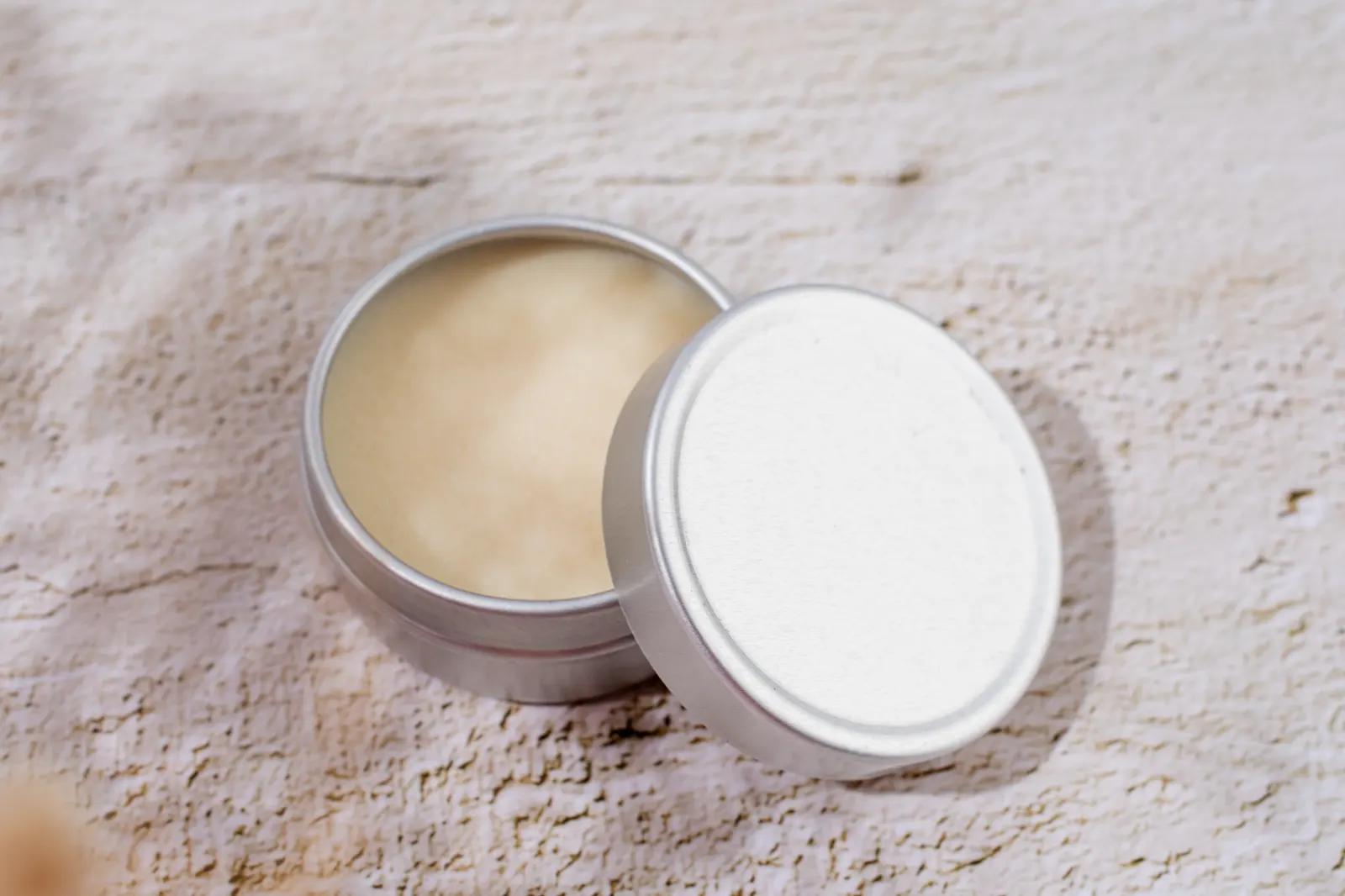 Balm · BeginnerGentle Balm for Dry PatchesAn unscented, fuss-free balm of sunflower oil, mango butter, jojoba and a little colloidal oatmeal for rough, tight patches on elbows, hands and shins.
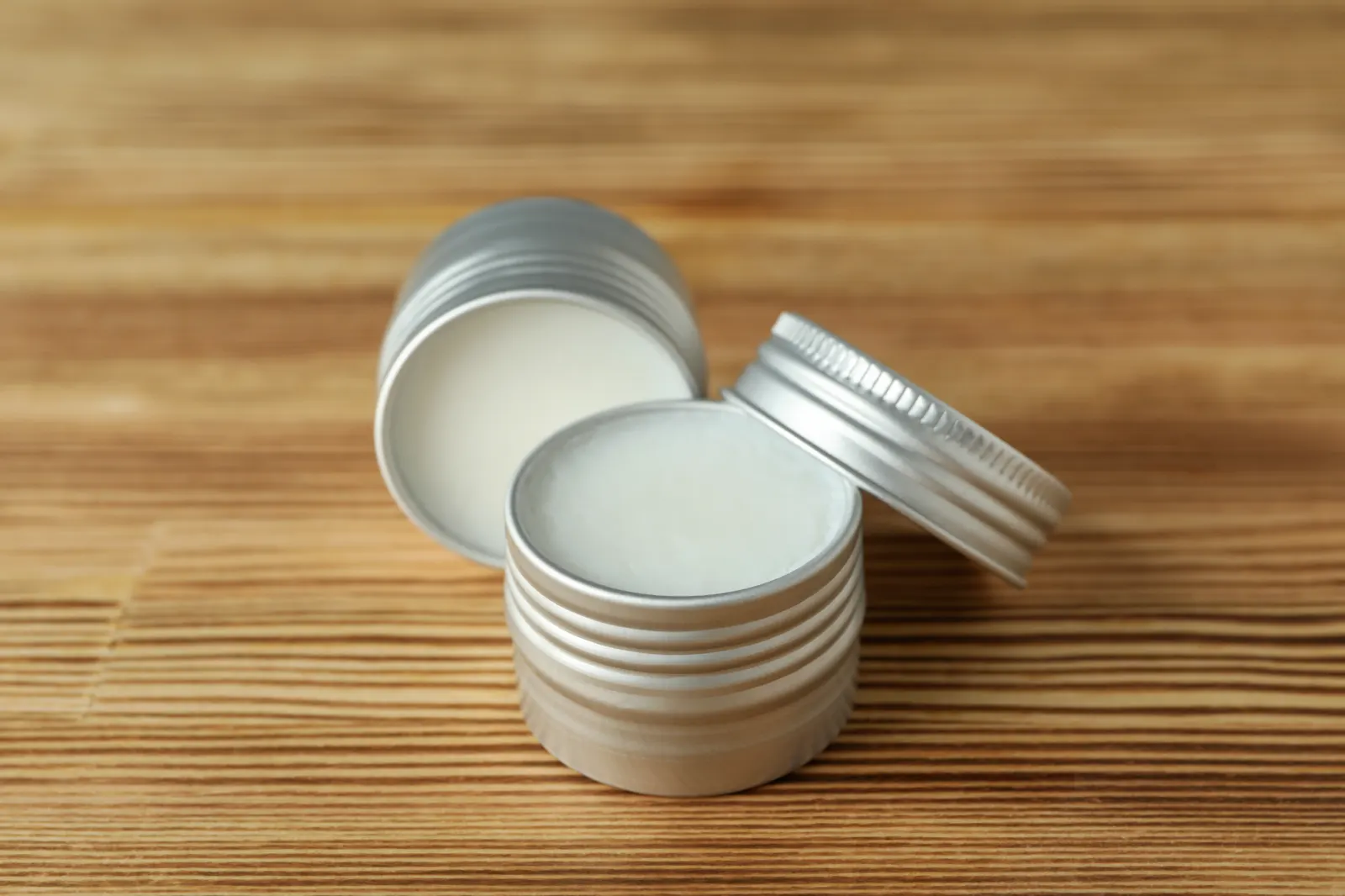 Balm · BeginnerTravel-Size Multi-BalmOne small, plant-based, unscented tin for lips, cuticles, brows, dry knuckles and flyaways, made with mango butter, jojoba, castor oil and candelilla.
Buying well
Sustainability
Mango butter is made from kernels discarded by the pulp and juice industry, mainly in India, the world’s largest mango producer, so it turns a waste stream into a useful ingredient. Most is solvent-extracted and refined; mechanically pressed or organic grades exist but are rarer and cost more. Ask suppliers about traceability and extraction. See Sustainable & Ethical Botanical Sourcing.
How to choose quality
Check the INCI: pure mango butter is Mangifera Indica Seed Butter. Some cheap “mango butters” are blends of hydrogenated vegetable oils with a little mango extract or fragrance — a red flag. Refined butter is white to pale yellow and nearly odorless; unrefined is more yellow with a faint smell. Store cool and dark; it keeps one to two years. Graininess is a crystallization issue, solved by melting and cooling quickly.
The research For professionals
The chemistry, the studies and the evidence by concern, for practitioners, formulators and the curious.
Mango kernel fat typically contains about 35–45% stearic acid and 40–50% oleic acid, with smaller amounts of palmitic (roughly 5–10%), linoleic (roughly 3–7%) and arachidic acid. Like cocoa butter, much of it is arranged in symmetrical triglycerides (SOS and POS), giving a fat that is solid at room temperature but softer and lower-melting than cocoa butter, melting in the low-to-mid 30s °C. Mango kernel fat is one of the six vegetable fats the EU allows as a cocoa butter equivalent in chocolate — a sign of how closely its fat structure resembles cocoa butter.
On skin it behaves as an occlusive emollient, reducing water loss and softening rough skin; with low polyunsaturated content and tocopherols, it is oxidatively stable. The unsaponifiable fraction is small after refining. Mangiferin, the much-studied mango antioxidant, is found mainly in leaves, bark and peel, not in significant amounts in the refined kernel butter.
Mango is in the Anacardiaceae, the family of poison ivy, poison oak and cashew. Mango peel and sap contain alkylresorcinols structurally related to urushiol, and people sensitized to poison ivy or poison oak can develop “mango dermatitis” — typically around the mouth or on the hands — after handling the fruit’s skin. Refined kernel butter is unlikely to carry meaningful amounts of these compounds and reactions to it appear rare, but cross-reactivity cannot be ruled out. There are no controlled human studies of mango butter alone.
MythMango butter is full of mangiferin and vitamins from the fruit.
EvidenceThe butter comes from the kernel, not the juicy flesh. Vitamin C and most fruit antioxidants are water-soluble or concentrated in the peel and leaves and are not present in meaningful amounts in refined butter. Its value is its fatty acids.
In tradition
In India the mango is a revered tree in Hindu and Buddhist tradition, its leaves strung over doorways for festivals. Mango kernels have long been dried and ground into flour in lean times, and the kernel fat is used locally.
Frequently asked questions
Mango butter vs shea butter: which is better?
Can I use mango butter if I am allergic to mangoes?
Is mango butter comedogenic?
Does mango butter help stretch marks?
Cite this page
Herbs.Beauty. Mango Butter (Mangifera indica L.): evidence-based monograph. Updated 26 November 2026. https://herbs.beauty/ingredients/mango-butter.html