Does it work?
Comfrey for Scars, Wounds & Stretch Marks
Nicknamed knitbone, comfrey is a time-honored comfort for bruises and strains, used the safe, modern way.
The short answer: Several placebo- and active-controlled RCTs support licensed PA-reduced comfrey root ointments for sprains and back pain, and one trial supports a herb cream for abrasions; cosmetic data are thin.
Our Scars, Wounds & Stretch Marks guide does not rank Comfrey for this use yet, so this is the overall grade for Comfrey.
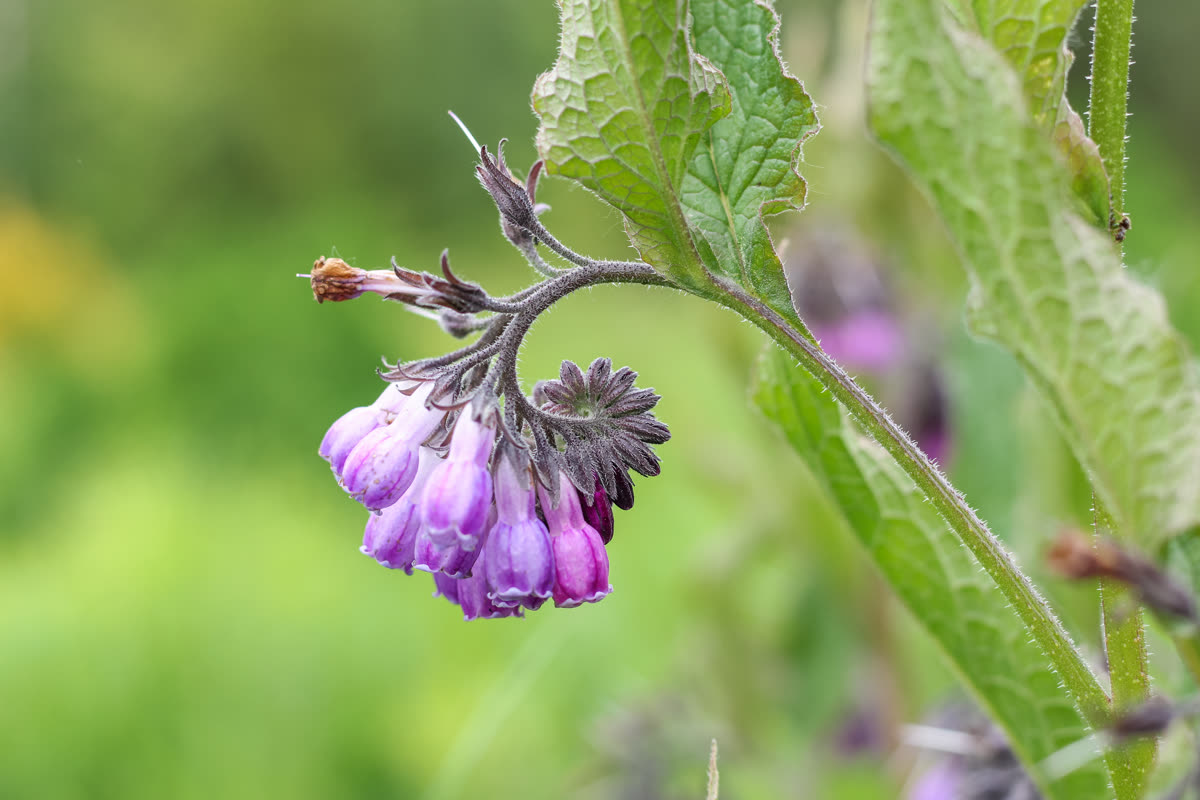
What Comfrey can do for Scars, Wounds & Stretch Marks
Comfrey is the old “knitbone” of European herbalism, rich in soothing allantoin, rosmarinic acid and mucilage. Licensed root ointments have performed well in randomized trials for sprains, bruises and back pain. But the plant also contains pyrrolizidine alkaloids (PAs) that damage the liver, so comfrey must never be taken by mouth, and topical use should be short-term, on unbroken skin, with PA-free or PA-reduced extracts.
Why people reach for it
- Soothes bruises and strains. Licensed comfrey root ointments reduced pain and swelling in ankle sprains in placebo-controlled trials, and performed comparably to a diclofenac gel in one trial.
- Supports healing of minor abrasions. In a double-blind trial, a PA-free comfrey herb cream sped the healing of fresh abrasions compared with a low-strength reference cream. See Scars, Wounds & Stretch Marks.
- Soft, conditioned skin. Allantoin (the active comfrey made famous) and mucilage help soften rough, dry skin; cosmetic allantoin today is usually synthetic and identical.
- Antioxidant and calming. Rosmarinic acid contributes anti-inflammatory and antioxidant activity in lab studies.
How to use it
Try it today
A smart bruise-care routine
- Choose a licensed comfrey root ointment rather than anything homemade.
- Apply it to the bruise, on unbroken skin only, exactly as the label directs.
- Keep the course short, and see a doctor for severe swelling or if you can’t bear weight.
| Form | Typical use | Notes |
|---|---|---|
| Licensed comfrey root ointment | As labeled (usually 2–4 times daily, short courses) | The evidence-based way to use comfrey for bruises and sprains. Follow the product’s maximum duration (often a few weeks). |
| PA-free comfrey extract in creams | 1–5% (or per supplier) | Buy only extracts certified PA-free or below the supplier’s stated PA limit, with a certificate of analysis. |
| Allantoin instead of comfrey | 0.1–0.5% in creams and balms | For DIY soothing products, cosmetic allantoin gives comfrey’s main skin benefit without any alkaloid risk. |
Use it safely
- Never take comfrey internally (teas, tinctures, capsules, “green juice”): pyrrolizidine alkaloids can cause serious, sometimes fatal, liver damage.
- Topical use on intact skin only. Do not apply home-made comfrey preparations to open wounds, cuts or broken skin, where alkaloid absorption is higher; use only products specifically made PA-free for that purpose.
- Keep courses short. Germany’s Commission E historically limited external use to small daily PA exposures for no more than 4–6 weeks a year; modern PA-free extracts avoid the issue.
- Home-grown comfrey (especially roots and Russian comfrey) contains unknown PA levels; do not make leave-on products from it.
- Rare contact allergy. See a doctor for sprains with severe swelling, inability to bear weight or suspected fracture.
Pregnancy and breastfeeding: Avoid during pregnancy and breastfeeding (PAs are toxic to the developing liver), and do not use on young children unless a product is licensed for their age.
New to an ingredient? Patch test first.
When to see a doctor
- Signs of infection: spreading redness or warmth, red streaks, increasing pain or swelling, pus, a bad smell, or fever.
- Deep, gaping or long cuts, wounds on the face, hands or joints, or bleeding that does not stop with 10 minutes of firm pressure — stitches work best within hours.
- Animal or human bites, puncture wounds, dirty wounds, or if your tetanus vaccination is not up to date.
- Burns larger than your palm, or any burn on the face, hands, feet, genitals or over joints, or with white, leathery or charred skin.
- Wounds not healing within two weeks, especially if you have diabetes, poor circulation or a weakened immune system.
- A scar that keeps growing beyond its edges, is painful or itchy (possible keloid), or an old scar that ulcerates, bleeds or changes.
- New, wide purple stretch marks together with weight gain, a rounded face, easy bruising or muscle weakness.
Other plants for Scars, Wounds & Stretch Marks
| Ingredient | Grade | What the evidence shows |
|---|---|---|
| Honey | B | Systematic reviews suggest sterile, medical-grade honey dressings heal partial-thickness burns faster than some conventional dressings, though trial quality varies; kitchen honey is not for open wounds. |
| Aloe Vera | B | Several trials and a systematic review suggest aloe preparations may shorten healing time of superficial burns; evidence for surgical wounds is inconclusive. |
| Centella Asiatica (Cica) | B | Asiaticoside and madecassoside promote collagen organization; small trials (mostly of combination creams) support use for stretch-mark prevention and scar appearance. |
| Calendula | C | Small trials suggest benefit for skin reactions to radiotherapy and minor wounds; daisy-family allergy is possible. |
| Rosehip Oil | C | A small controlled study suggested rosehip oil improved the color and appearance of post-surgical scars after the wound had closed. |
| Helichrysum (Immortelle) | D | Popular in aromatherapy for scars, but evidence is anecdotal or from lab studies; as an essential oil it must be diluted and never used on open wounds. |
| Olive Oil | D | Trials of massaging plain oils, including olive oil, in pregnancy have not shown clear prevention of stretch marks; massage itself is harmless and pleasant. |