Does it work?
Comfrey for Sensitive Skin & Redness
What the research says about comfrey for sensitive skin & redness, how to use it at home and how to stay safe.
The short answer: Several placebo- and active-controlled RCTs support licensed PA-reduced comfrey root ointments for sprains and back pain, and one trial supports a herb cream for abrasions; cosmetic data are thin.
Our Sensitive Skin & Redness guide does not rank Comfrey for this use yet, so this is the overall grade for Comfrey.
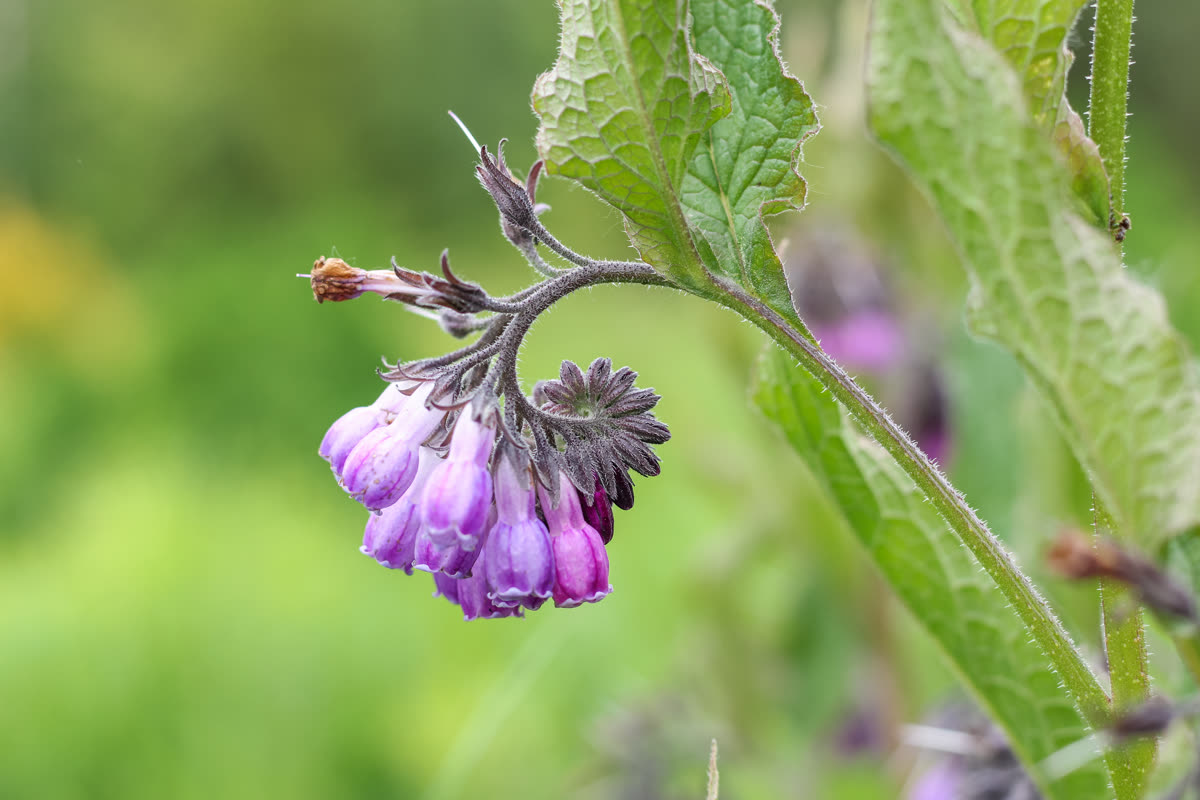
What it does
Comfrey is the old “knitbone” of European herbalism, rich in soothing allantoin, rosmarinic acid and mucilage. Licensed root ointments have performed well in randomized trials for sprains, bruises and back pain. But the plant also contains pyrrolizidine alkaloids (PAs) that damage the liver, so comfrey must never be taken by mouth, and topical use should be short-term, on unbroken skin, with PA-free or PA-reduced extracts.
Why people reach for it
- Soothes bruises and strains. Licensed comfrey root ointments reduced pain and swelling in ankle sprains in placebo-controlled trials, and performed comparably to a diclofenac gel in one trial.
- Supports healing of minor abrasions. In a double-blind trial, a PA-free comfrey herb cream sped the healing of fresh abrasions compared with a low-strength reference cream. See Scars, Wounds & Stretch Marks.
- Soft, conditioned skin. Allantoin (the active comfrey made famous) and mucilage help soften rough, dry skin; cosmetic allantoin today is usually synthetic and identical.
- Antioxidant and calming. Rosmarinic acid contributes anti-inflammatory and antioxidant activity in lab studies.
How to use it
| Form | Typical use | Notes |
|---|---|---|
| Licensed comfrey root ointment | As labeled (usually 2–4 times daily, short courses) | The evidence-based way to use comfrey for bruises and sprains. Follow the product’s maximum duration (often a few weeks). |
| PA-free comfrey extract in creams | 1–5% (or per supplier) | Buy only extracts certified PA-free or below the supplier’s stated PA limit, with a certificate of analysis. |
| Allantoin instead of comfrey | 0.1–0.5% in creams and balms | For DIY soothing products, cosmetic allantoin gives comfrey’s main skin benefit without any alkaloid risk. |
Use it safely
- Never take comfrey internally (teas, tinctures, capsules, “green juice”): pyrrolizidine alkaloids can cause serious, sometimes fatal, liver damage.
- Topical use on intact skin only. Do not apply home-made comfrey preparations to open wounds, cuts or broken skin, where alkaloid absorption is higher; use only products specifically made PA-free for that purpose.
- Keep courses short. Germany’s Commission E historically limited external use to small daily PA exposures for no more than 4–6 weeks a year; modern PA-free extracts avoid the issue.
- Home-grown comfrey (especially roots and Russian comfrey) contains unknown PA levels; do not make leave-on products from it.
- Rare contact allergy. See a doctor for sprains with severe swelling, inability to bear weight or suspected fracture.
Pregnancy and breastfeeding: Avoid during pregnancy and breastfeeding (PAs are toxic to the developing liver), and do not use on young children unless a product is licensed for their age.
New to an ingredient? Patch test first.
When to see a doctor
- Swelling of the lips, eyelids, tongue or throat, or difficulty breathing after using a product — this is an emergency.
- Persistent facial redness, visible vessels, flushing or bumps (possible rosacea), or burning, gritty, red eyes with facial redness (ocular rosacea).
- An itchy rash that spreads beyond where a product was applied or appears 1–3 days later (possible allergic contact dermatitis — ask about patch testing).
- A butterfly-shaped rash across the cheeks with joint pain, fatigue or sun sensitivity.
- Redness or stinging that continues despite a stripped-back routine for 4–6 weeks.
Other plants for Sensitive Skin & Redness
| Ingredient | Grade | What the evidence shows |
|---|---|---|
| Colloidal Oatmeal | B | Avenanthramides are anti-inflammatory and anti-itch; clinical studies support oatmeal products for irritated, itchy and reactive skin. |
| Licorice Root | B | Several small, mostly manufacturer-funded trials of licochalcone A products reduced facial redness, including in mild rosacea. |
| Centella Asiatica (Cica) | C | Madecassoside and asiaticoside reduce inflammation and support barrier repair in the lab; small human studies of centella creams show improved redness and comfort. |
| Green Tea | C | EGCG is anti-inflammatory and reduces UV-induced redness; a small trial suggested benefit in papulopustular rosacea. |
| Aloe Vera | C | Soothing and cooling with small supportive studies; choose stabilized gels without alcohol or fragrance, as some products irritate. |
| Chamomile | C | Bisabolol and chamazulene are anti-inflammatory, but chamomile is in the daisy family and can cause allergy in sensitized people. |