The ingredient encyclopedia · root
Comfrey
Symphytum officinale (Also Russian comfrey, Symphytum × uplandicum) · Boraginaceae
Nicknamed knitbone, comfrey is a time-honored comfort for bruises and strains, used the safe, modern way.
FR Grande consoudeES Consuelda mayorAR السنفيتون
- How well proven
- BGood evidence
- Safety
- Use with care
- Sun-sensitive
- No
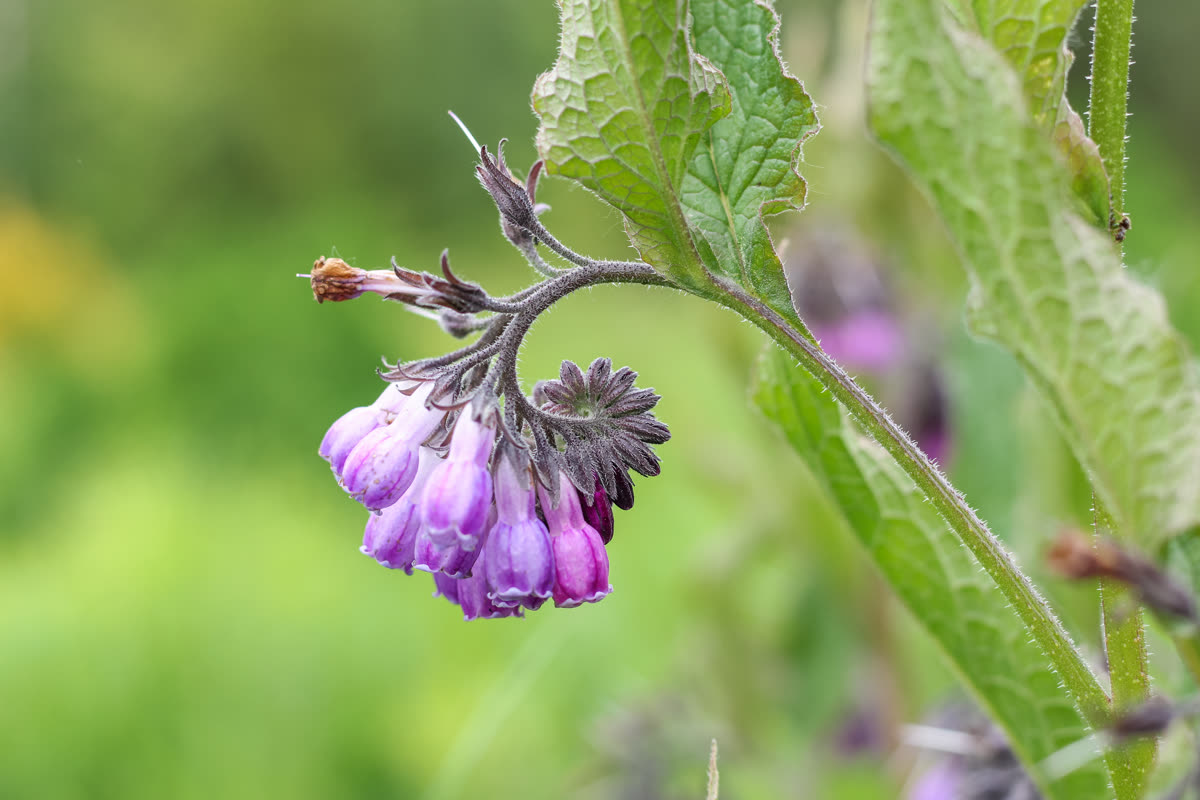
Also known as Symphytum officinale (Also Russian comfrey, Symphytum × uplandicum)
FR Grande consoudeES Consuelda mayorAR السنفيتون
What the evidence says
Several placebo- and active-controlled RCTs support licensed PA-reduced comfrey root ointments for sprains and back pain, and one trial supports a herb cream for abrasions; cosmetic data are thin.
- What it does
- Soothes bruises and strains. Licensed comfrey root ointments reduced pain and swelling in ankle sprains in placebo-controlled trials, and performed comparably to a diclofenac gel in one trial.
- How to use it
- Licensed comfrey root ointment · As labeled (usually 2–4 times daily, short courses)
- Watch out for
- Never take comfrey internally (teas, tinctures, capsules, “green juice”): pyrrolizidine alkaloids can cause serious, sometimes fatal, liver damage.
Checked against 4 cited studies and our safety review · Updated 26 November 2026 · How we grade
Why you’ll love Comfrey
Why you’ll love it
- Licensed ointments soothe bruises and sprains, backed by clinical trials
- Leaves dry skin feeling soft and conditioned
- Allantoin offers its soothing touch without the alkaloid worries
Best forAdults with everyday bruises and strains on unbroken skin.
Try it today
A smart bruise-care routine
- Choose a licensed comfrey root ointment rather than anything homemade.
- Apply it to the bruise, on unbroken skin only, exactly as the label directs.
- Keep the course short, and see a doctor for severe swelling or if you can’t bear weight.
Good to know: Comfrey is for unbroken skin only, never to be taken internally. Skip it in pregnancy, while breastfeeding and on young children.
At a glance
| Parts used | Root; leaf; aerial parts (topical extracts only) |
|---|---|
| Key actives | Allantoin, Rosmarinic acid, Mucilage (fructans), Tannins, Pyrrolizidine alkaloids (toxic, removed in PA-free extracts) |
| INCI names | Symphytum Officinale Leaf Extract Symphytum Officinale Root Extract Allantoin |
| Skin types | dry, normal |
| Pairs well with | CalendulaAloe VeraShea ButterMarshmallow Root |
| Evidence grade | BGood evidence Several placebo- and active-controlled RCTs support licensed PA-reduced comfrey root ointments for sprains and back pain, and one trial supports a herb cream for abrasions; cosmetic data are thin. |
What it does for skin and hair
Soothes bruises and strains
Licensed comfrey root ointments reduced pain and swelling in ankle sprains in placebo-controlled trials, and performed comparably to a diclofenac gel in one trial.
Supports healing of minor abrasions
In a double-blind trial, a PA-free comfrey herb cream sped the healing of fresh abrasions compared with a low-strength reference cream. See Scars, Wounds & Stretch Marks.
Soft, conditioned skin
Allantoin (the active comfrey made famous) and mucilage help soften rough, dry skin; cosmetic allantoin today is usually synthetic and identical.
Antioxidant and calming
Rosmarinic acid contributes anti-inflammatory and antioxidant activity in lab studies.
How to use it
Start low, be consistent, and give it four to eight weeks. These are the amounts that work in real products and home recipes.
| Form | Typical use level | Notes |
|---|---|---|
| Licensed comfrey root ointment | As labeled (usually 2–4 times daily, short courses) | The evidence-based way to use comfrey for bruises and sprains. Follow the product’s maximum duration (often a few weeks). |
| PA-free comfrey extract in creams | 1–5% (or per supplier) | Buy only extracts certified PA-free or below the supplier’s stated PA limit, with a certificate of analysis. |
| Allantoin instead of comfrey | 0.1–0.5% in creams and balms | For DIY soothing products, cosmetic allantoin gives comfrey’s main skin benefit without any alkaloid risk. |
Use it safely
Use with care
- Never take comfrey internally (teas, tinctures, capsules, “green juice”): pyrrolizidine alkaloids can cause serious, sometimes fatal, liver damage.
- Topical use on intact skin only. Do not apply home-made comfrey preparations to open wounds, cuts or broken skin, where alkaloid absorption is higher; use only products specifically made PA-free for that purpose.
- Keep courses short. Germany’s Commission E historically limited external use to small daily PA exposures for no more than 4–6 weeks a year; modern PA-free extracts avoid the issue.
- Home-grown comfrey (especially roots and Russian comfrey) contains unknown PA levels; do not make leave-on products from it.
- Rare contact allergy. See a doctor for sprains with severe swelling, inability to bear weight or suspected fracture.
- Pregnancy & breastfeeding
- Avoid during pregnancy and breastfeeding (PAs are toxic to the developing liver), and do not use on young children unless a product is licensed for their age. Pregnancy guide
- Phototoxicity
- Not phototoxic at normal use levels.
- Declared fragrance allergens
- None expected
New to an ingredient? Patch test first. Stop and seek advice if you get burning, swelling, blistering or a spreading rash.
Buying well
Sustainability
Comfrey is a vigorous, widely cultivated perennial and not threatened. The quality issue is not scarcity but alkaloid content: the same plant varies widely in PAs by part, cultivar and season.
How to choose quality
Choose licensed ointments or cosmetic extracts labeled PA-free or PA-reduced with a certificate of analysis stating the alkaloid limit. Red flags: oral comfrey products, “comfrey oil” of unknown origin sold for wounds, or no information on alkaloids at all.
The research For professionals
The chemistry, the studies and the evidence by concern, for practitioners, formulators and the curious.
Comfrey’s skin-relevant compounds are allantoin (a ureide that promotes keratinocyte turnover and softens the stratum corneum), rosmarinic acid and other caffeic-acid derivatives (anti-inflammatory, antioxidant), mucilaginous fructans (film-forming and soothing) and tannins (mildly astringent). Roots are richer in allantoin and mucilage than leaves.
Clinical evidence comes almost entirely from standardized, PA-reduced root extract ointments. Koll and colleagues (2004) found a comfrey root ointment superior to placebo for pain and swelling in about 140 people with ankle sprains; Predel and colleagues (2005) found it non-inferior to a diclofenac gel; and Giannetti and colleagues (2010) reported benefit for acute back pain. Barna and colleagues (2007) tested a 10% PA-free comfrey herb cream against a 1% version in roughly 280 people with fresh abrasions and found faster healing with the stronger cream. These are medical, not cosmetic, endpoints, and most trials were industry-supported.
The problem is the pyrrolizidine alkaloids (lycopsamine, intermedine, symphytine and, in Russian comfrey, echimidine). After metabolic activation in the liver they cause hepatic veno-occlusive disease and are genotoxic and carcinogenic in animals. Oral comfrey products have been withdrawn or restricted in many countries (the US FDA advised removing them from the market in 2001). Skin absorption of PAs through intact skin is low, which is why short-term topical use of PA-free or tightly limited extracts is accepted, but broken skin increases absorption.
Key studies
Multicenter, randomized, double-blind, placebo-controlled trial in about 140 adults with ankle sprains: comfrey root extract ointment reduced pain and swelling more than placebo.
Koll R, et al. Phytomedicine. 2004 Read it in the bibliography Find on PubMedIn about 160 patients with ankle sprains, comfrey root ointment was at least as effective as a diclofenac gel.
Predel HG, et al. Phytomedicine. 2005 Read it in the bibliography Find on PubMedDouble-blind trial in roughly 280 people with fresh abrasions: a 10% PA-free comfrey herb cream healed wounds faster than a 1% reference cream.
Barna M, et al. Wien Med Wochenschr. 2007 Read it in the bibliography Find on PubMedRandomized, placebo-controlled trial in 120 patients with acute upper or low back pain: comfrey root extract ointment reduced pain more than placebo.
Giannetti BM, et al. Br J Sports Med. 2010 Read it in the bibliography Find on PubMed
MythComfrey is a natural, harmless wound healer you can use on anything.
EvidenceComfrey contains liver-toxic alkaloids. Licensed PA-free products are useful on bruises and minor abrasions; home preparations on open wounds or any oral use are not safe.
In tradition
In European folk medicine, comfrey poultices (“knitbone,” “boneset”) were wrapped around sprains and fractures; the name Symphytum comes from the Greek for “to grow together.”
Frequently asked questions
Is comfrey safe to use on skin?
Can I drink comfrey tea?
Does comfrey help bruises?
What is the difference between comfrey and allantoin?
Cite this page
Herbs.Beauty. Comfrey (Symphytum officinale): evidence-based monograph. Updated 26 November 2026. https://herbs.beauty/ingredients/comfrey.html