Does it work?
Camellia Oil (Tsubaki Oil) for Dry & Dehydrated Skin
What the research says about camellia oil (Tsubaki oil) for dry & dehydrated skin, how to use it at home and how to stay safe.
The short answer: The grade rests on its well-characterized composition and the established behavior of oleic-rich oils as emollients and hair lubricants; clinical studies of camellia oil itself are scarce.
Our Dry & Dehydrated Skin guide does not rank Camellia Oil (Tsubaki Oil) for this use yet, so this is the overall grade for Camellia Oil (Tsubaki Oil).
What it does
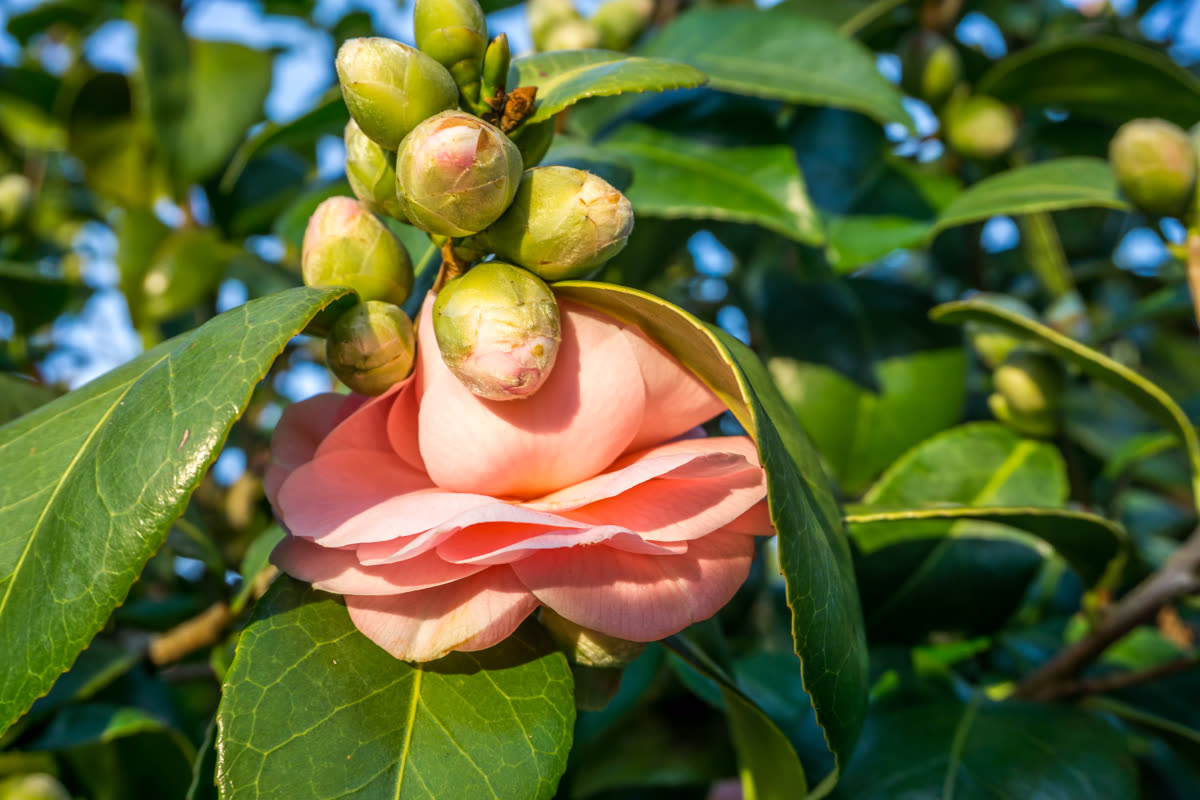
Camellia oil is pressed from the seeds of the camellia shrub — Camellia japonica (tsubaki) in Japan and Korea and Camellia oleifera in China. Roughly three-quarters or more of it is oleic acid, which makes it silky, quick to spread and unusually resistant to going rancid. It is the classic Japanese hair oil and a pleasant emollient for dry skin; evidence for it specifically is limited, but its behavior is predictable from its chemistry.
Why people reach for it
- Smooth, glossy hair with less friction. A few drops coat the hair cuticle, reduce combing friction and frizz, and add shine without the heaviness of thicker oils. That is why tsubaki oil has been the finishing oil of Japanese hair care for centuries — see Dry, Damaged & Frizzy Hair.
- A stable, silky emollient for dry skin. Its high oleic acid and low polyunsaturated fat content make it fluid, fast-absorbing and slow to oxidize. It softens dry and mature skin and makes a good base for facial oils and balms.
- A long-lasting carrier oil. Because it oxidizes slowly, camellia oil keeps well and suits carrier blends and cleansing oils. Compare it with other bases in our Carrier Oils: The Formulator’s Guide.
How to use it
| Form | Typical use | Notes |
|---|---|---|
| Hair finishing oil | 1–3 drops for short or fine hair; up to 5–6 drops for long, thick or curly hair | Warm between the palms and smooth over the mid-lengths and ends of damp or dry hair. Use less than you think — excess looks greasy, especially on fine hair. |
| Pre-wash hair and scalp treatment | 1–2 teaspoons (5–10 mL), 20–60 minutes before shampooing | Massage into lengths (and scalp if dry) before washing. If you are dandruff-prone, keep oils off the scalp: oleic acid can provoke flaking in people sensitive to Malassezia (Dandruff & Itchy Scalp). |
| Face oil or cleansing-oil base | 10–100% of a face oil; 50–80% of a self-emulsifying cleansing oil | Press 2–3 drops onto damp skin after a moisturizer, or blend with a linoleic-rich oil for barrier-compromised skin. In cleansing oils it pairs well with rice bran oil, the other classic Japanese base. |
Daily rituals with Camellia Oil (Tsubaki Oil)
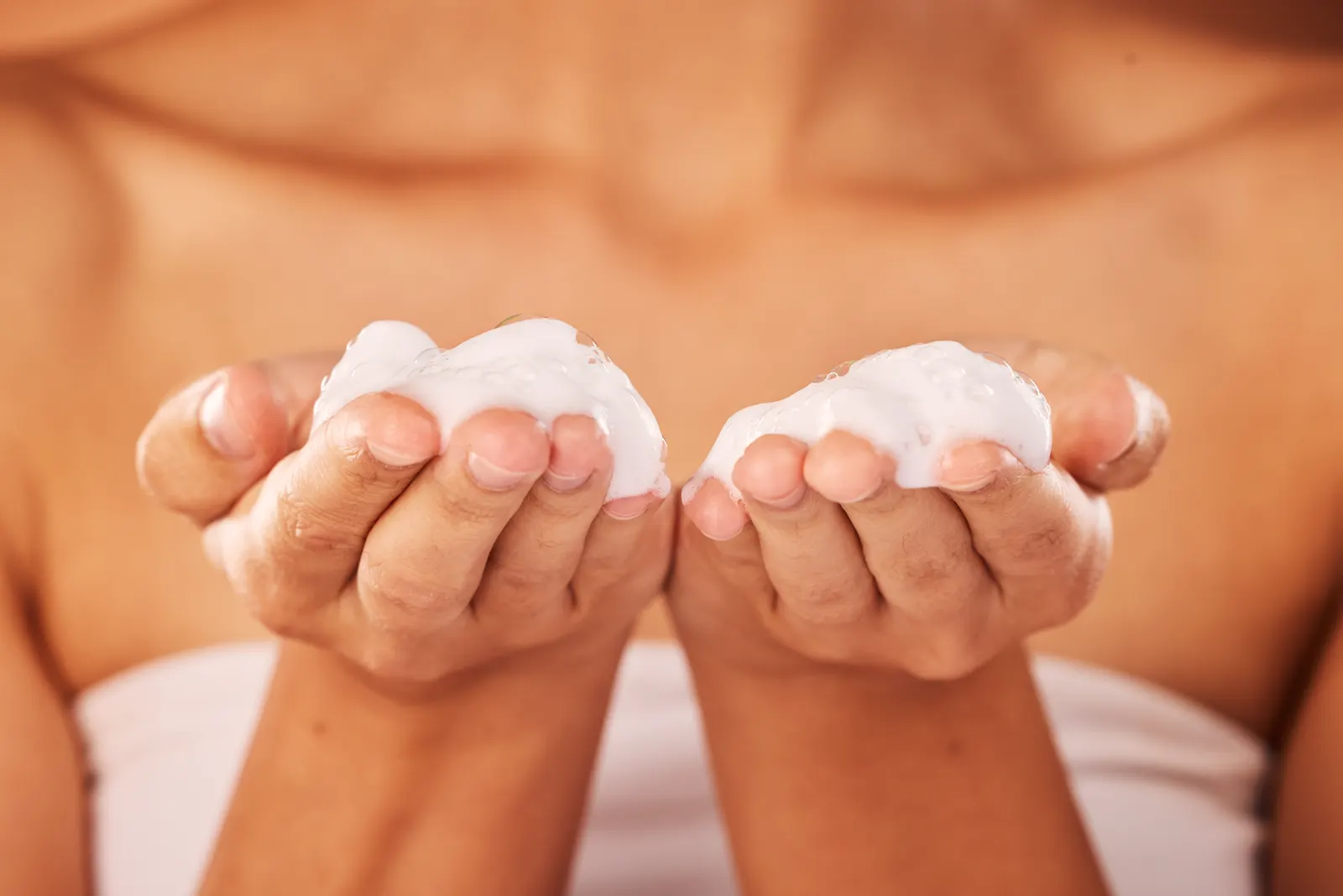 The Japanese Foam Wash: Let the Bubbles Do the WorkWhip a little cleanser into dense, springy foam and wash without rubbing. A Japanese habit that makes everyday cleansing gentler on skin.
 Unclench: A Four-Minute Jaw and Brow Self-MassageClenched jaw, furrowed brow, shoulders at your ears? A slow, hands-only facial self-massage with steady breathing to let the day go before sleep.
Use it safely
- Allergy is rare. Patch test, especially on reactive skin (How to Patch Test).
- High-oleic oils may weaken an already damaged barrier when used heavily; people with atopic or eczema-prone skin may prefer a linoleic-rich oil or a blend.
- As with any oil, heavy use on the scalp can worsen dandruff in susceptible people, and oily products on the face can contribute to breakouts in acne-prone skin.
- Unrefined, food-grade “tea-seed oil” from China is a cooking oil; choose a cosmetic grade with a recent production date for skin and hair.
Pregnancy and breastfeeding: Considered safe to use on skin and hair during pregnancy and breastfeeding.
New to an ingredient? Patch test first.
When to see a doctor
- Dryness with intense itch that disturbs sleep, or red, inflamed patches (possible eczema or another dermatitis).
- Cracked, bleeding or weeping skin, or signs of infection (pain, warmth, yellow crusts, pus).
- Fish-scale-like dryness present since childhood (possible ichthyosis).
- New, persistent dryness with fatigue, weight change, feeling cold or hair thinning (thyroid), or with excessive thirst and urination (diabetes).
- Severe dryness in older adults with widespread itch that does not respond to moisturizers.
Other plants for Dry & Dehydrated Skin
| Ingredient | Grade | What the evidence shows |
|---|---|---|
| Colloidal Oatmeal | B | Multiple clinical studies show colloidal oatmeal creams and baths reduce dryness, scaling and itch; it is an approved skin protectant in the US. |
| Sunflower Oil | B | Linoleic-rich sunflower seed oil preserved stratum corneum integrity and improved hydration in a comparative study with olive oil, and supports barrier function in neonatal studies. |
| Coconut Oil | B | A randomized trial found virgin coconut oil as effective and safe as mineral oil for mild to moderate xerosis of the legs. |
| Shea Butter | C | Rich emollient and mild occlusive with anti-inflammatory triterpene esters; small studies of shea-containing creams support hydration. |
| Squalane | C | A skin-identical, stable, lightweight emollient that reduces roughness; excellent tolerability but limited trial data on its own. |
| Jojoba | C | A liquid wax ester that resembles skin’s own wax esters; small studies support barrier repair and softness. |
| Aloe Vera | C | A humectant gel that improved skin hydration in small studies; on its own it is not enough for very dry skin and needs an emollient on top. |
| Marshmallow Root | D | Mucilage polysaccharides form a soothing, humectant film; evidence is traditional and lab-based. |