Does it work?
Cucumber for Sensitive Skin & Redness
Cool, crisp and endlessly refreshing: the original spa ingredient for tired eyes and a gentle reset.
The short answer: Effects rest on its cooling, hydrating physical properties and modest lab antioxidant data; there are no meaningful controlled human trials of cucumber for any skin outcome.
Our Sensitive Skin & Redness guide does not rank Cucumber for this use yet, so this is the overall grade for Cucumber.
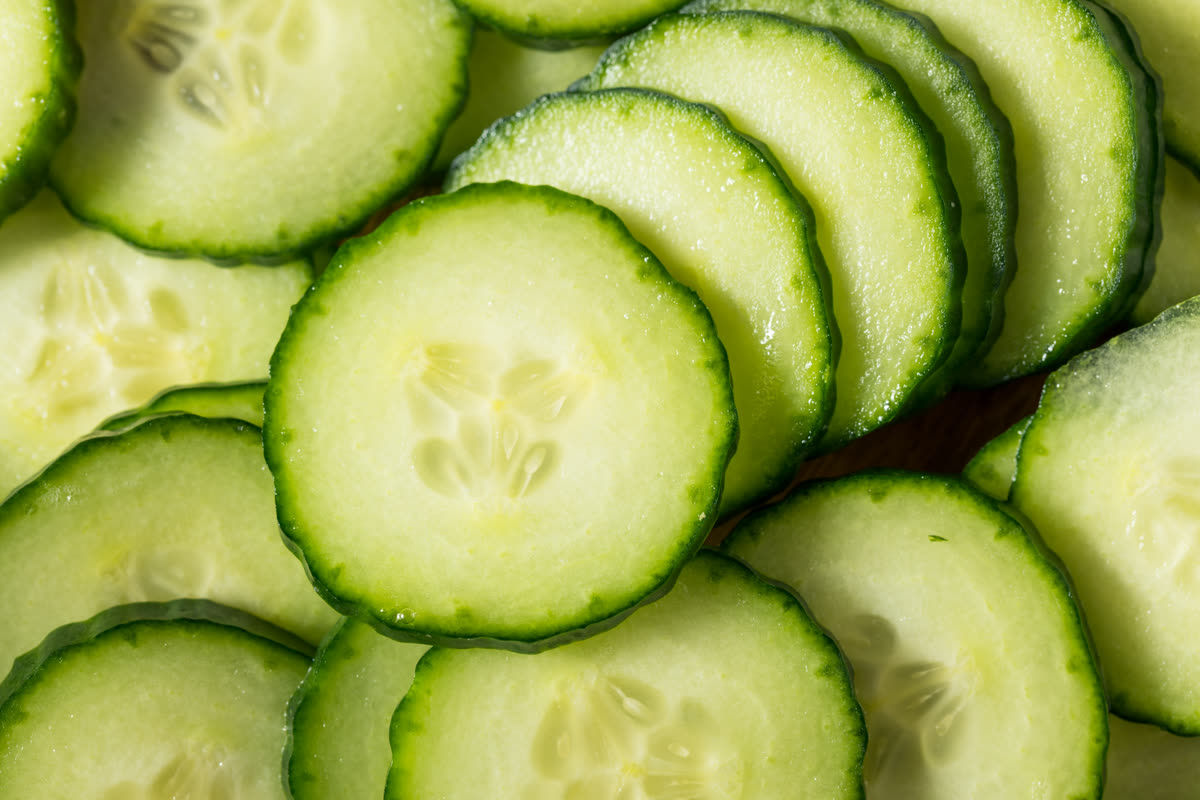
What Cucumber can do for Sensitive Skin & Redness
Cucumber is the archetypal spa ingredient — and mostly a cooling, hydrating water. Chilled slices soothe tired, puffy eyes chiefly because they are cold and wet, and cucumber extracts are gentle, pleasant additions to toners and gels. Evidence that cucumber has specific skin-treating effects beyond that is minimal, but it is very well tolerated.
Why people reach for it
- Cooling comfort for tired, puffy eyes. Chilled cucumber slices act as a gentle cold compress: cold constricts surface blood vessels and can temporarily reduce morning puffiness. A cold spoon or chilled damp cloth works much the same way.
- A soothing, gentle extract. Cucumber extract and water are mild, fragrance-friendly ingredients with a fresh skin-feel, making them easy to include in toners and gels for sensitive skin.
- Light hydration in water-based products. Cucumber water can replace part of the water in a toner or gel, adding small amounts of sugars, amino acids and minerals. Pair with humectants such as glycerin for real hydration.
- Seed oil: a light, linoleic-rich emollient. Cucumber seed oil is rich in linoleic acid, giving a light emollient for oily and combination skin — a niche but pleasant carrier oil.
How to use it
Try it today
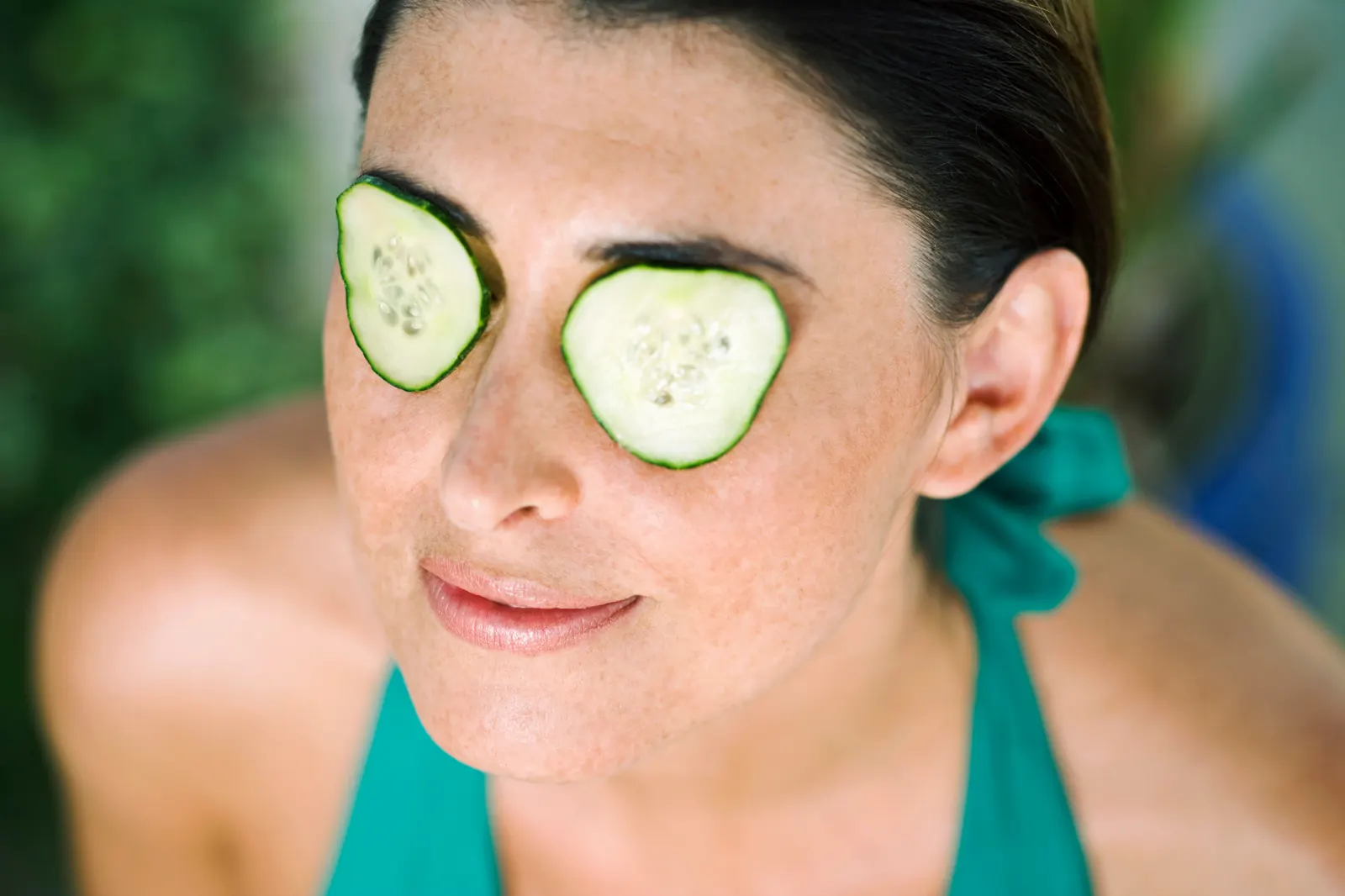
The classic cucumber eye break
- Wash a cucumber straight from the fridge and cut two fresh slices.
- Close your eyes, lay the slices on your lids and rest for 5–10 minutes.
- Throw the slices away afterwards; use fresh ones every time.
| Form | Typical use | Notes |
|---|---|---|
| Chilled cucumber slices | Two slices, 5–10 minutes, single use | Wash the cucumber, slice it fresh from the fridge, close your eyes and rest. Discard slices after use. A cold spoon or a chilled cloth soaked in cooled green tea gives the same cooling effect. |
| Cucumber extract or fruit water in toners and gels | Extract: 1–5%; fruit water: up to 50% or more of the water phase | Use in preserved, water-based formulas with a broad-spectrum preservative and pH check (DIY Safety: Water, Microbes & Preservatives). Combine with aloe vera juice for a soothing after-sun gel base. |
| Fresh cucumber mask (single use) | Blend 2–3 tablespoons of peeled cucumber; apply for 10 minutes; rinse | Make only what you will use immediately and discard leftovers — fresh produce spoils within hours at room temperature. Can be thickened with colloidal oatmeal or a little yogurt. |
Recipes for Sensitive Skin & Redness with Cucumber
Daily rituals with Cucumber

Use it safely
- Very well tolerated. Allergy is rare, but people with ragweed pollen allergy can have oral allergy syndrome to melon, cucumber and banana; if fresh cucumber makes your mouth itch, patch test before using it on the face (How to Patch Test).
- Hygiene: wash produce before use, use fresh slices once, and do not keep homemade cucumber toners or juices for more than a day in the fridge unless properly preserved. Contaminated slices on the eyes can cause infection.
- Bitter cucumbers contain more cucurbitacins, which can irritate skin and are toxic if eaten in quantity; discard very bitter fruit.
Pregnancy and breastfeeding: Safe to use topically during pregnancy and breastfeeding.
New to an ingredient? Patch test first.
When to see a doctor
- Swelling of the lips, eyelids, tongue or throat, or difficulty breathing after using a product — this is an emergency.
- Persistent facial redness, visible vessels, flushing or bumps (possible rosacea), or burning, gritty, red eyes with facial redness (ocular rosacea).
- An itchy rash that spreads beyond where a product was applied or appears 1–3 days later (possible allergic contact dermatitis — ask about patch testing).
- A butterfly-shaped rash across the cheeks with joint pain, fatigue or sun sensitivity.
- Redness or stinging that continues despite a stripped-back routine for 4–6 weeks.
Other plants for Sensitive Skin & Redness
| Ingredient | Grade | What the evidence shows |
|---|---|---|
| Colloidal Oatmeal | B | Avenanthramides are anti-inflammatory and anti-itch; clinical studies support oatmeal products for irritated, itchy and reactive skin. |
| Licorice Root | B | Several small, mostly manufacturer-funded trials of licochalcone A products reduced facial redness, including in mild rosacea. |
| Centella Asiatica (Cica) | C | Madecassoside and asiaticoside reduce inflammation and support barrier repair in the lab; small human studies of centella creams show improved redness and comfort. |
| Green Tea | C | EGCG is anti-inflammatory and reduces UV-induced redness; a small trial suggested benefit in papulopustular rosacea. |
| Aloe Vera | C | Soothing and cooling with small supportive studies; choose stabilized gels without alcohol or fragrance, as some products irritate. |
| Chamomile | C | Bisabolol and chamazulene are anti-inflammatory, but chamomile is in the daisy family and can cause allergy in sensitized people. |