The ingredient encyclopedia · food
Cucumber
Cucumis sativus L. · Cucurbitaceae
Cool, crisp and endlessly refreshing: the original spa ingredient for tired eyes and a gentle reset.
FR ConcombreES PepinoAR الخيارFakous (فقوس) for the long, ridged Middle Eastern snake-melon type, which is actually Cucumis melo
- How well proven
- DTraditional wisdom
- Safety
- Low topical risk
- Sun-sensitive
- No
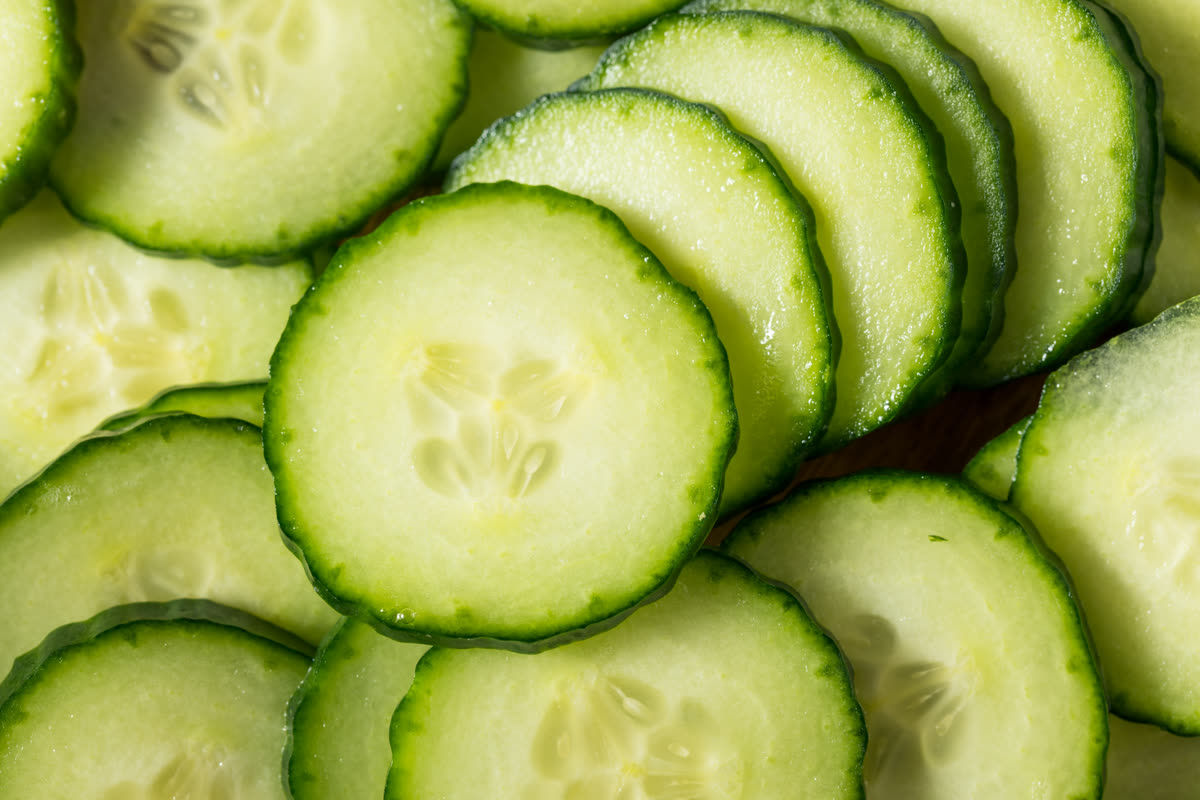
FR ConcombreES PepinoAR الخيارFakous (فقوس) for the long, ridged Middle Eastern snake-melon type, which is actually Cucumis melo
What the evidence says
Effects rest on its cooling, hydrating physical properties and modest lab antioxidant data; there are no meaningful controlled human trials of cucumber for any skin outcome.
- What it does
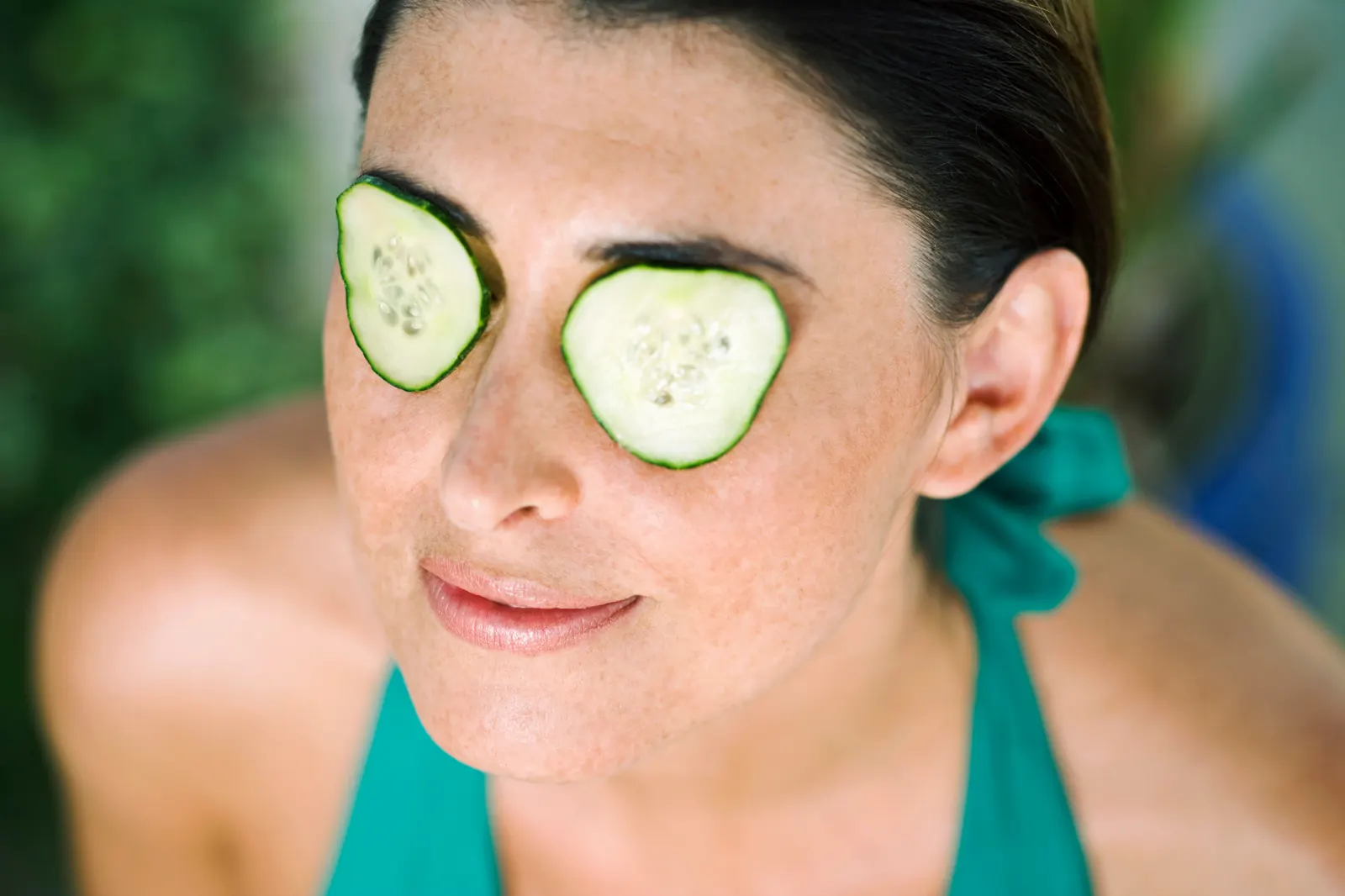
- Cooling comfort for tired, puffy eyes. Chilled cucumber slices act as a gentle cold compress: cold constricts surface blood vessels and can temporarily reduce morning puffiness.
- How to use it
- Chilled cucumber slices · Two slices, 5–10 minutes, single use
- Watch out for
- Very well tolerated.
Checked against 1 cited study and our safety review · Updated 26 November 2026 · How we grade
Why you’ll love Cucumber
Why you’ll love it
- Cooling comfort that eases tired, puffy morning eyes
- Gentle and fresh, even for sensitive skin
- A light, clean feel in toners and gels
Best forTired, puffy eyes, sensitive skin and hot-weather refreshes.

Try it today
The classic cucumber eye break
- Wash a cucumber straight from the fridge and cut two fresh slices.
- Close your eyes, lay the slices on your lids and rest for 5–10 minutes.
- Throw the slices away afterwards; use fresh ones every time.
Good to know: The cold does most of the work, so a chilled spoon works too. Keep homemade cucumber toners no longer than a day in the fridge.
At a glance
| Parts used | Fruit (fresh slices, juice, water and glycerin or glycol extracts); seed oil |
|---|---|
| Key actives | Water (about 95%), Small amounts of vitamin C, caffeic acid and flavonoids, Cucurbitacins (bitter triterpenes, mainly in peel and stem end), Ascorbate oxidase (an enzyme that destroys vitamin C), Linoleic acid (seed oil) |
| INCI names | Cucumis Sativus (Cucumber) Fruit Extract Cucumis Sativus (Cucumber) Fruit Water Cucumis Sativus (Cucumber) Juice Cucumis Sativus (Cucumber) Seed Oil |
| Skin types | normal, oily, combination, sensitive, dry |
| Pairs well with | Aloe VeraGreen TeaColloidal OatmealChamomile |
| Evidence grade | DTraditional wisdom Effects rest on its cooling, hydrating physical properties and modest lab antioxidant data; there are no meaningful controlled human trials of cucumber for any skin outcome. |
What it does for skin and hair
Cooling comfort for tired, puffy eyes
Chilled cucumber slices act as a gentle cold compress: cold constricts surface blood vessels and can temporarily reduce morning puffiness. A cold spoon or chilled damp cloth works much the same way.
A soothing, gentle extract
Cucumber extract and water are mild, fragrance-friendly ingredients with a fresh skin-feel, making them easy to include in toners and gels for sensitive skin.
Light hydration in water-based products
Cucumber water can replace part of the water in a toner or gel, adding small amounts of sugars, amino acids and minerals. Pair with humectants such as glycerin for real hydration.
Seed oil: a light, linoleic-rich emollient
Cucumber seed oil is rich in linoleic acid, giving a light emollient for oily and combination skin — a niche but pleasant carrier oil.
How to use it
Start low, be consistent, and give it four to eight weeks. These are the amounts that work in real products and home recipes.
| Form | Typical use level | Notes |
|---|---|---|
| Chilled cucumber slices | Two slices, 5–10 minutes, single use | Wash the cucumber, slice it fresh from the fridge, close your eyes and rest. Discard slices after use. A cold spoon or a chilled cloth soaked in cooled green tea gives the same cooling effect. |
| Cucumber extract or fruit water in toners and gels | Extract: 1–5%; fruit water: up to 50% or more of the water phase | Use in preserved, water-based formulas with a broad-spectrum preservative and pH check (DIY Safety: Water, Microbes & Preservatives). Combine with aloe vera juice for a soothing after-sun gel base. |
| Fresh cucumber mask (single use) | Blend 2–3 tablespoons of peeled cucumber; apply for 10 minutes; rinse | Make only what you will use immediately and discard leftovers — fresh produce spoils within hours at room temperature. Can be thickened with colloidal oatmeal or a little yogurt. |
Use it safely
Low topical risk
- Very well tolerated. Allergy is rare, but people with ragweed pollen allergy can have oral allergy syndrome to melon, cucumber and banana; if fresh cucumber makes your mouth itch, patch test before using it on the face (How to Patch Test).
- Hygiene: wash produce before use, use fresh slices once, and do not keep homemade cucumber toners or juices for more than a day in the fridge unless properly preserved. Contaminated slices on the eyes can cause infection.
- Bitter cucumbers contain more cucurbitacins, which can irritate skin and are toxic if eaten in quantity; discard very bitter fruit.
- Pregnancy & breastfeeding
- Safe to use topically during pregnancy and breastfeeding. Pregnancy guide
- Phototoxicity
- Not phototoxic at normal use levels.
- Declared fragrance allergens
- None expected
New to an ingredient? Patch test first. Stop and seek advice if you get burning, swelling, blistering or a spreading rash.
Make it at home: recipes with cucumber
Buying well
Sustainability
Cucumber is one of the world’s most widely grown vegetables and is not threatened. Greenhouse production can be energy-intensive, and cosmetic extracts are usually made from food-grade fruit. Using surplus or slightly soft cucumbers from your own kitchen for a single-use mask is the lowest-impact option.
How to choose quality
In products, cucumber is often a minor “feel-good” ingredient listed near the end; that is fine, but do not pay a premium for it. Look for gentle, fragrance-free toners and gels where cucumber sits with proven hydrators such as glycerin. For formulators, choose preserved extracts with stated solvent and plant-to-extract ratio; cucumber seed oil should be fresh, stored cool and used within 6–12 months.
The research For professionals
The chemistry, the studies and the evidence by concern, for practitioners, formulators and the curious.
A cucumber is roughly 95% water, with small amounts of sugars, minerals (notably potassium), vitamin C, caffeic and other phenolic acids and flavonoids. Its bitterness comes from cucurbitacins, triterpenes concentrated near the stem end and peel; modern varieties are bred to contain very little. Cucumber also contains ascorbate oxidase, an enzyme that destroys vitamin C, which is why blending cucumber into “vitamin C” DIY masks is counterproductive. Cucumber seed oil is a separate ingredient, high in linoleic acid.
The famous cucumber-slice effect is largely physical. A chilled, water-rich slice cools the skin and constricts superficial blood vessels, which can briefly reduce puffiness and relieve the feeling of tired eyes; evaporating water adds a cooling sensation. Laboratory studies report antioxidant and mild anti-inflammatory activity in cucumber extracts, and a 2013 review (Mukherjee, Fitoterapia) summarizes these and traditional uses, but there are no well-designed human trials showing cucumber reduces dark circles, lightens pigmentation, tightens pores or slows aging.
Dark circles have several causes — inherited pigmentation, thin skin showing underlying vessels, shadowing from hollows, and fluid retention — and only the last responds, temporarily, to cold. Persistent puffiness from fat pads or aging does not change with cucumber or any topical. Cucumber is best appreciated for what it is: a gentle, refreshing, low-risk ingredient that makes routines feel nicer.
Key studies
Narrative review of cucumber phytochemistry and reported activities (antioxidant, anti-inflammatory and others), drawn mainly from laboratory and animal studies; robust human skin trials were not identified.
Mukherjee PK, et al. Fitoterapia. 2013 Read it in the bibliography Find on PubMed
MythCucumber slices get rid of dark circles because cucumber is rich in silica and vitamin C.
EvidenceThe relief is from cold and moisture, not special nutrients; cucumber’s silica content is modest and its vitamin C is small and unstable. Cold can temporarily reduce puffiness, but it does not change pigmented or hollow-shadow dark circles. Sleep, sun protection and, if needed, a dermatologist’s advice do more.
In tradition
Cucumber has been cultivated in India for thousands of years and spread across the Mediterranean in antiquity. Its use as a cooling face wash and slices on the eyes became a fixture of European and American beauty culture in the twentieth century, and it remains a summer staple in Middle Eastern and Spanish kitchens and homes.
Frequently asked questions
Do cucumber slices really help puffy eyes?
Does cucumber lighten dark circles or dark spots?
Is it safe to put cucumber on your face every day?
Is cucumber good for oily or acne-prone skin?
Cite this page
Herbs.Beauty. Cucumber (Cucumis sativus L.): evidence-based monograph. Updated 26 November 2026. https://herbs.beauty/ingredients/cucumber.html