The ingredient encyclopedia · herb
Peppermint
Mentha × piperita (Hybrid of water mint (M. aquatica) and spearmint, M. spicata) · Lamiaceae
A tingle of peppermint wakes up a tired scalp or weary feet with a clean, icy rush of cool.
FR Menthe poivréeES Menta piperitaAR النعناع الفلفلي
- How well proven
- CPromising
- Safety
- Use with care
- Sun-sensitive
- No
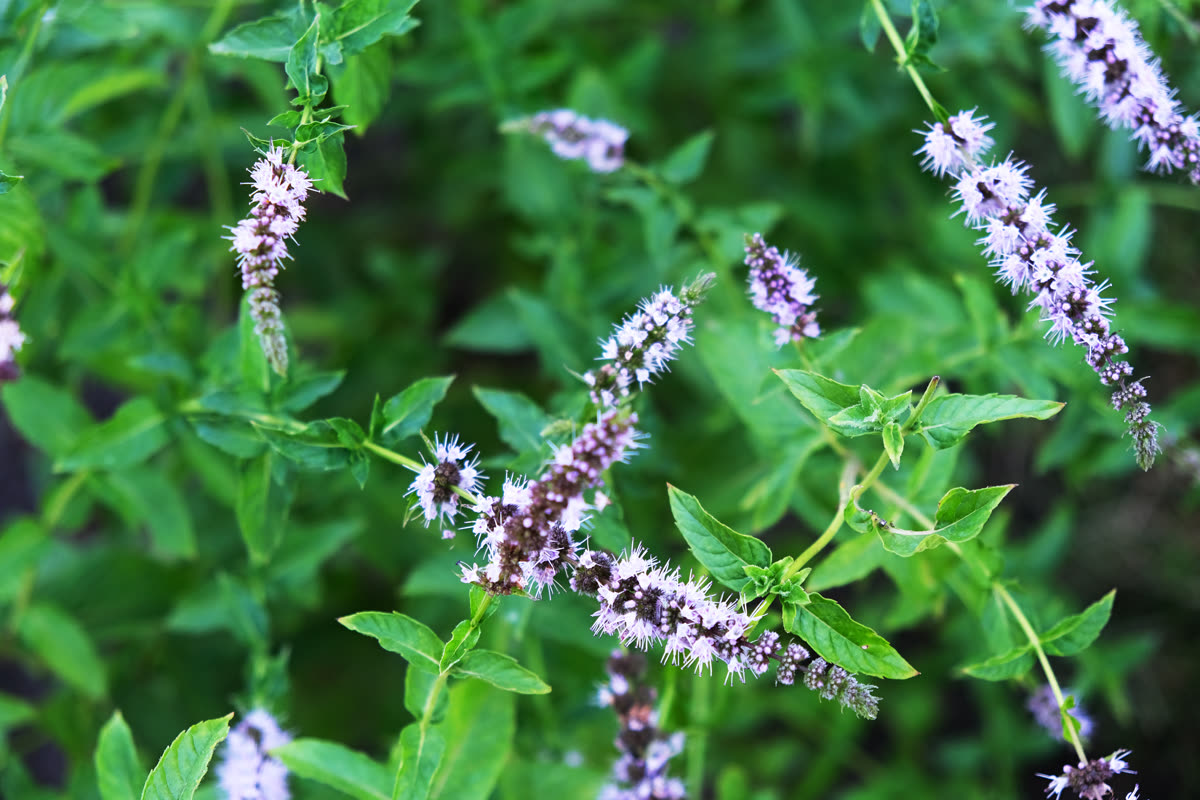
Also known as Mentha × piperita (Hybrid of water mint (M. aquatica) and spearmint, M. spicata)
FR Menthe poivréeES Menta piperitaAR النعناع الفلفلي
What the evidence says
The cooling and anti-itch effect of menthol is well established pharmacologically and supported by small human studies; hair-growth evidence is animal-only.
- Best supported for
- Thinning Hair & Hair Loss D
- How to use it
- Scalp tonic or shampoo (rinse-off) · 0.5–1% essential oil
- Watch out for
- Never apply peppermint oil or menthol on or near the face, nose or chest of infants and young children: menthol can trigger reflex breathing problems (laryngospasm, apnea).
Checked against 1 cited study and our safety review · Updated 26 November 2026 · How we grade
Why you’ll love Peppermint
Why you’ll love it
- An instant cooling feeling that’s genuinely refreshing
- Can take the edge off itchy skin
- Turns a post-workout foot rub into a small treat
Best forOily scalps, tired feet, and anyone who loves a crisp, cooling sensation.
Try it today
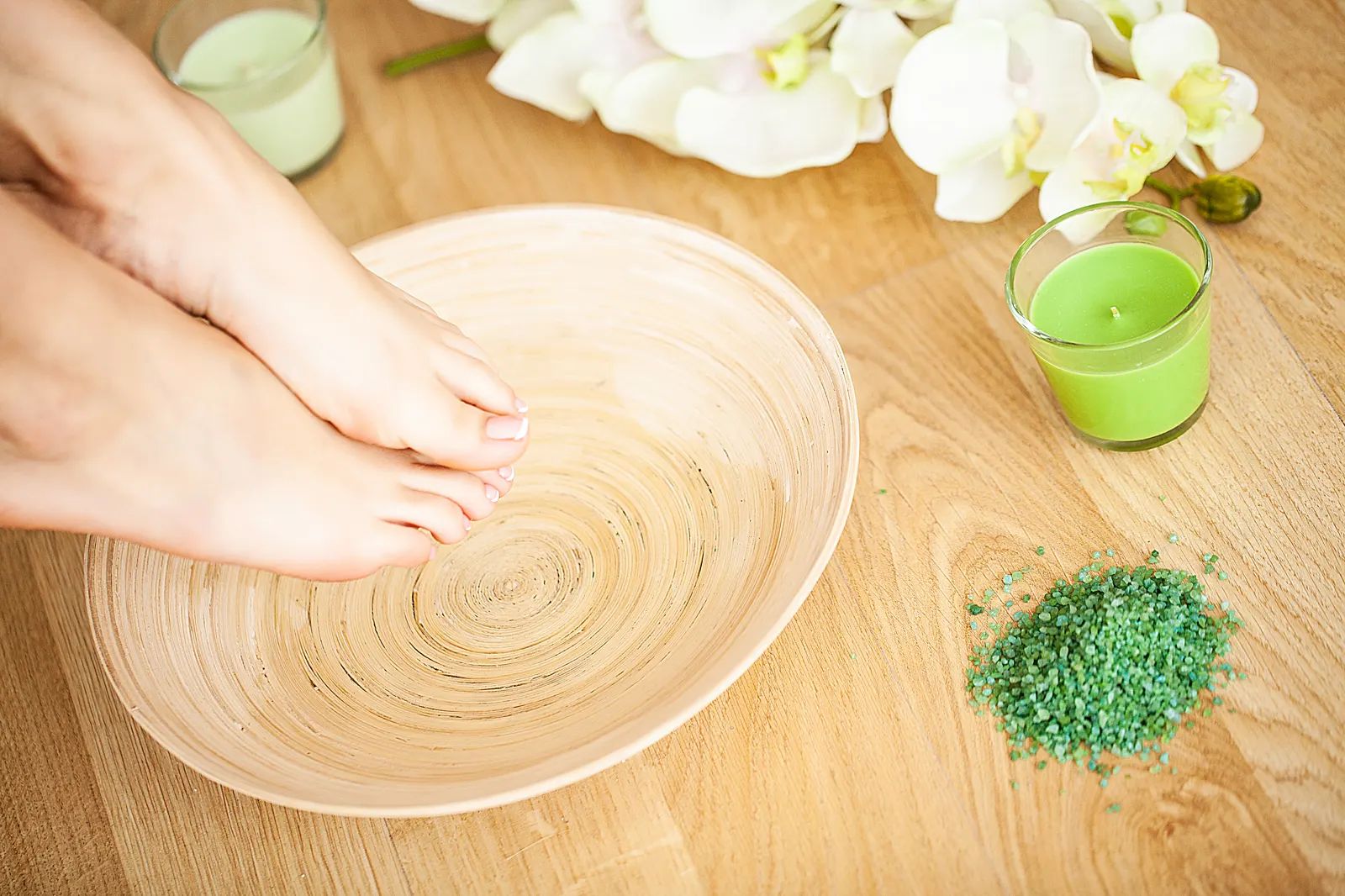
A cooling foot refresh
- Patch test first, then dilute peppermint essential oil to 1–2% in a gel or carrier oil.
- Massage into clean feet and calves, avoiding freshly shaved or broken skin.
- Wash your hands well afterward and keep it away from your eyes.
Good to know: Never use peppermint oil on or near the face or chest of babies and young children: menthol can affect their breathing.
At a glance
| Parts used | Leaf; essential oil (steam-distilled); isolated menthol |
|---|---|
| Key actives | Menthol, Menthone, 1,8‑cineole, Menthyl acetate, Menthofuran, Rosmarinic acid (leaf extracts) |
| INCI names | Mentha Piperita (Peppermint) Oil Mentha Piperita (Peppermint) Leaf Extract Menthol |
| Hair & scalp | oily scalp |
| Pairs well with | RosemaryStinging NettleTea TreeJojoba |
| Evidence grade | CPromising The cooling and anti-itch effect of menthol is well established pharmacologically and supported by small human studies; hair-growth evidence is animal-only. |
What it does for skin and hair
Instant cooling sensation
Menthol activates TRPM8, the receptor that normally signals cold, giving a fresh, tingling feel at low concentrations.
Relief from itch
Cooling counter-irritation can temporarily dampen itch on the scalp or body, which is why menthol appears in anti-itch and after-sun products.
Scalp refresh
In rinse-off shampoos and diluted tonics it makes an oily or itchy scalp feel cleaner; it does not treat the cause of Dandruff & Itchy Scalp on its own.
Hair growth (animal data only)
A 2014 study in mice found 3% peppermint oil increased hair follicle number and depth over four weeks. This has not been shown in humans.
How to use it
Start low, be consistent, and give it four to eight weeks. These are the amounts that work in real products and home recipes.
| Form | Typical use level | Notes |
|---|---|---|
| Scalp tonic or shampoo (rinse-off) | 0.5–1% essential oil | Pre-dilute in a solubilizer before adding to water-based products. Keep it out of the eyes when rinsing. |
| Leave-on scalp or body product | 0.25–1% essential oil (or 0.1–0.5% menthol) | Start low: tingling should be pleasant, not burning. Use the Essential Oil Dilution Calculator. |
| Foot or after-sport gel | 1–2% essential oil | Thicker skin of the feet and legs tolerates more; avoid freshly shaved or broken skin. |
| Leaf infusion rinse | 5–10 g dried leaf per 250 ml hot water, cooled | A gentle, low-menthol option; make fresh and discard leftovers. |
Use it safely
Use with care
- Never apply peppermint oil or menthol on or near the face, nose or chest of infants and young children: menthol can trigger reflex breathing problems (laryngospasm, apnea). Menthol has also been linked to jaundice in newborns with G6PD deficiency.
- Undiluted oil can burn and sensitize. Keep face products at or below about 0.5% and away from the eye area. See Essential Oil Safety: The Complete Guide.
- “Plumping” lip glosses with peppermint work by mild irritation; skip them if lips crack or sting.
- Contact allergy to peppermint oil and menthol is uncommon but documented, especially in toothpaste and lip products.
- Pregnancy & breastfeeding
- Low-dose topical use (≤1% on limited areas) is generally considered acceptable; avoid concentrated or oral use of the oil without medical advice. Pregnancy guide
- Phototoxicity
- Not phototoxic at normal use levels.
- Declared fragrance allergens
- Limonene, Linalool
New to an ingredient? Patch test first. Stop and seek advice if you get burning, swelling, blistering or a spreading rash.
Make it at home: recipes with peppermint
Buying well
Sustainability
Peppermint is a sterile hybrid propagated from runners and widely cultivated (USA, India, Europe); it is not threatened. Cheaper “mint oil” from cornmint (Mentha arvensis), often dementholized, is sometimes passed off as peppermint.
How to choose quality
Buy oil labeled with the full botanical name Mentha × piperita, country of origin and a GC-MS report. Red flags: “mint oil” without a species, or very low prices (often cornmint). Store tightly closed, cool and dark; discard if it smells harsh or turpentine-like.
The research For professionals
The chemistry, the studies and the evidence by concern, for practitioners, formulators and the curious.
Steam-distilled peppermint oil is dominated by (−)-menthol (often roughly a third to a half of the oil) and menthone, with 1,8‑cineole, menthyl acetate, menthofuran and limonene in smaller amounts. Menthol binds and opens TRPM8, a cation channel on sensory nerve endings that responds to temperatures below about 25 °C, so the brain reads “cold” while skin temperature is unchanged. At higher concentrations menthol also acts on TRPA1 and other channels and becomes irritating, which is the basis of both its counter-irritant use and its side effects.
The hair-growth reputation comes from Oh and colleagues (2014), who applied 3% peppermint oil to shaved C57BL/6 mice for four weeks and reported greater dermal thickness, follicle number and depth, and markers of the growth (anagen) phase, compared with saline, jojoba oil and 3% minoxidil. This is a single animal experiment; mouse hair cycles differ from human androgenetic alopecia, and no controlled human trial of peppermint oil for hair loss exists. For evidence-based options see Thinning Hair & Hair Loss.
Menthol’s antipruritic effect is better documented: small human studies and clinical experience support low-dose menthol (around 0.5–1%) for itch. Peppermint leaf extracts (rather than the oil) contain rosmarinic acid and flavonoids with antioxidant activity, but their cosmetic relevance is unproven.
Evidence by concern
| Concern | Grade | What the evidence shows |
|---|---|---|
| Thinning Hair & Hair Loss | D | A mouse study showed hair growth with diluted peppermint oil; there are no meaningful human trials, and it can irritate the scalp. |
Key studies
In mice, topical 3% peppermint oil for 4 weeks increased hair follicle number, depth and dermal thickness more than saline, jojoba oil or 3% minoxidil. Animal data only.
Oh JY, Park MA, Kim YC. Toxicol Res. 2014 Read it in the bibliography Find on PubMed
MythPeppermint oil regrows hair better than minoxidil.
EvidenceThat claim comes from one mouse study. No human trial shows peppermint oil treats hair loss; minoxidil and other medical options remain the evidence-based choices.
In tradition
Mints have soothed skin and settled stomachs across the Mediterranean for millennia. Note that the mint in Moroccan tea (na’na’) is usually spearmint, a gentler, low-menthol relative.
Frequently asked questions
Does peppermint oil help hair growth?
How do I dilute peppermint oil for my scalp?
Is peppermint oil safe for babies or children?
Why does peppermint feel cold?
Cite this page
Herbs.Beauty. Peppermint (Mentha × piperita): evidence-based monograph. Updated 26 November 2026. https://herbs.beauty/ingredients/peppermint.html