The ingredient encyclopedia · root
Licorice Root
Glycyrrhiza glabra · Fabaceae
Sweet licorice root is a gentle, skin-friendly brightener for uneven tone and easily flushed skin.
FR RéglisseES Regaliz / OrozuzAR عرق السوسArk sous (Darija); Yashtimadhu (Sanskrit); Gan cao (Chinese, mainly G. uralensis)
- How well proven
- CPromising
- Safety
- Low topical risk
- Sun-sensitive
- No
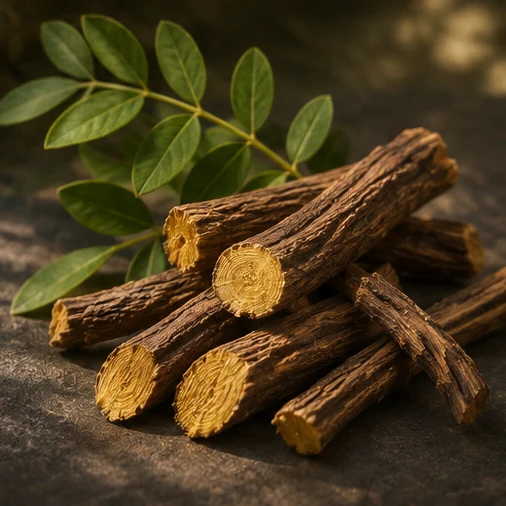
FR RéglisseES Regaliz / OrozuzAR عرق السوسArk sous (Darija); Yashtimadhu (Sanskrit); Gan cao (Chinese, mainly G. uralensis)
What the evidence says
Glabridin’s anti-pigment effect is well established in the lab and animal skin, but human trials for melasma and dark spots are few, small and short.
- Best supported for
- Dark Spots & Hyperpigmentation BSensitive Skin & Redness BEczema-Prone Skin C
- How to use it
- Glabridin-standardized (oil-soluble) extract · Typically 0.1–0.5%, per supplier’s standardization
- Watch out for
- Topical vs oral are different stories.
Checked against 3 cited studies and our safety review · Updated 26 November 2026 · How we grade
Why you’ll love Licorice Root
Why you’ll love it
- Helps dark spots look softer, with promising early research
- Calms redness and irritation while it gently brightens
- Gentle enough to pair with other treatments
Best forUneven tone, post-blemish marks, and sensitive skin that dislikes strong brighteners.
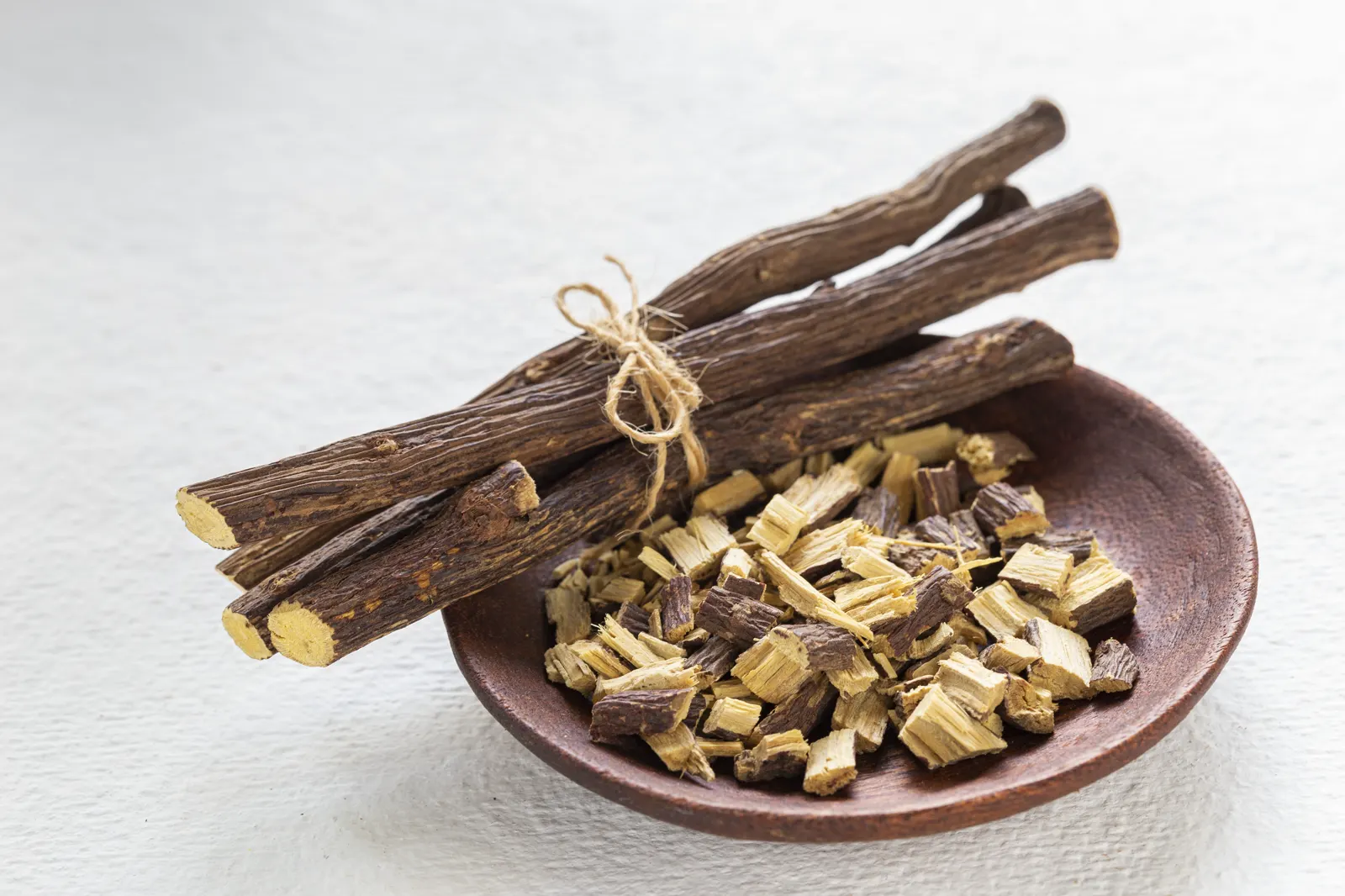
Try it today
A brightening morning trio
- After cleansing, apply a licorice serum; patch test first if your skin is sensitive.
- Follow with your usual moisturizer and give it a minute to settle.
- Finish with broad-spectrum sunscreen every day; without it, brighteners can’t do their job.
Good to know: Eating lots of licorice can raise blood pressure; skincare use is a different story. Show new or changing dark spots to a dermatologist.
At a glance
| Parts used | Root and stolon; oil-soluble (glabridin-rich) and water-soluble extracts, purified derivatives of glycyrrhizin |
|---|---|
| Key actives | Glabridin, Liquiritin and isoliquiritigenin, Glycyrrhizin (glycyrrhizic acid), 18β-Glycyrrhetinic acid, Licochalcone A (from G. inflata) |
| INCI names | Glycyrrhiza Glabra (Licorice) Root Extract Glabridin Dipotassium Glycyrrhizate Glycyrrhetinic Acid Stearyl Glycyrrhetinate |
| Skin types | normal, combination, sensitive, dry, oily, mature |
| Pairs well with | Centella Asiatica (Cica)Green TeaSqualaneRosehip Oil |
| Evidence grade | CPromising Glabridin’s anti-pigment effect is well established in the lab and animal skin, but human trials for melasma and dark spots are few, small and short. |
What it does for skin and hair
Brightens dark spots and uneven tone
Glabridin inhibits tyrosinase, the key enzyme in melanin production, and reduced UV-induced pigmentation in animal skin. A small trial of topical liquiritin improved melasma.
Calms redness and irritation
Glycyrrhetinic acid and dipotassium glycyrrhizate reduce inflammatory signaling and are widely used to soothe sensitive and post-procedure skin.
Supports anti-inflammatory treatments
Glycyrrhetinic acid inhibits the skin enzyme that inactivates cortisol, and enhanced the effect of topical hydrocortisone in a classic study.
Gentle enough to combine
Licorice extracts pair well with niacinamide, vitamin C and azelaic acid in brightening routines, and are a common hydroquinone-free option.
How to use it
Start low, be consistent, and give it four to eight weeks. These are the amounts that work in real products and home recipes.
| Form | Typical use level | Notes |
|---|---|---|
| Glabridin-standardized (oil-soluble) extract | Typically 0.1–0.5%, per supplier’s standardization | Dissolve in the oil phase or a suitable solvent (e.g. a glycol); use with daily sunscreen. See Licorice & Niacinamide Brightening Serum. |
| Water-soluble licorice root extract | 1–5% | Gentler, soothing and lightly brightening; suits toners and gels. Preserve aqueous formulas. |
| Dipotassium glycyrrhizate | 0.1–0.5% | A water-soluble soothing agent for sensitive skin, aftershaves and formulas with acids or retinoids. |
Use it safely
Low topical risk
- Topical vs oral are different stories. Eating large amounts of licorice (glycyrrhizin) can cause high blood pressure, low potassium and fluid retention, and interacts with diuretics, digoxin and corticosteroids. Normal topical use is not considered to deliver meaningful systemic glycyrrhizin.
- Allergic contact dermatitis to licorice extracts is rare but reported. Patch test, especially on sensitive skin (How to Patch Test).
- Brightening ingredients only work with daily broad-spectrum sunscreen; see a dermatologist for new, changing or irregular dark spots.
- Pregnancy & breastfeeding
- Topical licorice extracts are generally regarded as a gentle brightening option in pregnancy. Avoid eating large amounts of licorice or taking licorice supplements while pregnant, as heavy consumption has been linked to adverse pregnancy outcomes. Pregnancy guide
- Phototoxicity
- Not phototoxic at normal use levels.
- Declared fragrance allergens
- None expected
New to an ingredient? Patch test first. Stop and seek advice if you get burning, swelling, blistering or a spreading rash.
Make it at home: recipes with licorice root
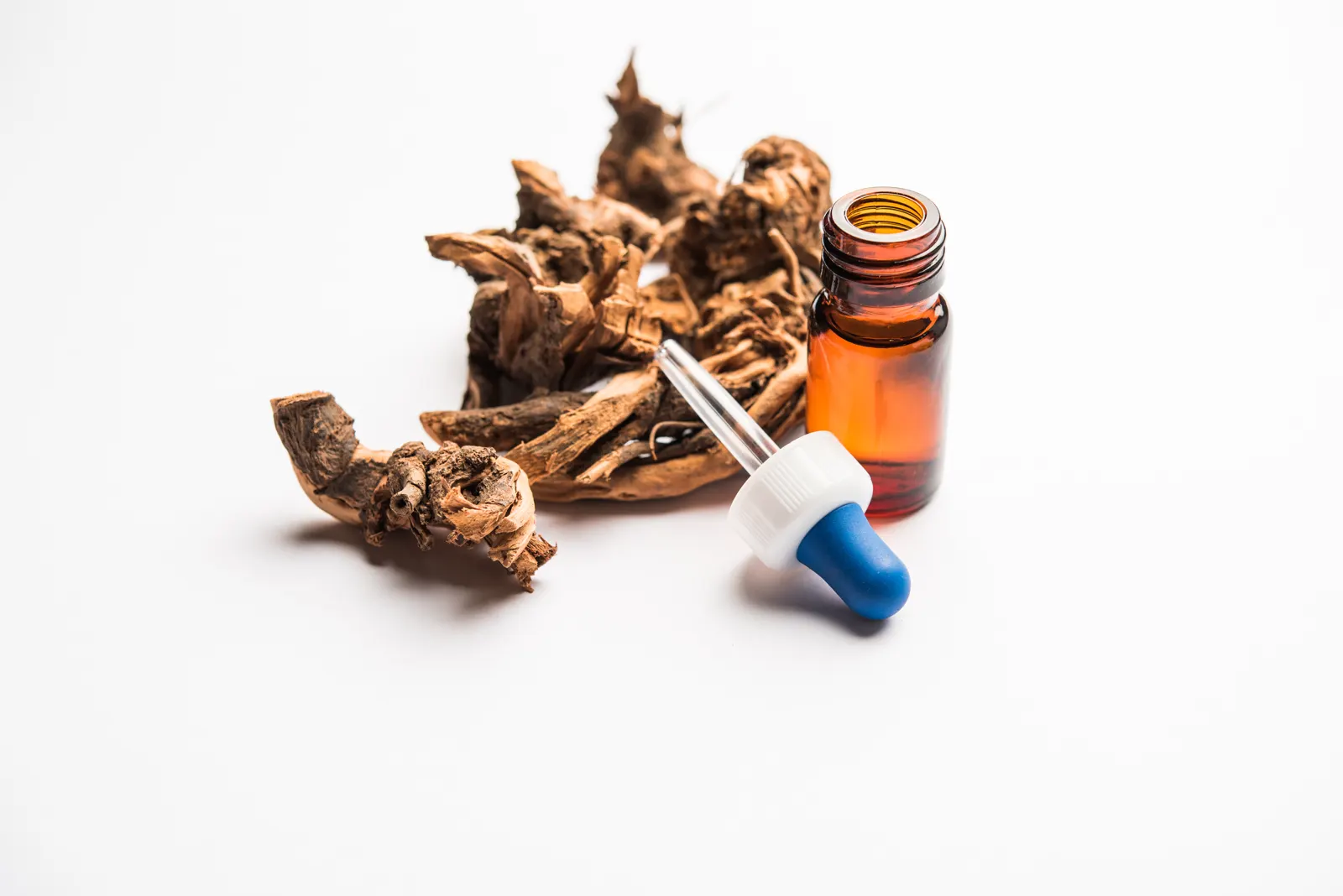
Buying well
Sustainability
Much licorice root is still wild-harvested across Central Asia, the Middle East and China, where overharvesting and land degradation have depleted stands in some regions. Choose cultivated or certified sustainably wild-collected material where possible. Glabridin is a minor component, so producing it requires large volumes of root.
How to choose quality
Look for extracts standardized to glabridin (oil-soluble) or a stated glycyrrhizin/liquiritin content (water-soluble), with the species named — glabridin comes from G. glabra. “Licorice extract” far down an INCI list is likely a token amount. Store powders dry and sealed.
The research For professionals
The chemistry, the studies and the evidence by concern, for practitioners, formulators and the curious.
Licorice root has two chemically distinct fractions. The hydrophobic fraction contains the isoflavan glabridin, characteristic of G. glabra and present at well under 1% of the root, so cosmetic extracts are concentrated and standardized. The hydrophilic fraction contains the triterpene saponin glycyrrhizin (the source of licorice’s sweetness), its aglycone 18β-glycyrrhetinic acid, and flavonoids such as liquiritin and isoliquiritigenin. A related species, G. inflata, supplies licochalcone A, used in commercial anti-redness ranges.
Glabridin inhibits tyrosinase activity in melanocytes without killing them, and a 0.5% topical application reduced UVB-induced pigmentation and redness in guinea pigs (Yokota, 1998). It is also anti-inflammatory, reducing superoxide and cyclooxygenase activity. Liquiritin appears to work differently, by dispersing melanin. Glycyrrhetinic acid inhibits 11β-hydroxysteroid dehydrogenase, the enzyme that inactivates cortisol in skin; it potentiated the effect of topical hydrocortisone in human skin (Teelucksingh, 1990), which helps explain its soothing reputation.
Clinical data remain limited. A small placebo-controlled trial found topical liquiritin improved melasma over four weeks (Amer, 2000). Industry-sponsored studies of licochalcone A products report reduced facial redness. Licorice usually appears in multi-active brightening formulas, so its individual contribution in real products is hard to judge. For melasma and stubborn dark spots, licorice is a reasonable gentle option or adjunct; daily sunscreen remains the most important intervention. See Dark Spots & Hyperpigmentation.
Evidence by concern
| Concern | Grade | What the evidence shows |
|---|---|---|
| Dark Spots & Hyperpigmentation | B | Glabridin and liquiritin inhibit tyrosinase and disperse melanin; small controlled trials of liquiritin and licorice-extract creams improved melasma and PIH. |
| Sensitive Skin & Redness | B | Several small, mostly manufacturer-funded trials of licochalcone A products reduced facial redness, including in mild rosacea. |
| Eczema-Prone Skin | C | A small trial of a 2% licorice extract gel reduced itch and redness; glycyrrhetinic acid is anti-inflammatory. |
Key studies
Glabridin inhibited tyrosinase in cultured melanocytes without cytotoxicity, and 0.5% topical glabridin reduced UVB-induced pigmentation and erythema in guinea pig skin.
Yokota T, et al. Pigment Cell Res. 1998 Read it in the bibliography Find on PubMedSmall placebo-controlled trial in women with melasma: topical liquiritin cream produced greater improvement than placebo over 4 weeks.
Amer M, Metwalli M. Int J Dermatol. 2000 Read it in the bibliography Find on PubMedTopical glycyrrhetinic acid potentiated the skin-blanching activity of hydrocortisone in human volunteers by inhibiting 11β-hydroxysteroid dehydrogenase.
Teelucksingh S, et al. Lancet. 1990 Read it in the bibliography Find on PubMed
MythLicorice is a natural hydroquinone.
EvidenceLicorice inhibits pigment production more gently and slowly than hydroquinone, with much less clinical evidence. It is a good, well-tolerated option for mild unevenness or maintenance, not a like-for-like replacement for prescription lighteners.
In tradition
Licorice root is one of the most widely traded medicinal roots in history: gan cao in Chinese medicine, yashtimadhu in Ayurveda, and ark sous in North Africa and the Middle East, where the chilled root drink is a Ramadan tradition.
From the first-edition dossier
From study to shelf
Licorice compounds and the evidence behind dark-spot claims.
On this page
What the studies found
Amer & Metwalli (2000)
- Study design
- Twenty women aged 18 to 40 with symmetrical epidermal melasma used a liquiritin cream on one side of the face and its base on the other, twice daily for four weeks. They were advised to avoid sun exposure or use sunscreen.
- Result
- The study reported a pigmentation improvement signal with the liquiritin cream. The researchers scored color relative to each participant’s normal facial skin and measured the areas with a grid.
- Limitations
- This small and short study concerned a particular derivative and type of melasma. It cannot predict the performance of glabridin, an unspecified extract or a product for every kind of dark spot.
If melasma is the concern
The licorice trial used liquiritin and advised sun avoidance or sunscreen. The American Academy of Dermatology recommends broad-spectrum SPF 30 or higher for melasma and suggests a tinted sunscreen with iron oxide to help protect against visible light. Seek assessment for an unexplained or changing mark.
American Academy of Dermatology · Melasma self-care
Checks before you buy
- Check whether the label declares Glycyrrhiza Glabra Root Extract or names a specific compound.
- For a dark-spot claim, look for evidence on the exact formula and ask how pigmentation was measured.
- Protect exposed skin from sun and seek advice for a new or changing mark.
Questions readers ask
Are liquiritin and glabridin interchangeable?
They are different licorice constituents. The trial tested liquiritin.
Can these results predict how an ordinary root extract will work?
An extract name alone does not specify the constituent profile or concentration studied.
Compare the preparations
A whole root extract, glabridin, liquiritin and a multi-ingredient serum are distinct. Look for finished-product evidence and realistic time frames when evaluating the appearance of dark spots.
| Preparation | What to check |
|---|---|
| Licorice root extract | Check the plant part or species declared and the manufacturer’s specification. |
| Named licorice constituent or derivative | Check whether the same preparation appears in the study or the formula you are comparing. |
The research
A small split-face study reported improvement in epidermal melasma after four weeks with a liquiritin cream. Its preparation, population and measures limit what the result can tell you about other licorice constituents or a finished product.
Safety and tolerance
Introduce a new cosmetic carefully. For a changing or unexplained skin spot, seek clinical advice. Use appropriate sun protection as part of daytime care.
What to look for on the label
Look for “Glycyrrhiza Glabra (Licorice) Root Extract” or specifically identified constituents.
A real label example
Spain ·
Paula’s Choice Clinical 0.3% Retinol + 2% Bakuchiol Treatment
- Glycyrrhiza Glabra (Licorice) Root Extract
- Dipotassium Glycyrrhizate
The label lists licorice root extract and dipotassium glycyrrhizate separately. Preserve those distinct names in a comparison instead of collapsing them into one entry.
Sources
- PubMed · Evidence review of botanicals for hyperpigmentation PubMed
- AAD · How to select sunscreen
- Amer & Metwalli (2000)
- American Academy of Dermatology · Melasma self-care
Continue reading
First published in the original Herbs.Beauty atlas on 11 November 2026, with its sources as checked on that date.
Frequently asked questions
Does licorice root extract lighten dark spots?
Is licorice extract safe in pregnancy?
Can I use licorice with vitamin C or niacinamide?
Can licorice in skin care raise blood pressure?
Cite this page
Herbs.Beauty. Licorice Root (Glycyrrhiza glabra): evidence-based monograph. Updated 26 November 2026. https://herbs.beauty/ingredients/licorice-root.html