Labels & formulas · · 4 min read
One plant, five very different ingredients
An oil, extract, hydrosol and essential oil can share a plant name without being interchangeable. Here is how to tell what you are buying.
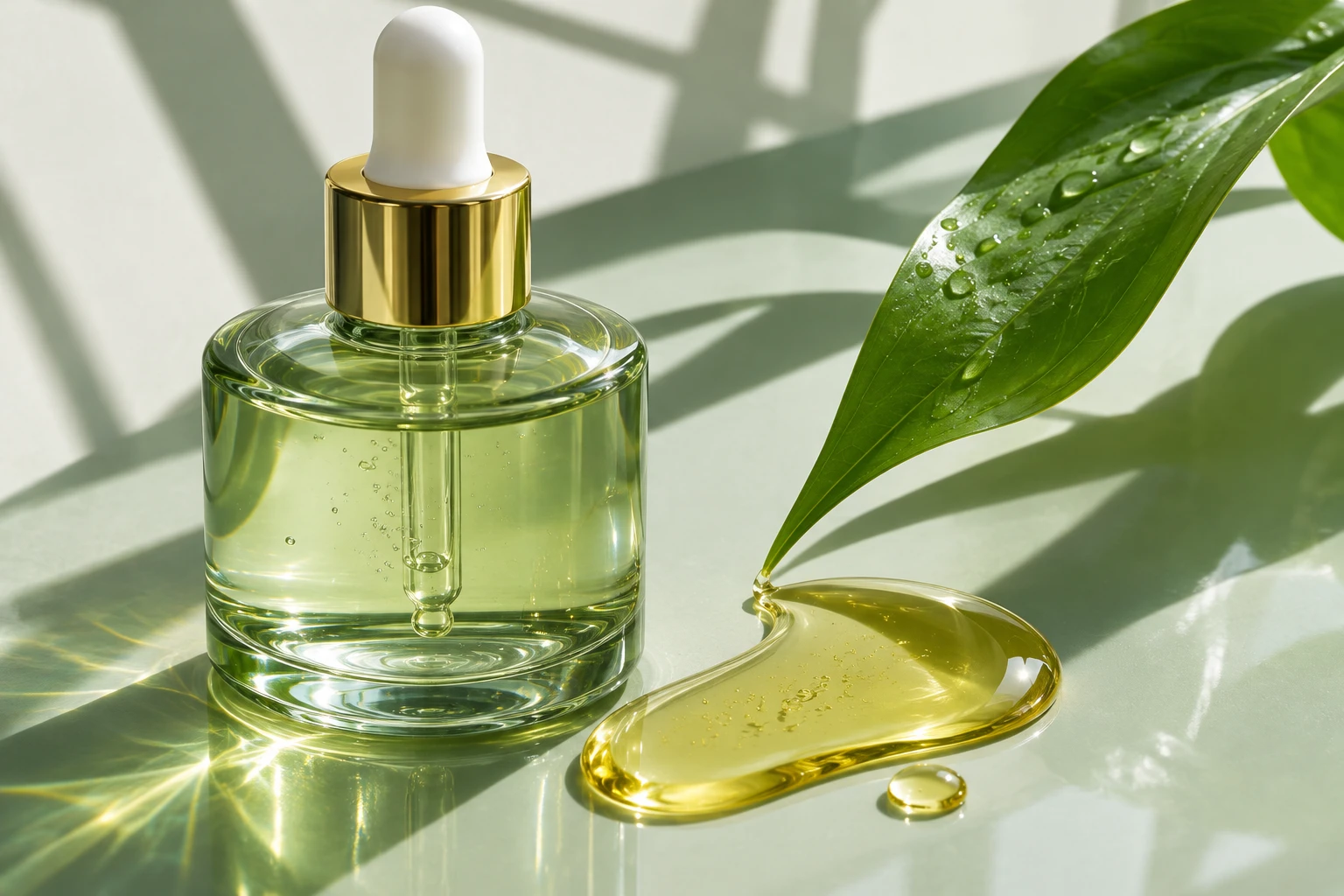
Begin with the preparation, not the plant picture
Imagine three bottles with rosemary on the front: a scalp oil blend, a distilled aromatic oil and a water-based mist. The illustration tells you which plant the maker wants you to notice. It does not tell you what is inside, how much was added, or what the finished product can do. Start a small note with five fields: full ingredient name, plant part, preparation, product format and instructions. If one field is missing, mark it unknown. That small discipline keeps a recognizable plant name from doing the work of a complete specification.
1. A plant oil is not automatically an essential oil
Read the whole name rather than stopping at the word oil. A seed oil, an aromatic leaf oil and a blend of several oils describe different materials. For a blend, identify the base oils as well as the botanical highlighted on the front. If a product called rosemary oil lists a carrier oil first, record it as a formulated oil blend. Do not write 100% rosemary beside it unless the maker actually establishes that identity. Ask whether you want an everyday cosmetic texture or a particular studied preparation; these are different shopping questions.
2. An extract needs more than the word extract
Professional herbal specifications distinguish the starting plant material, extraction solvent and resulting preparation. An extract may be supplied with water, glycerin, alcohol or other components, so a percentage of supplied extract is not automatically a percentage of pure plant solids. For a cosmetic shopper, the useful question is: what does the stated percentage measure? Copy the manufacturer’s wording exactly before interpreting it. If a serum advertises 10% botanical complex, do not silently convert that into 10% of a named active molecule. The complex may contain several ingredients.
3. An essential oil needs its own instructions
A concentrated aromatic ingredient is not a ready-made facial moisturizer merely because both products come in small bottles. The FDA explains that natural origin does not establish safety. Buy for the stated cosmetic use and follow the finished product’s instructions. Do not transfer directions from a rinse-off shampoo to a leave-on facial product, or from a diffuser product to your skin. This guide deliberately gives no universal dilution recipe: a single rule would conceal differences between materials, formulations and intended uses.
4. A hydrosol is a distillation water
A hydrosol is the aqueous material collected during plant distillation. It is not simply the same bottle of essential oil with a larger amount of water added. Commercial naming is not always enough to establish the manufacturing process, so look for the actual ingredient list and the producer’s explanation. When comparing two floral waters, note whether each is a distilled material or a finished blend. Treat any preservation, storage and period-after-opening instructions as part of the purchase decision, not as small print to read once the bottle is already open.
5. An infusion or macerate describes a process
A herb steeped in a liquid creates a preparation whose identity depends on the starting material and the liquid. The TGA’s naming framework distinguishes infusions, decoctions and other preparations; it is written for therapeutic goods, not a promise that a cosmetic uses the same specification. On a beauty product, ask what was steeped in what. A supplier might describe calendula in a carrier oil or a water infusion. Record the carrier separately. Neither the word handmade nor a photograph of fresh petals resolves the composition of the finished bottle.
Read a study without changing its ingredient
Make two short columns, one for the study and one for the product. Compare preparation, concentration when reported, other ingredients, application method and duration. A blank in either column is an uncertainty, not a match. If the paper tested an identified extract in a cream, the result does not answer your question about a homemade tea from the same plant. This comparison does not require you to reject every product with incomplete data. It tells you which promise you can reasonably evaluate and which one remains unverified.
Three questions worth sending to a brand
Ask: what does the highlighted botanical percentage include? What plant part and preparation does the ingredient name describe? Is the evidence for this exact finished formula or for a different ingredient preparation? A useful reply identifies the material and gives a document or study you can read. A reply that repeats the front label leaves your original question open. Keep the answer with the market, product name and date, because a reformulated product may require a fresh comparison. You can use the same questions before buying an expensive serum or an inexpensive mist.
Your finished shopping note
Write a decision in ordinary language: “This is a ready-to-use oil blend; I know its ingredient list and directions; I have not verified a hair-growth claim.” Or: “This is a distilled floral water; I am buying it for the sensory experience, not because an unrelated oil study proves a treatment effect.” These are clearer decisions than good plant or bad plant. Keep the practical question in view: does this particular product, with these instructions and this evidence, deserve a place in my routine?
Sources
- EMA · Quality of herbal preparations, revision 3
- TGA · Complete approved herbal names
- Aroma-Zone · Hydrosols and distillation (supplier explanation)
- FDA · Aromatherapy and natural ingredients
First published in the original Herbs.Beauty edition on 11 November 2026. Sources were checked on that date; see our corrections register.