Does it work?
Saffron for Aging & Photoaging
What the research says about saffron for aging & photoaging, how to use it at home and how to stay safe.
The short answer: Antioxidant and UV-absorbing activity is shown in the lab; topical human data are limited to a few small formulation studies, and the robust saffron trials are oral and not about skin.
Our Aging & Photoaging guide does not rank Saffron for this use yet, so this is the overall grade for Saffron.
What it does
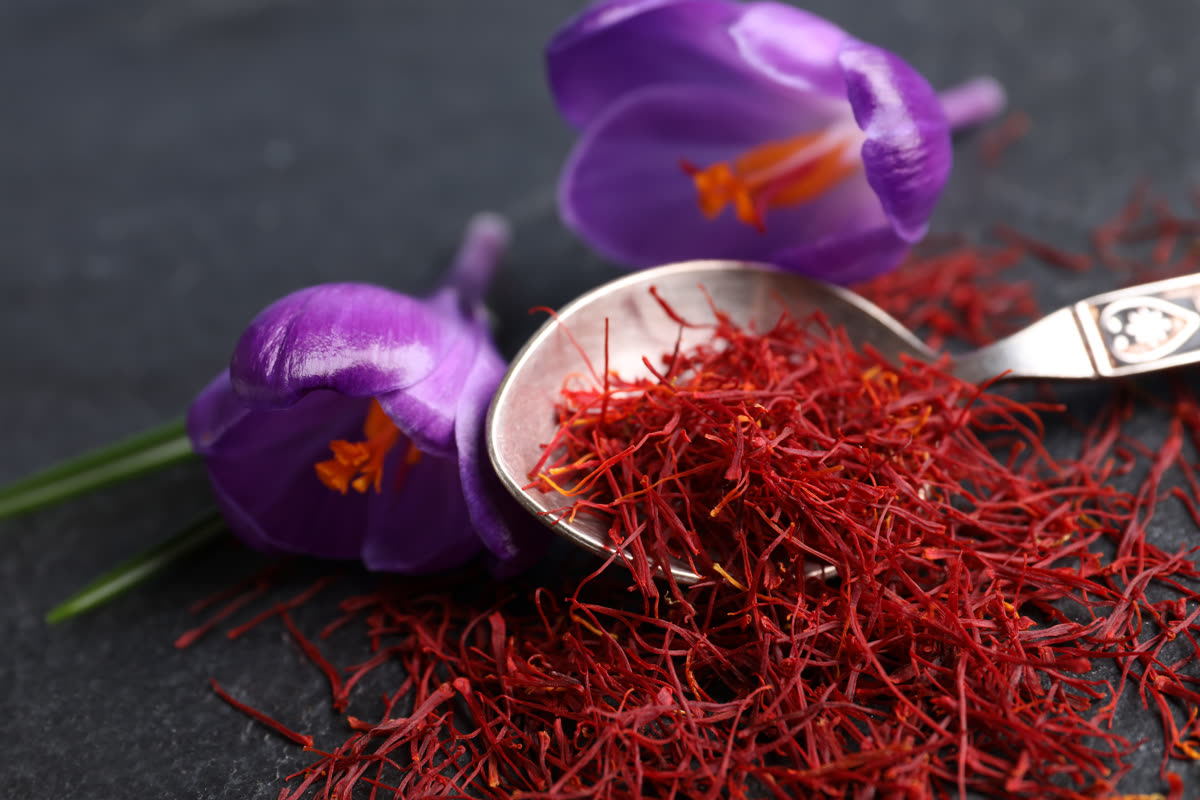
Saffron is the hand-picked red stigma of the saffron crocus — three threads per flower and well over a hundred thousand flowers per kilogram — which makes it the world’s most expensive spice. Its golden pigment crocin and aroma molecule safranal are genuine antioxidants in the lab, and saffron has a long beauty tradition from Persia and Kashmir to Spain and Morocco. But topical human evidence is tiny, adulteration is rife, and in skincare it is best seen as a precious, story-rich supporting ingredient.
Why people reach for it
- Antioxidant pigments. Crocin, crocetin and safranal scavenge free radicals and calm inflammatory signaling in cell studies — a plausible but unproven contribution to an antioxidant routine for aging skin.
- A traditional brightening ingredient. Saffron is the star of Ayurvedic kumkumadi oils and bridal pastes. Lab studies hint at mild effects on pigment pathways, but there is no good human evidence that it fades dark spots.
- Color, scent and ceremony. A few threads tint a mask or oil a luminous gold and lend a honeyed, hay-like aroma — real sensory value in a ritual, as long as you don’t expect a drug effect.
- Upcycled petals. Each kilogram of spice leaves a large mass of purple petals, rich in flavonols and anthocyanins, which are now being developed as cosmetic extracts.
How to use it
| Form | Typical use | Notes |
|---|---|---|
| Saffron-infused oil | About 0.05–0.1 g of threads (a generous pinch) per 50 g of carrier oil | Crumble threads, warm gently in a water bath (below 50 °C) for 1–2 hours or macerate in the dark for 2–4 weeks, then filter. Crocin is water-soluble, so an oil infusion captures aroma and some color but not all of it. See Infused Oils, Hydrosols & Extracts. |
| Fresh ritual mask (single use) | 5–10 threads steeped in 1 tablespoon of warm water or milk for 10 minutes | Stir into a spoonful of honey or plain yogurt, apply for 10 minutes, rinse. Make fresh, use immediately and discard leftovers. |
| Commercial stigma or petal extract | Typically 0.05–1% in serums and creams (follow the supplier) | Protect from light with opaque or airless packaging; crocin fades quickly under light. |
Use it safely
- Saffron stains skin, nails and fabrics yellow-orange; the color on skin fades within a day or so.
- Skin allergy is rare, but occupational allergy (including to saffron pollen) is documented in saffron workers. Patch test any homemade preparation.
- Do not put cheap “saffron” on your skin: adulterated products can contain synthetic dyes or other plant parts.
- Culinary amounts are safe to eat; very large oral doses (several grams) are toxic. Saffron supplements can interact with mood and blood-pressure medications — ask a pharmacist.
Pregnancy and breastfeeding: Topical use and normal culinary amounts are not a concern. Avoid saffron supplements and medicinal oral doses in pregnancy: at high doses saffron stimulates the uterus and was historically used as an abortifacient.
New to an ingredient? Patch test first.
When to see a doctor
- A new or changing mole or spot, especially using the ABCDE signs (asymmetry, irregular border, uneven color, diameter over 6 mm, evolving).
- Rough, scaly patches on sun-exposed skin that persist (possible actinic keratoses).
- A pearly or shiny bump, a sore that does not heal within 3–4 weeks, or a lesion that bleeds easily.
- Sudden skin thinning, easy bruising or stretch marks that may be medication-related (e.g. long-term steroids).
- If you want prescription retinoids or in-office treatments, or are unsure which actives are safe for you.
Other plants for Aging & Photoaging
| Ingredient | Grade | What the evidence shows |
|---|---|---|
| Bakuchiol | B | A randomized, double-blind trial found 0.5% bakuchiol twice daily comparable to 0.5% retinol for wrinkles and pigmentation over 12 weeks, with less stinging; it is not a true retinoid and is less studied. |
| Green Tea | B | Topical green tea polyphenols reduce UV-induced redness and DNA damage in human skin; trials for wrinkles show mixed, modest results. |
| Centella Asiatica (Cica) | C | Madecassoside and asiaticoside stimulate collagen in the lab; small trials of centella-containing creams showed improved firmness, mostly in combination products. |
| Argan Oil | C | A small study in postmenopausal women found improved elasticity with argan oil (oral and topical arms); useful as an emollient. |
| Rosehip Oil | C | Rich in linoleic acid and carotenoids; small studies (mainly of oral rosehip powder) suggest improved skin texture. Topical anti-wrinkle data are thin. |
| Frankincense | C | One small trial of a Boswellia serrata extract cream reported improvement in photoaging signs; needs replication. |
| Sea Buckthorn | D | High in antioxidants and omega-7 (palmitoleic acid), but clinical anti-aging evidence is minimal; unrefined oil stains orange. |