The ingredient encyclopedia · flower
Saffron
Crocus sativus L. · Iridaceae
A few threads of saffron turn a simple honey mask golden and fragrant: a ritual of luxury from La Mancha to Taliouine.
FR SafranES AzafránAR زعفرانZaafran (Darija); kesar or kumkuma (Hindi and Sanskrit)
- How well proven
- DTraditional wisdom
- Safety
- Low topical risk
- Sun-sensitive
- No
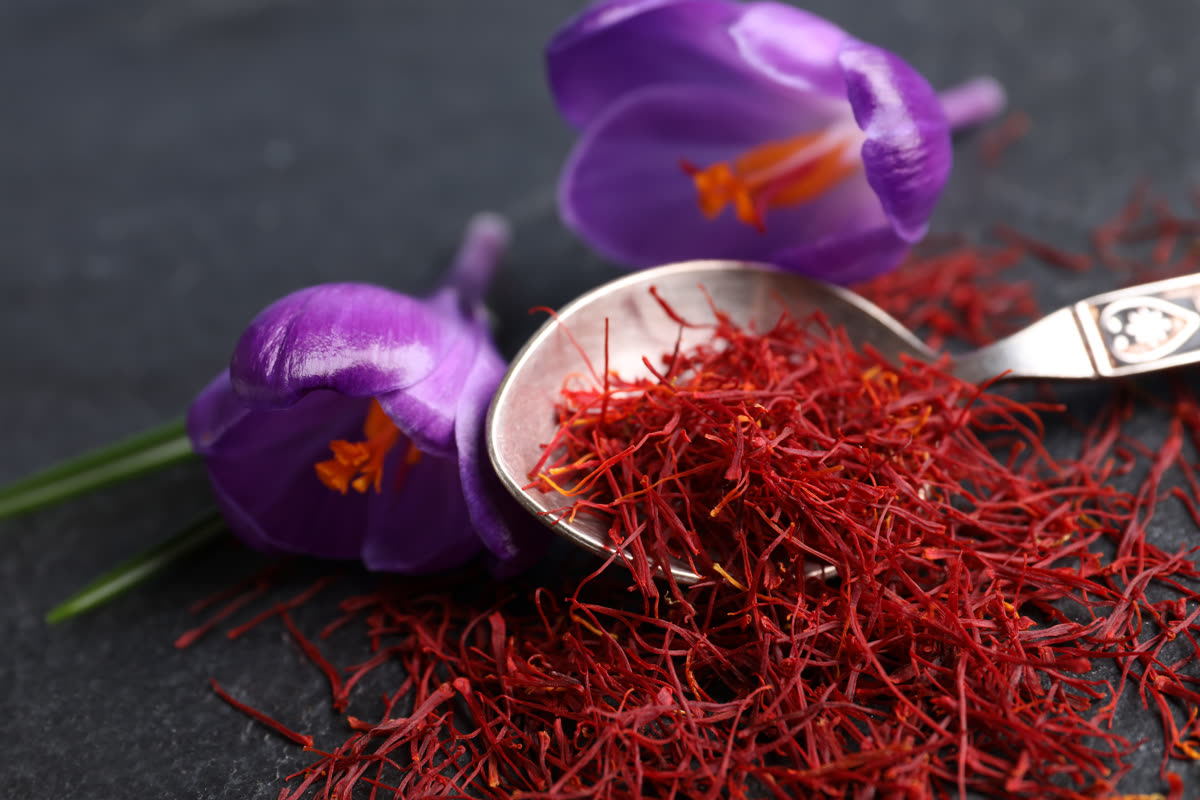
FR SafranES AzafránAR زعفرانZaafran (Darija); kesar or kumkuma (Hindi and Sanskrit)
What the evidence says
Antioxidant and UV-absorbing activity is shown in the lab; topical human data are limited to a few small formulation studies, and the robust saffron trials are oral and not about skin.
- What it does
- Antioxidant pigments. Crocin, crocetin and safranal scavenge free radicals and calm inflammatory signaling in cell studies — a plausible but unproven contribution to an antioxidant routine for aging skin.
- How to use it
- Saffron-infused oil · About 0.05–0.1 g of threads (a generous pinch) per 50 g of carrier oil
- Watch out for
- Saffron stains skin, nails and fabrics yellow-orange; the color on skin fades within a day or so.
Checked against 2 cited studies and our safety review · Updated 26 November 2026 · How we grade
Why you’ll love Saffron
Why you’ll love it
- Tints a mask or oil a luminous, glowing gold
- A honeyed, hay-like aroma that makes any ritual feel special
- Antioxidant pigments that researchers are still studying
Best forAnyone who loves a sensory ritual; enjoy it for pleasure, not dramatic results.
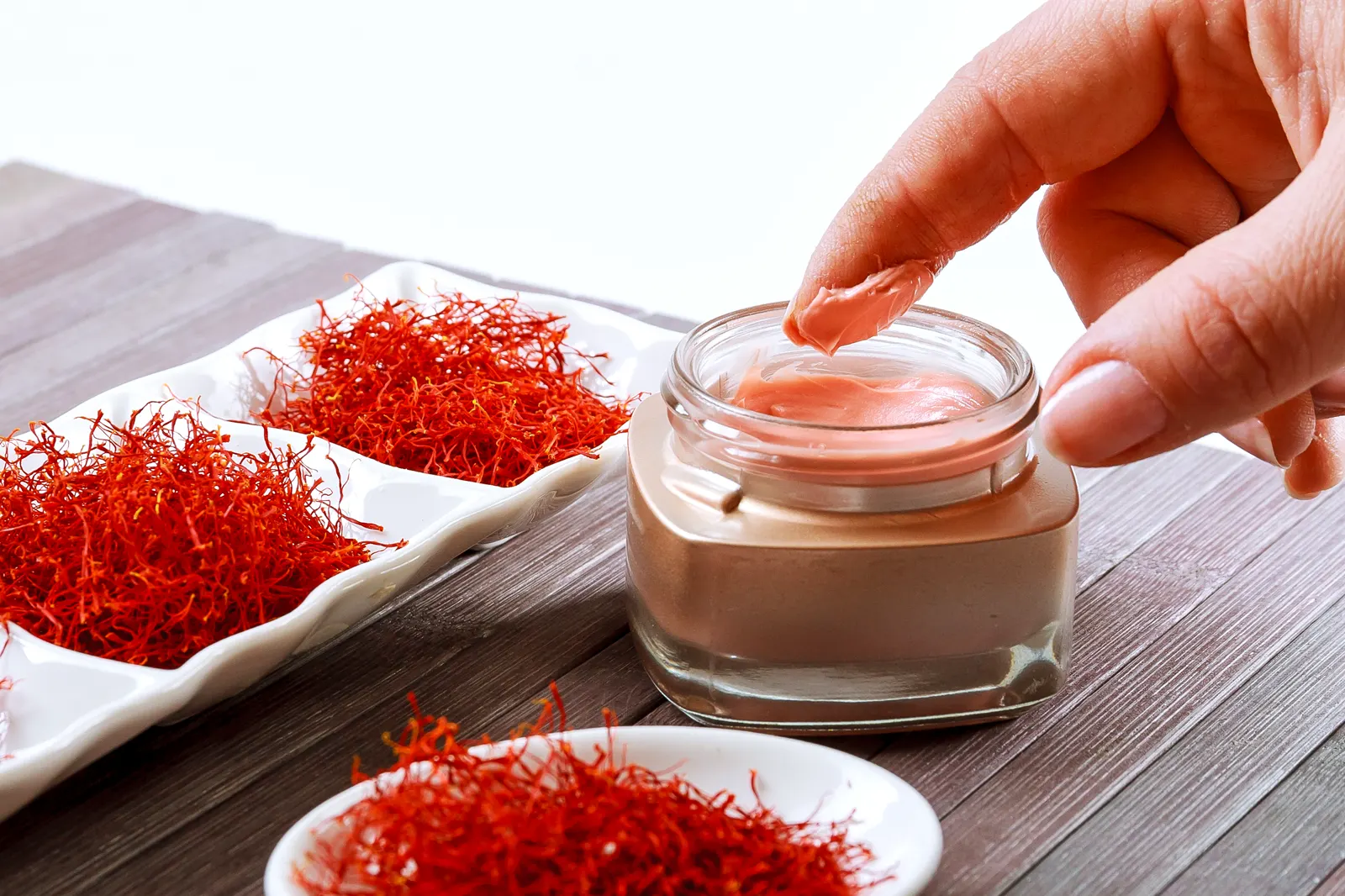
Try it today
A golden honey mask
- Steep 5–10 saffron threads in 1 tablespoon of warm water or milk for 10 minutes.
- Stir into a spoonful of honey or plain yogurt; patch test first if your skin is reactive.
- Apply for 10 minutes, rinse well, and discard any leftover mask.
Good to know: Buy saffron only from trusted sources, as cheap fakes can contain dyes. It may tint skin yellow for a day or so and stains fabric.
At a glance
| Parts used | Dried stigmas (the spice); petals and other floral parts, a large harvest by-product, used for extracts |
|---|---|
| Key actives | Crocin (crocetin glycosides), Crocetin, Picrocrocin, Safranal, Kaempferol glycosides and anthocyanins (petals) |
| INCI names | Crocus Sativus Flower Extract Crocus Sativus Stigma Extract |
| Skin types | normal, dry, combination, mature |
| Pairs well with | HoneyDamask RoseLicorice RootTurmeric |
| Evidence grade | DTraditional wisdom Antioxidant and UV-absorbing activity is shown in the lab; topical human data are limited to a few small formulation studies, and the robust saffron trials are oral and not about skin. |
What it does for skin and hair
Antioxidant pigments
Crocin, crocetin and safranal scavenge free radicals and calm inflammatory signaling in cell studies — a plausible but unproven contribution to an antioxidant routine for aging skin.
A traditional brightening ingredient
Saffron is the star of Ayurvedic kumkumadi oils and bridal pastes. Lab studies hint at mild effects on pigment pathways, but there is no good human evidence that it fades dark spots.
Color, scent and ceremony
A few threads tint a mask or oil a luminous gold and lend a honeyed, hay-like aroma — real sensory value in a ritual, as long as you don’t expect a drug effect.
Upcycled petals
Each kilogram of spice leaves a large mass of purple petals, rich in flavonols and anthocyanins, which are now being developed as cosmetic extracts.
How to use it
Start low, be consistent, and give it four to eight weeks. These are the amounts that work in real products and home recipes.
| Form | Typical use level | Notes |
|---|---|---|
| Saffron-infused oil | About 0.05–0.1 g of threads (a generous pinch) per 50 g of carrier oil | Crumble threads, warm gently in a water bath (below 50 °C) for 1–2 hours or macerate in the dark for 2–4 weeks, then filter. Crocin is water-soluble, so an oil infusion captures aroma and some color but not all of it. See Infused Oils, Hydrosols & Extracts. |
| Fresh ritual mask (single use) | 5–10 threads steeped in 1 tablespoon of warm water or milk for 10 minutes | Stir into a spoonful of honey or plain yogurt, apply for 10 minutes, rinse. Make fresh, use immediately and discard leftovers. |
| Commercial stigma or petal extract | Typically 0.05–1% in serums and creams (follow the supplier) | Protect from light with opaque or airless packaging; crocin fades quickly under light. |
Use it safely
Low topical risk
- Saffron stains skin, nails and fabrics yellow-orange; the color on skin fades within a day or so.
- Skin allergy is rare, but occupational allergy (including to saffron pollen) is documented in saffron workers. Patch test any homemade preparation.
- Do not put cheap “saffron” on your skin: adulterated products can contain synthetic dyes or other plant parts.
- Culinary amounts are safe to eat; very large oral doses (several grams) are toxic. Saffron supplements can interact with mood and blood-pressure medications — ask a pharmacist.
- Pregnancy & breastfeeding
- Topical use and normal culinary amounts are not a concern. Avoid saffron supplements and medicinal oral doses in pregnancy: at high doses saffron stimulates the uterus and was historically used as an abortifacient. Pregnancy guide
- Phototoxicity
- Not phototoxic at normal use levels.
- Declared fragrance allergens
- None expected
New to an ingredient? Patch test first. Stop and seek advice if you get burning, swelling, blistering or a spreading rash.
Buying well
Sustainability
Saffron cannot be mechanized: each flower is picked at dawn and the stigmas removed by hand. Iran produces the large majority of the world’s supply; Spain’s Azafrán de La Mancha and Morocco’s Safran de Taliouine are protected designations of origin, the latter largely produced by small family farms and women’s cooperatives on the slopes of Jbel Siroua. Spain re-exports more saffron than it grows, so “Spanish saffron” on a label is not the same as the La Mancha PDO. Upcycled petal extracts make better use of each harvest.
How to choose quality
Buy whole threads, never powder (the easiest to adulterate). Good saffron is deep crimson with slightly lighter, trumpet-shaped tips, few yellow styles, and a strong honey-hay aroma; look for ISO 3632 category I or a PDO seal. In warm water, genuine threads release a slow golden-yellow color and stay red and intact; fakes bleed red quickly, dissolve or lose color. Common adulterants include safflower and marigold petals, dyed corn silk, turmeric, synthetic dyes and weight-adding oils or sugars. Store airtight, dark and cool for up to two years.
The research For professionals
The chemistry, the studies and the evidence by concern, for practitioners, formulators and the curious.
Saffron’s identity rests on three molecules. Crocin, a family of water-soluble carotenoid glycosides of crocetin, provides the color; picrocrocin provides the bitterness; and safranal, formed from picrocrocin as the stigmas dry, provides most of the aroma. The ISO 3632 standard grades saffron by measuring these spectrophotometrically (crocin at about 440 nm, picrocrocin at about 257 nm, safranal at about 330 nm), together with moisture and floral waste. Petals, discarded in vast quantities, contain kaempferol glycosides and anthocyanins rather than much crocin.
In cell and animal studies, crocin, crocetin and safranal act as antioxidants and dampen inflammatory signaling, and saffron extracts weakly inhibit tyrosinase. Crocin absorbs strongly in the blue-violet range, and an Iranian study measured in-vitro SPF values for lotions containing saffron. None of this makes saffron a sunscreen: crocin degrades in light, and lab SPF measurements of plant extracts do not translate into reliable protection on skin. See Sun Care & After-Sun.
Human evidence is the weak point. Oral saffron has been tested in a series of small randomized trials for mood, summarized in meta-analyses, but nothing about that transfers to skin. Topical studies consist of a handful of small formulation trials, mostly from Iran, measuring hydration or melanin indices, without independent replication. For Dark Spots & Hyperpigmentation, proven options such as sunscreen, azelaic acid, niacinamide and retinoids should come first; saffron can sit alongside them as a minor, sensory ingredient.
Key studies
Lab study asking whether saffron has antisolar and moisturizing effects: lotions containing saffron showed UV-absorbing (in-vitro SPF) activity. Not a substitute for tested sunscreen.
Golmohammadzadeh S, Jaafari MR, Hosseinzadeh H. Iran J Pharm Res. 2010 Read it in the bibliography Find on PubMedMeta-analysis of small randomized trials of oral saffron for major depression, showing benefit versus placebo. Included for context: this is oral evidence and says nothing about skin.
Hausenblas HA, et al. J Integr Med. 2013 Read it in the bibliography Find on PubMed
MythSaffron will make your skin fairer and erase dark spots.
EvidenceThere is no good human evidence that saffron lightens skin or fades hyperpigmentation; the claim comes from tradition and lab studies. Fairness marketing also carries a troubling history. For uneven tone, daily sunscreen and proven actives work far better — see Dark Spots & Hyperpigmentation.
In tradition
Saffron reached al-Andalus with Arab agriculture — Spanish azafrán comes from Arabic za‘farān — and it colors Moroccan tagines and Spanish paella alike. Persian, Kashmiri and Indian brides traditionally use saffron-milk pastes, and Ayurveda’s kumkumadi tailam is a saffron-based complexion oil; a Bronze Age fresco at Akrotiri on Santorini shows saffron gatherers.
Frequently asked questions
Does saffron really brighten skin?
How can I tell if saffron is real?
Can I make saffron oil at home?
Is saffron skincare safe in pregnancy?
Cite this page
Herbs.Beauty. Saffron (Crocus sativus L.): evidence-based monograph. Updated 26 November 2026. https://herbs.beauty/ingredients/saffron.html