The ingredient encyclopedia · oil
Neem
Azadirachta indica (syn. Melia azadirachta, still used in INCI) · Meliaceae
Bitter, earthy and deeply traditional, neem is Ayurveda’s go-to for blemish-prone skin and scalp care.
FR Margousier (neem)ES Nim / MargosaAR النيمNimba (Sanskrit); Margosa
- How well proven
- DTraditional wisdom
- Safety
- Use with care
- Sun-sensitive
- No
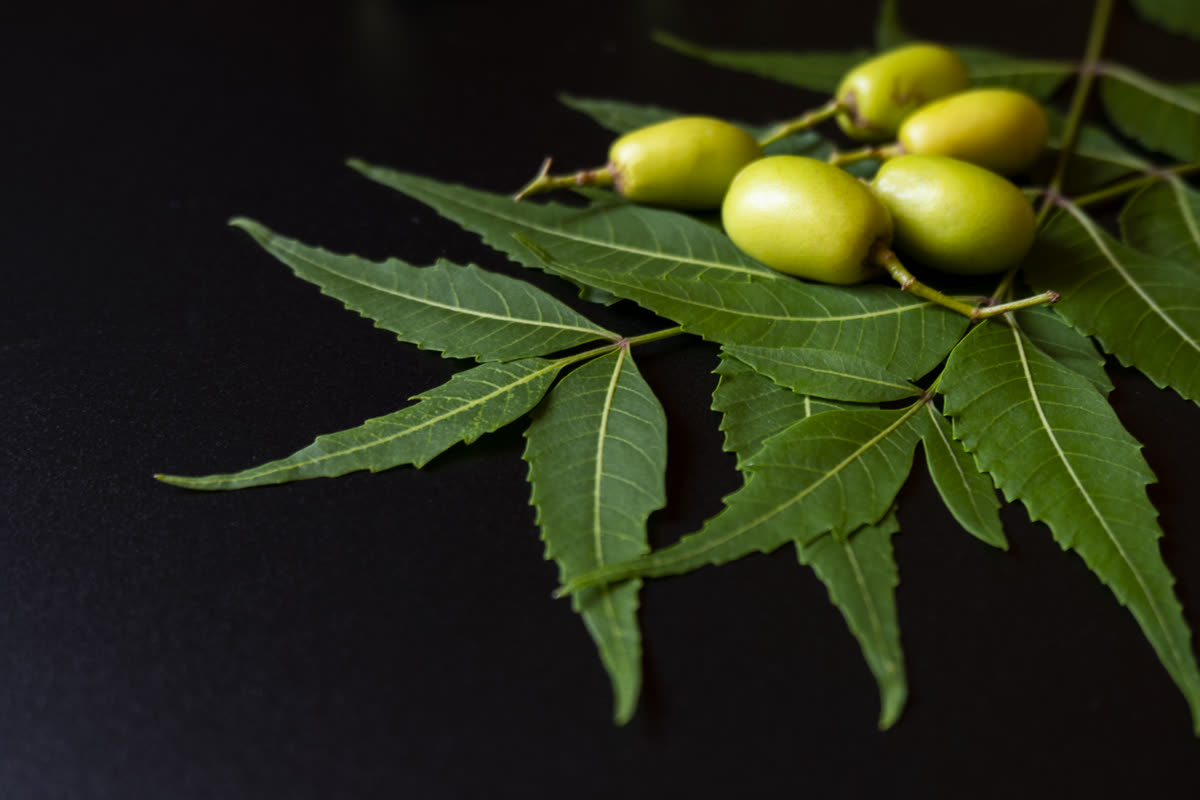
Also known as Azadirachta indica (syn. Melia azadirachta, still used in INCI)
FR Margousier (neem)ES Nim / MargosaAR النيمNimba (Sanskrit); Margosa
What the evidence says
Antibacterial and antifungal activity is well documented in the lab, but there are no controlled human trials for acne or dandruff; human data are limited to uncontrolled studies in parasitic skin conditions.
- Best supported for
- Dandruff & Itchy Scalp D
- How to use it
- Neem seed oil in balms and body oils · 1–10% of the oil phase
- Watch out for
- Never swallow neem oil, and never give it to children by mouth.
Checked against 3 cited studies and our safety review · Updated 26 November 2026 · How we grade
Why you’ll love Neem
Why you’ll love it
- A rich, conditioning oil for scalp and body
- An Ayurvedic classic, with interesting lab research behind it
- Blends easily with lighter oils like jojoba
Best forBlemish-prone skin and scalps, for Ayurveda fans who don’t mind an earthy scent.
Try it today
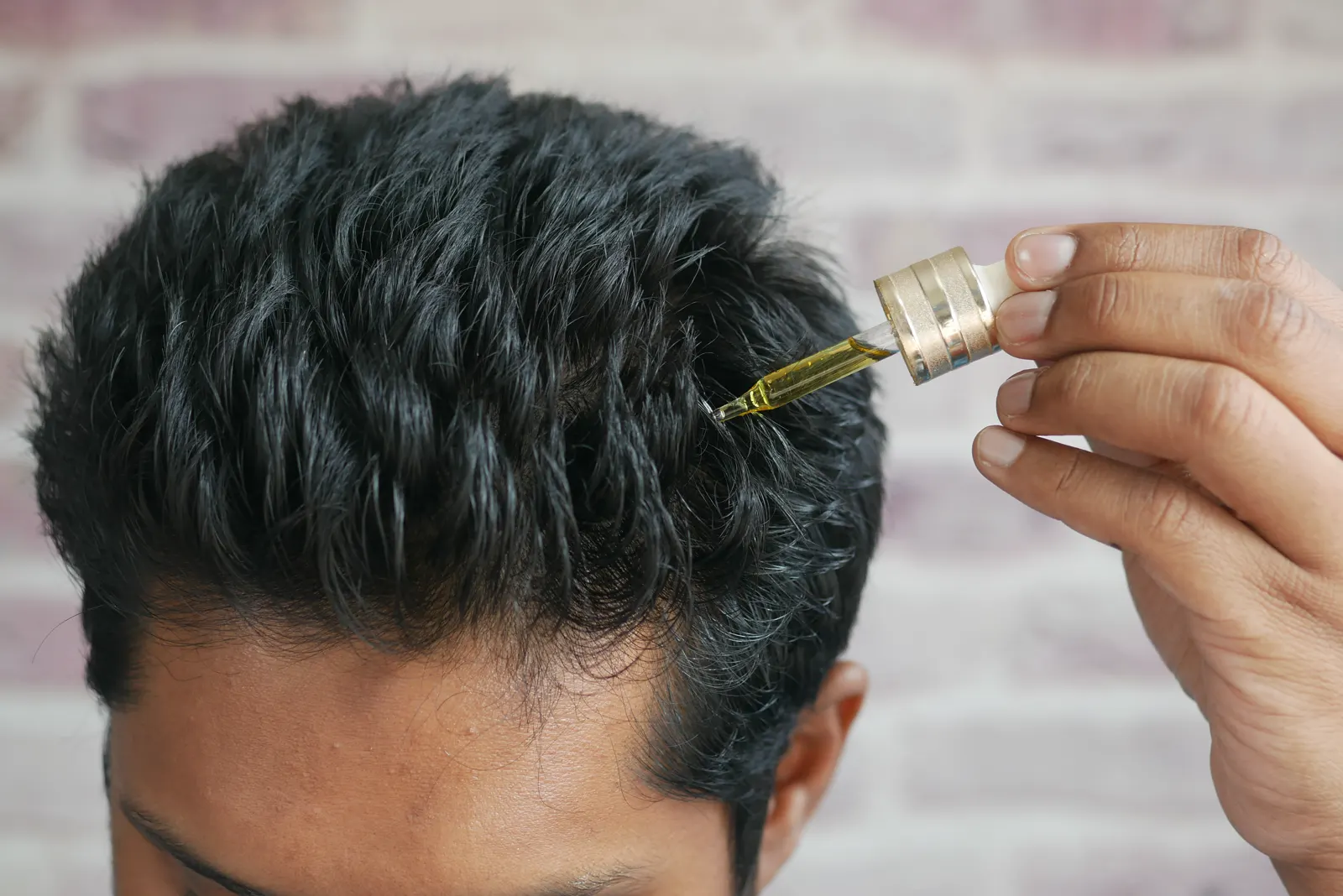
A pre-wash neem scalp oil
- Patch test first, then blend neem oil at 5–10% into a lighter carrier such as jojoba.
- Massage it into your scalp and leave it for 30–60 minutes.
- Shampoo twice to lift the oil and its earthy scent.
Good to know: Neem oil is for skin and hair only. Never swallow it, and keep the bottle well out of children’s reach.
At a glance
| Parts used | Seed oil (cold-pressed); leaf extracts and powder; bark and twigs traditionally |
|---|---|
| Key actives | Azadirachtin, Nimbin and nimbidin, Salannin and gedunin (limonoids), Oleic, stearic, palmitic and linoleic acids, Leaf flavonoids (quercetin) |
| INCI names | Melia Azadirachta Seed Oil Melia Azadirachta Leaf Extract Azadirachta Indica Seed Oil Azadirachta Indica Leaf Extract |
| Skin types | oily, combination |
| Hair & scalp | oily scalp, dry scalp |
| Pairs well with | TurmericTea TreeCoconut OilJojoba |
| Evidence grade | DTraditional wisdom Antibacterial and antifungal activity is well documented in the lab, but there are no controlled human trials for acne or dandruff; human data are limited to uncontrolled studies in parasitic skin conditions. |
What it does for skin and hair
Antimicrobial activity
Neem leaf and seed extracts inhibit acne bacteria, Staphylococcus and some fungi in lab studies, supporting its traditional use for blemishes and scalp flaking.
Rich, conditioning oil
Neem seed oil is high in oleic, stearic and palmitic acids, giving a rich, protective feel in balms and pre-wash scalp oils — at low percentages, given the smell.
Traditional scalp and lice care
Neem seed extracts are insecticidal, and neem shampoos have shown activity against head lice in small studies. Use licensed lice products as directed.
How to use it
Start low, be consistent, and give it four to eight weeks. These are the amounts that work in real products and home recipes.
| Form | Typical use level | Notes |
|---|---|---|
| Neem seed oil in balms and body oils | 1–10% of the oil phase | Start low because of the strong smell; blend with lighter oils such as jojoba. Warm gently if it has solidified. |
| Pre-wash scalp oil | 5–10% in a carrier oil | Massage into the scalp, leave 30–60 minutes, then shampoo twice. Patch test first. |
| Neem leaf extract or powder | Extract 0.5–3%; powder in fresh masks (1–2 teaspoons per use) | Leaf preparations are less pungent than the oil. Combine with clay or turmeric in a single-use mask; aqueous products need a preservative. |
Use it safely
Use with care
- Never swallow neem oil, and never give it to children by mouth. Oral neem oil has caused vomiting, drowsiness, seizures, metabolic acidosis and Reye’s-like encephalopathy in infants and young children, sometimes fatally. Store it out of children’s reach.
- Allergic contact dermatitis to neem oil has been reported, sometimes severe. Patch test before scalp or face use (How to Patch Test).
- Neem is not a reliable treatment for scabies or lice on its own; use licensed treatments and see a doctor if symptoms persist or spread.
- Its strong odor can linger on hair and fabric; low percentages and thorough washing help.
- Pregnancy & breastfeeding
- Avoid oral neem in pregnancy and breastfeeding — it has traditional and animal-study associations with reduced fertility and pregnancy loss. Topical use on small areas is likely low risk, but safety data are limited. Pregnancy guide
- Phototoxicity
- Not phototoxic at normal use levels.
- Declared fragrance allergens
- None expected
New to an ingredient? Patch test first. Stop and seek advice if you get burning, swelling, blistering or a spreading rash.
Buying well
Sustainability
Neem is a hardy, fast-growing tree planted widely across South Asia and Africa, and considered invasive in some regions. Fruit and leaves can be harvested without harming the tree. In 2000 the European Patent Office revoked a patent on a neem-based fungicide in a landmark case against biopiracy of traditional knowledge.
How to choose quality
Choose cold-pressed, unrefined neem seed oil (strong-smelling and golden to brown); “odorless” neem is often refined or solvent-extracted, with fewer limonoids. For leaf extracts, ask for the extraction solvent and standardization. Store the oil cool and dark, and expect it to solidify in cold weather.
The research For professionals
The chemistry, the studies and the evidence by concern, for practitioners, formulators and the curious.
Neem seed oil is a fatty oil dominated by oleic acid with substantial stearic and palmitic acids and some linoleic acid, so it is thick and turns cloudy or solid in cool rooms. What makes neem distinctive is its fraction of bitter tetranortriterpenoid limonoids — azadirachtin, nimbin, nimbidin, salannin and gedunin — plus sulfur compounds responsible for its strong garlic-peanut smell. Azadirachtin is a potent insect growth regulator and antifeedant, approved as a pesticide active substance in many countries. Leaves contain additional limonoids (such as nimbolide) and flavonoids.
In vitro, neem leaf and seed extracts are active against Cutibacterium acnes, Staphylococcus aureus, Malassezia and dermatophytes, and show anti-inflammatory and antioxidant effects; these findings are summarized in several reviews (e.g. Alzohairy, 2016). They are plausible foundations for traditional uses, but there are no controlled human trials of neem for acne or dandruff.
The best-known human study is an uncontrolled pilot in which a neem and turmeric paste was used to treat scabies in over 800 people in India, with high reported cure rates (Charles, 1992) — encouraging, but unblinded and without a comparison group. Neem-based shampoos have shown activity against head lice in small studies. For everyday cosmetic claims, neem remains a traditional ingredient with interesting lab data.
Evidence by concern
| Concern | Grade | What the evidence shows |
|---|---|---|
| Dandruff & Itchy Scalp | D | Antifungal activity in the lab and traditional Ayurvedic use; no good human trials for dandruff. |
Key studies
Uncontrolled pilot study in over 800 people with scabies treated with a neem and turmeric paste: high reported cure rates within 3–15 days, with no comparison group.
Charles V, Charles SX. Trop Geogr Med. 1992 Read it in the bibliography Find on PubMedReported Reye’s-like syndrome (encephalopathy, metabolic acidosis) in Malaysian infants given neem (margosa) oil by mouth.
Sinniah D, Baskaran G. Lancet. 1981 Read it in the bibliography Find on PubMedReview of neem pharmacology: broad antimicrobial, anti-inflammatory and antioxidant activity, mostly from lab and animal studies.
Alzohairy MA. Evid Based Complement Alternat Med. 2016 Read it in the bibliography Find on PubMed
MythNeem is a natural antibiotic that clears acne.
EvidenceNeem kills acne bacteria in a lab dish, but there are no controlled trials in people with acne. Proven topical treatments, such as benzoyl peroxide and retinoids, are listed on the Acne & Breakouts page.
In tradition
In Ayurveda neem is nimba, used for skin complaints, and neem twigs were chewed as toothbrushes across India. Neem leaves are traditionally added to bathwater, and neem flowers with jaggery mark the Ugadi new year in southern India.
Frequently asked questions
Is neem oil good for acne?
Does neem oil help with dandruff?
Why does neem oil smell so bad?
Is neem oil safe for children?
Cite this page
Herbs.Beauty. Neem (Azadirachta indica): evidence-based monograph. Updated 26 November 2026. https://herbs.beauty/ingredients/neem.html