Does it work?
Aloe Vera for Sun Care & After-Sun
Cool, clear and quietly soothing, aloe gel is the after-sun friend your skin reaches for first.
The short answer: Soothing and cooling on sunburn, but controlled trials found aloe gel did not prevent sunburn or speed sunburn recovery compared with placebo; its value is comfort.
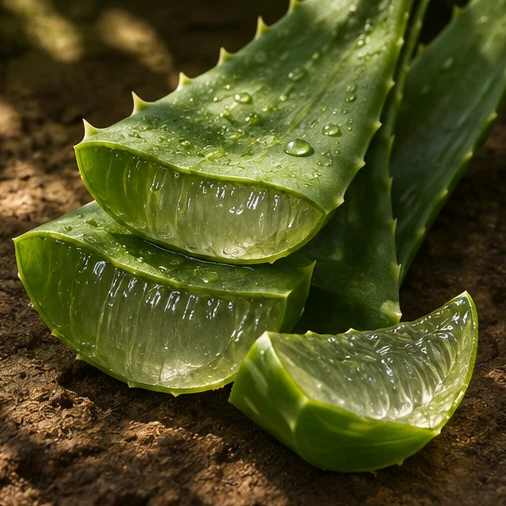
What Aloe Vera can do for Sun Care & After-Sun
The clear gel inside aloe leaves is about 99% water, with a small but active fraction of polysaccharides and glycoproteins. It is one of the best-studied botanicals for minor burns and sunburn, where small trials suggest faster healing, and it makes a light, soothing hydrator for most skin types. It is not a sunscreen, and the yellow latex found just under the rind is an irritant and laxative that good products remove.
Why people reach for it
- Soothes minor burns and sunburn. A systematic review of small trials found first- and second-degree burns treated with aloe healed faster than with comparison dressings. The cool, water-rich gel also gives immediate comfort on sun-reddened skin.
- Light, non-greasy hydration. Aloe’s polysaccharides bind water and leave a thin film, so it hydrates without heaviness. On its own it does not seal moisture in, so dry skin still needs an oil or cream on top.
- A gentle water phase for formulas. Decolorized aloe juice can replace part or all of the water in toners, gels and lotions, adding a soothing skin-feel. Like water, it must be preserved.
- Supports acne treatment tolerance. In one randomized trial, aloe gel used alongside prescription tretinoin improved results and reduced irritation compared with tretinoin plus a plain gel. It is an add-on, not a stand-alone acne treatment.
How to use it
Try it today
A cool after-sun moment
- Pick a fragrance-free aloe gel with aloe juice listed first, and keep it in the fridge.
- After a day outdoors, smooth a thin layer over sun-warmed shoulders, arms and legs.
- Reapply two to four times a day, and keep wearing sunscreen, because aloe isn’t one.
| Form | Typical use | Notes |
|---|---|---|
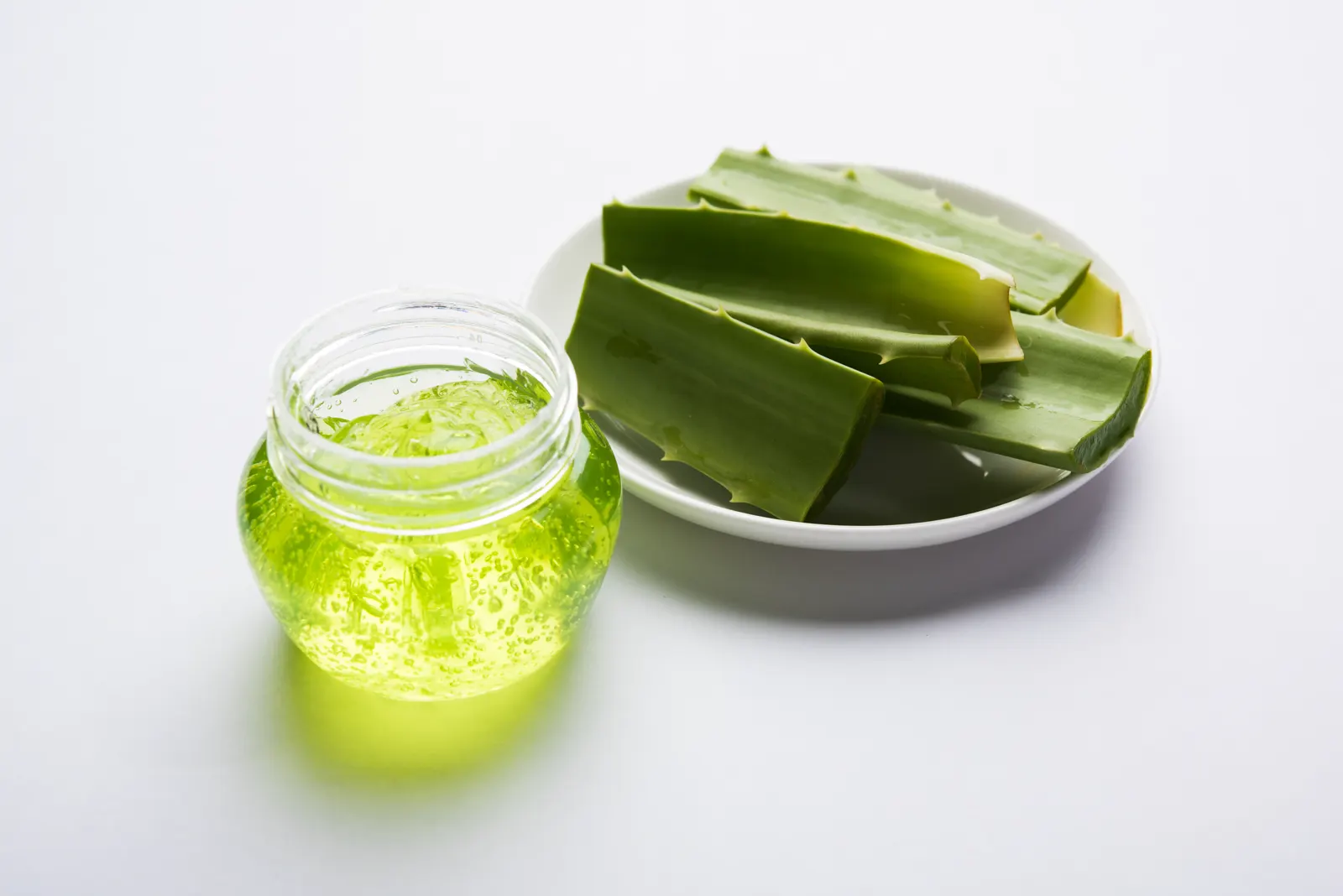
| Fresh gel from a home plant | Single use; apply a thin layer, discard leftovers | Cut a mature lower leaf, stand it cut-end down for 10–15 minutes to drain the yellow latex, then fillet out the clear gel and rinse it. Use immediately on sunburn or a kitchen burn (after cooling under running water). Unpreserved gel spoils within a day or two — see DIY Safety: Water, Microbes & Preservatives. |
| Decolorized aloe juice (1:1) or 200:1 powder | Juice: 10–100% of the water phase. Powder: 0.1–0.5% (≈ 20–100% juice equivalent) | Use in toners, gels and lotions with a broad-spectrum preservative at the supplier’s level, and check final pH (aloe juice is usually mildly acidic). See Cooling Aloe After-Sun Gel. |
| Ready-made aloe gel | 2–4 times daily on sun-exposed or irritated skin | Choose fragrance-free gels with aloe juice as the first ingredient and little or no alcohol; keep in the fridge for extra cooling. |
Recipes for Sun Care & After-Sun with Aloe Vera
Daily rituals with Aloe Vera
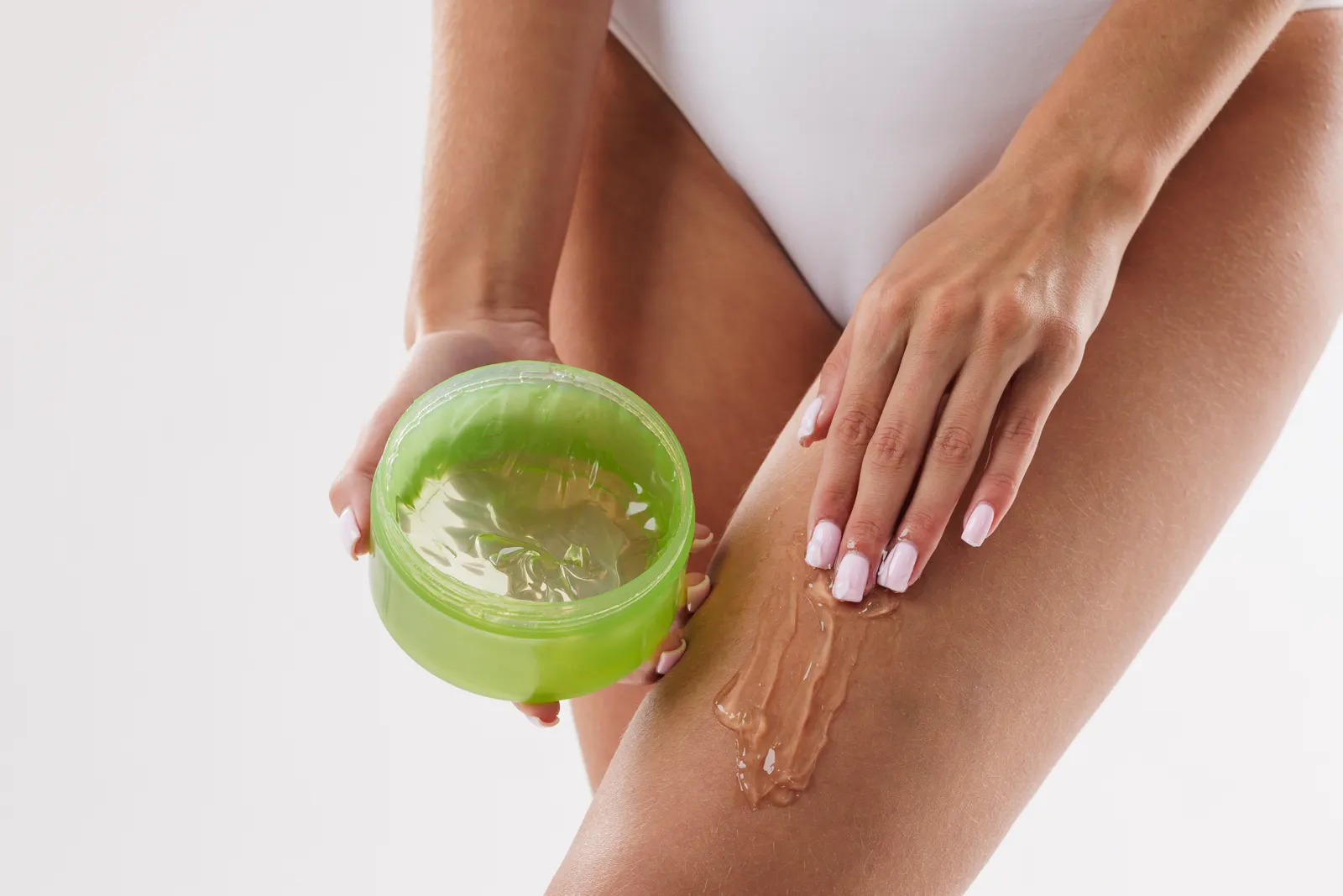 Calming Aloe After Shaving or WaxingRazor burn or post-wax redness on the face? Cool water, a thin layer of preserved aloe gel, and a 24-hour pause on actives help skin settle.
 A First Skincare Routine for TeensCleanse, moisturize, sunscreen: a calm, three-step first routine for teenagers, with one simple add-on for spots and what to skip online.
Use it safely
- Use inner-leaf, decolorized gel on skin. The yellow latex (aloin, aloe-emodin) irritates skin and is a strong laxative. Non-decolorized whole-leaf extract caused intestinal tumors in rats in a two-year US National Toxicology Program study and is classed by IARC as possibly carcinogenic to humans (Group 2B) when taken orally. Do not drink homemade aloe.
- Contact allergy is uncommon but documented; patch test before wide use, especially on already damaged skin (How to Patch Test).
- Aloe is for minor burns only. Seek medical care for burns that blister over an area larger than the person’s palm, involve the face, hands, feet, genitals or joints, are chemical or electrical, or look white, leathery or charred.
- Aloe has negligible SPF. It is an after-sun, not a sunscreen.
Pregnancy and breastfeeding: Topical inner-leaf gel is considered safe in pregnancy and while breastfeeding. Avoid oral aloe latex or whole-leaf products, which are stimulant laxatives.
New to an ingredient? Patch test first.
When to see a doctor
- Severe sunburn with large areas of blistering, intense pain, fever, chills, headache, confusion, fainting or signs of dehydration or heatstroke — seek urgent care.
- Any sunburn in a baby under one year old.
- A new mole or a mole that changes in size, shape or color, or shows ABCDE signs, or an “ugly duckling” that looks different from your others.
- A sore that does not heal, a pearly bump, or a scaly patch that persists or bleeds.
- An unusual rash after sun exposure, especially after starting a new medicine or touching plants (photosensitivity or phytophotodermatitis).
Other plants for Sun Care & After-Sun
| Ingredient | Grade | What the evidence shows |
|---|---|---|
| Green Tea | B | Topical green tea polyphenols reduced UV-induced redness and DNA damage in human skin studies — an antioxidant adjunct under sunscreen, never a substitute. |
| Colloidal Oatmeal | C | Soothes itch and discomfort on irritated, sun-exposed skin; evidence comes from its broader use as a skin protectant. |
| Calendula | D | Traditional for minor burns and has some evidence in radiation skin reactions, but not tested for sunburn; daisy-family allergy is possible. |
| Sea Buckthorn | D | Rich in carotenoids and antioxidants and used in after-sun products; no clinical evidence for protection or recovery, and it offers no SPF. |