Does it work?
Licorice Root for Dark Spots & Hyperpigmentation
Sweet licorice root is a gentle, skin-friendly brightener for uneven tone and easily flushed skin.
The short answer: Glabridin and liquiritin inhibit tyrosinase and disperse melanin; small controlled trials of liquiritin and licorice-extract creams improved melasma and PIH.
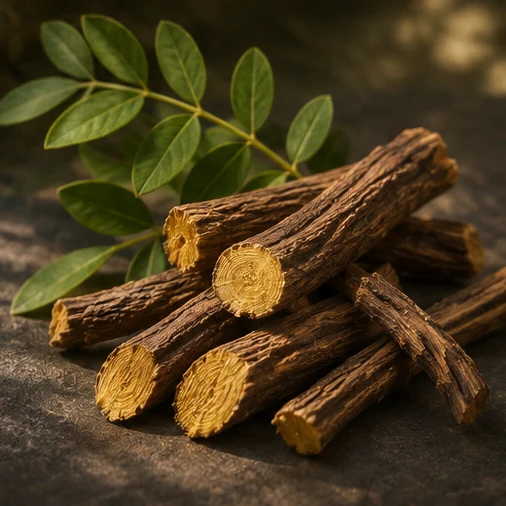
What Licorice Root can do for Dark Spots & Hyperpigmentation
Licorice root is a mainstay of brightening and anti-redness skin care. Its oil-soluble isoflavan glabridin inhibits melanin production, liquiritin helps disperse existing pigment, and glycyrrhetinic acid and its salts are soothing. Human evidence is small but encouraging. Topical use is very low-risk; the well-known blood-pressure problems belong to eating large amounts of licorice.
Why people reach for it
- Brightens dark spots and uneven tone. Glabridin inhibits tyrosinase, the key enzyme in melanin production, and reduced UV-induced pigmentation in animal skin. A small trial of topical liquiritin improved melasma.
- Calms redness and irritation. Glycyrrhetinic acid and dipotassium glycyrrhizate reduce inflammatory signaling and are widely used to soothe sensitive and post-procedure skin.
- Supports anti-inflammatory treatments. Glycyrrhetinic acid inhibits the skin enzyme that inactivates cortisol, and enhanced the effect of topical hydrocortisone in a classic study.
- Gentle enough to combine. Licorice extracts pair well with niacinamide, vitamin C and azelaic acid in brightening routines, and are a common hydroquinone-free option.
How to use it
Try it today
A brightening morning trio
- After cleansing, apply a licorice serum; patch test first if your skin is sensitive.
- Follow with your usual moisturizer and give it a minute to settle.
- Finish with broad-spectrum sunscreen every day; without it, brighteners can’t do their job.
| Form | Typical use | Notes |
|---|---|---|
| Glabridin-standardized (oil-soluble) extract | Typically 0.1–0.5%, per supplier’s standardization | Dissolve in the oil phase or a suitable solvent (e.g. a glycol); use with daily sunscreen. See Licorice & Niacinamide Brightening Serum. |
| Water-soluble licorice root extract | 1–5% | Gentler, soothing and lightly brightening; suits toners and gels. Preserve aqueous formulas. |
| Dipotassium glycyrrhizate | 0.1–0.5% | A water-soluble soothing agent for sensitive skin, aftershaves and formulas with acids or retinoids. |
Recipes for Dark Spots & Hyperpigmentation with Licorice Root
Daily rituals with Licorice Root
 Window Light, Screens and Your Skin: A Two-Minute CheckDo you need sunscreen indoors in winter? Window glass lets through UVA; screens are a minor issue. A quick check of where you sit tells you.
 The Autumn Equinox Skin ResetSummer’s over, the sunscreen stays. A twenty-minute equinox reset: check skin and moles, swap textures, and bring back actives slowly.
Use it safely
- Topical vs oral are different stories. Eating large amounts of licorice (glycyrrhizin) can cause high blood pressure, low potassium and fluid retention, and interacts with diuretics, digoxin and corticosteroids. Normal topical use is not considered to deliver meaningful systemic glycyrrhizin.
- Allergic contact dermatitis to licorice extracts is rare but reported. Patch test, especially on sensitive skin (How to Patch Test).
- Brightening ingredients only work with daily broad-spectrum sunscreen; see a dermatologist for new, changing or irregular dark spots.
Pregnancy and breastfeeding: Topical licorice extracts are generally regarded as a gentle brightening option in pregnancy. Avoid eating large amounts of licorice or taking licorice supplements while pregnant, as heavy consumption has been linked to adverse pregnancy outcomes.
New to an ingredient? Patch test first.
When to see a doctor
- Any spot that is changing in size, shape or color, has irregular borders or several colors, is larger than about 6 mm, itches, bleeds or crusts (the ABCDE warning signs of melanoma).
- A new dark streak in a fingernail or toenail, or a dark spot on the palm, sole or mucosa.
- Widespread, unexplained darkening of the skin, gums or skin creases, especially with fatigue, weight loss or dizziness.
- New or changing pigmentation in pregnancy that worries you — most is harmless melasma, but a changing mole should always be checked.
- Pigmentation that does not improve after 3 months of strict sun protection and treatment, or if you want prescription options.
- A dark patch that started after a new medicine (e.g. minocycline, some antimalarials or chemotherapy).
Other plants for Dark Spots & Hyperpigmentation
| Ingredient | Grade | What the evidence shows |
|---|---|---|
| Bakuchiol | C | In a randomized trial against retinol for photoaging, 0.5% bakuchiol improved mottled pigmentation; it has not been properly tested in melasma. |
| Aloe Vera | C | Aloesin inhibits tyrosinase in the lab, and small human studies of aloe-based products suggest mild lightening, including a small trial in pregnancy melasma. |
| Green Tea | C | EGCG reduces melanin production in the lab and protects against UV-induced inflammation; clinical depigmenting data are limited. |
| Turmeric | C | Curcuminoids inhibit tyrosinase in vitro, and a small study of a turmeric-extract cream reported modest reduction of facial spots. Raw turmeric stains and can irritate. |
| Rosehip Oil | D | Often marketed for dark marks, but its trans-retinoic acid content is unproven and human data for pigmentation are lacking; useful as a light emollient. |