The ingredient encyclopedia · food
Pomegranate
Punica granatum L. · Lythraceae
Jewel-red and antioxidant-rich, pomegranate brings a dry-touch seed oil and a toning peel to the Mediterranean beauty shelf.
FR GrenadeES GranadaAR رمانRommane (Darija); anar (Persian and Hindi); dāḍima (Sanskrit)
- How well proven
- CPromising
- Safety
- Low topical risk
- Sun-sensitive
- No
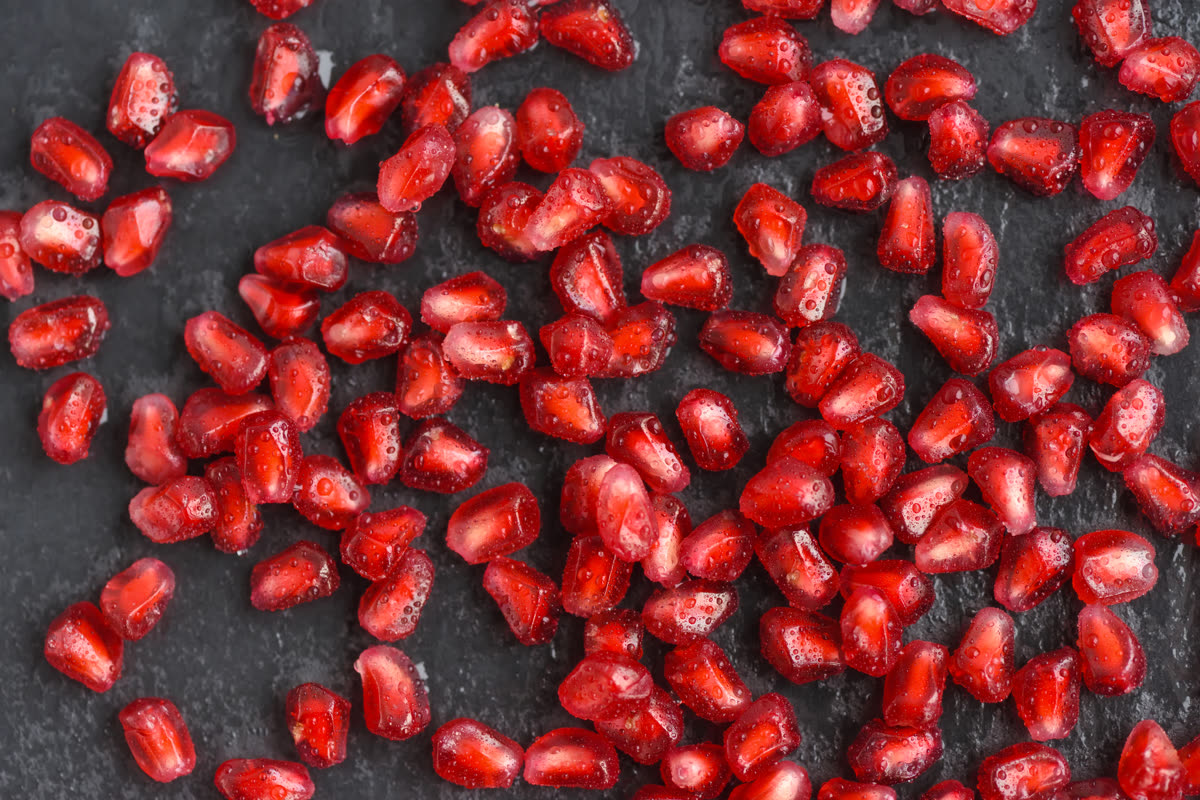
FR GrenadeES GranadaAR رمانRommane (Darija); anar (Persian and Hindi); dāḍima (Sanskrit)
What the evidence says
Solid in-vitro data and small randomized oral trials on UV response; topical human evidence for the seed oil or peel extract remains limited.
- What it does
- Antioxidant support. Ellagitannins and ellagic acid are potent antioxidants in the lab, and peel extracts protected skin cells against UV-induced damage in cell and animal studies — a rationale for use in anti-aging serums alongside sunscreen.
- How to use it
- Seed oil in face serums · 1–10% of an anhydrous serum
- Watch out for
- Allergy to pomegranate is rare but documented, including in people with other fruit allergies; patch test new products.
Checked against 3 cited studies and our safety review · Updated 26 November 2026 · How we grade
Why you’ll love Pomegranate
Why you’ll love it
- A light, quickly absorbed seed oil for combination skin
- Peel extracts give toners a fresh, briefly tightening feel
- Rich in antioxidants, with promising lab research behind them
Best forNormal and combination skin, oily-skin toners, and lovers of Mediterranean ingredients.
Try it today
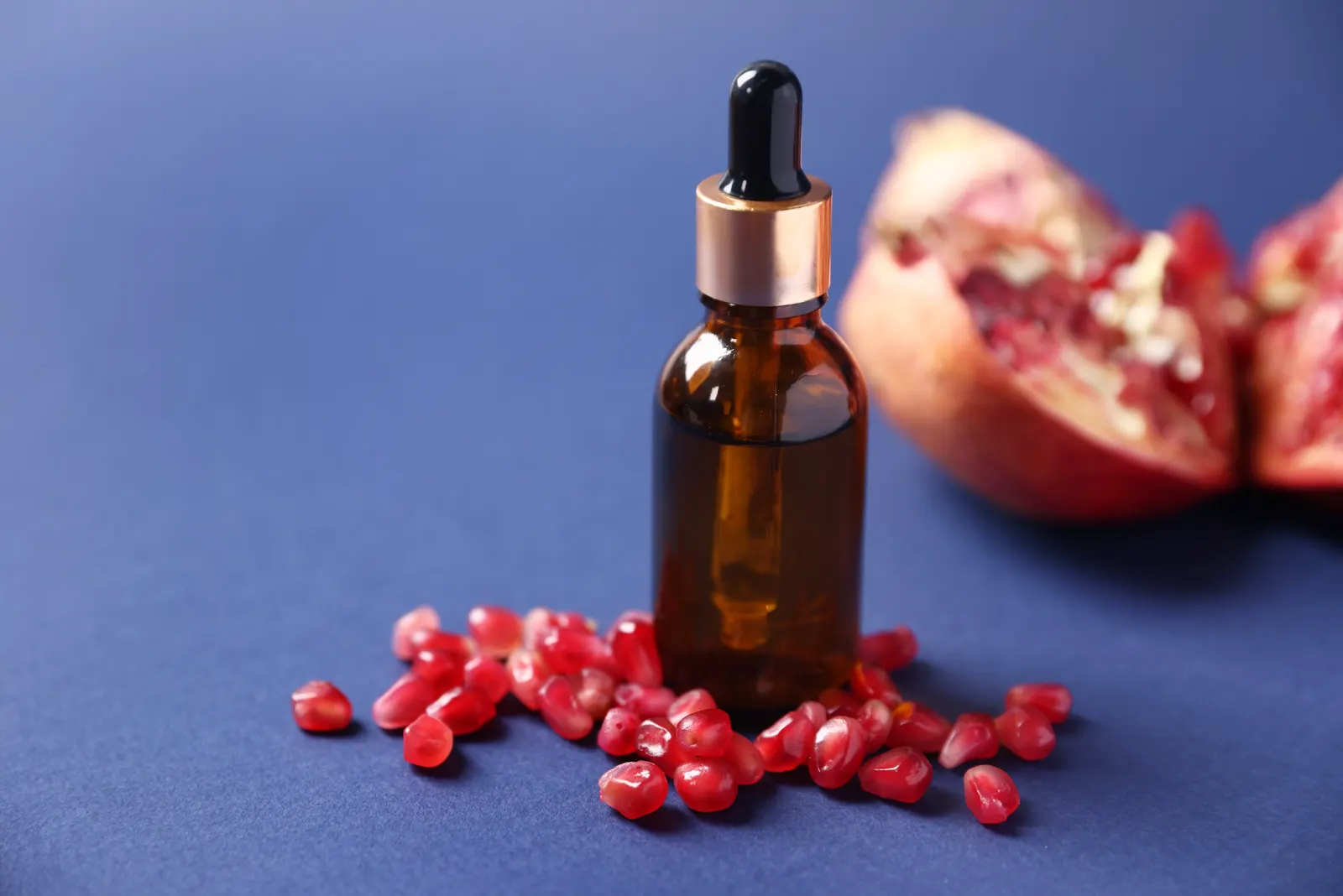
A jewel-drop night oil
- In a small dark bottle, add 1 drop of pomegranate seed oil for every 10–20 drops of squalane or jojoba.
- Press 2–3 drops of the blend onto clean skin at night.
- Keep the bottle in the fridge and use it up within a few months.
Good to know: The seed oil turns rancid quickly; discard it if it smells sharp or fishy. Fresh juice can sting and stain, so keep it off broken skin.
At a glance
| Parts used | Seed oil (cold-pressed or CO₂); peel (pericarp) extracts rich in tannins; fruit and juice extracts; flower extracts |
|---|---|
| Key actives | Punicic acid (a conjugated linolenic acid, seed oil), Punicalagins and other ellagitannins (peel), Ellagic acid, Anthocyanins (juice), Tocopherols and phytosterols (seed oil) |
| INCI names | Punica Granatum Seed Oil Punica Granatum Fruit Extract Punica Granatum Pericarp Extract Punica Granatum Juice Punica Granatum Extract |
| Skin types | normal, combination, oily, mature |
| Pairs well with | Green TeaRosehip OilPrickly Pear Seed OilArgan Oil |
| Evidence grade | CPromising Solid in-vitro data and small randomized oral trials on UV response; topical human evidence for the seed oil or peel extract remains limited. |
What it does for skin and hair
Antioxidant support
Ellagitannins and ellagic acid are potent antioxidants in the lab, and peel extracts protected skin cells against UV-induced damage in cell and animal studies — a rationale for use in anti-aging serums alongside sunscreen.
A dry-touch seed oil
Punicic acid gives pomegranate seed oil a light, quickly absorbed feel that suits combination and normal skin in small percentages of a face oil.
Astringent toning from the peel
Tannin-rich peel extracts tighten the feel of the skin temporarily and are traditional washes in the Maghreb and Ayurveda, useful in toners for oily skin.
Possible help for uneven tone
Ellagic acid inhibits tyrosinase in vitro, and one small oral trial found pomegranate extract slightly reduced UV-induced tanning. Topical proof is lacking.
How to use it
Start low, be consistent, and give it four to eight weeks. These are the amounts that work in real products and home recipes.
| Form | Typical use level | Notes |
|---|---|---|
| Seed oil in face serums | 1–10% of an anhydrous serum | Blend with stable oils such as jojoba or squalane and add tocopherol (0.2–0.5%). Keep refrigerated and use within a few months. |
| Peel or fruit extract in toners and serums | Typically 0.5–3% (follow the supplier’s standardization) | Choose extracts standardized for punicalagins or ellagic acid. Water-based products need a broad-spectrum preservative and a chelator; see DIY Safety: Water, Microbes & Preservatives. |
| Fresh kitchen mask (single use) | 1 tablespoon of pressed juice mixed into honey or yogurt | Pomegranate juice is acidic and can sting or stain; avoid broken skin. Use immediately and discard leftovers. |
Use it safely
Low topical risk
- Allergy to pomegranate is rare but documented, including in people with other fruit allergies; patch test new products.
- The seed oil oxidizes quickly; rancid oil smells sharp or fishy and is more irritating — discard it.
- Fresh juice and peel preparations can stain skin and fabrics and may sting sensitive or broken skin.
- Drinking large amounts of pomegranate juice has been reported to interact with some drugs (for example warfarin); this does not apply to skincare, but ask your pharmacist if you take it daily.
- Pregnancy & breastfeeding
- No concerns for topical use, and the fruit is a normal food in pregnancy. Patch test, as skin may be more reactive. Pregnancy guide
- Phototoxicity
- Not phototoxic at normal use levels.
- Declared fragrance allergens
- None expected
New to an ingredient? Patch test first. Stop and seek advice if you get burning, swelling, blistering or a spreading rash.
Make it at home: recipes with pomegranate
Buying well
Sustainability
Spain is the EU’s leading pomegranate grower, centered on the Vinalopó valleys of Alicante, where the soft-seeded Granada Mollar de Elche holds a protected designation of origin. Seed oil and peel extracts are largely by-products of juice production, an efficient upcycling of material that would otherwise be waste. See Sustainable & Ethical Botanical Sourcing.
How to choose quality
Seed oil should be golden to reddish-amber with a faint fruity smell; ask for a certificate of analysis showing punicic acid (typically above 65%) and a recent production date, and buy small bottles. Many “pomegranate” products contain only a trace of juice extract — check where it sits on the INCI list. For extracts, look for stated standardization (punicalagins or ellagic acid). Store the oil in the fridge.
The research For professionals
The chemistry, the studies and the evidence by concern, for practitioners, formulators and the curious.
Pomegranate seed oil is unusual: roughly 65–80% of its fatty acids are punicic acid (9Z,11E,13Z-octadecatrienoic acid), a conjugated linolenic acid found in very few plants. Conjugated double bonds make the oil feel dry and absorb fast, but also make it very prone to oxidation, so it needs antioxidants and cold storage. The peel (pericarp) is a different chemical world: large ellagitannins, chiefly punicalagins, which hydrolyze to ellagic acid. The juice adds anthocyanins and other flavonoids.
In laboratory work, pomegranate fractions behave like a well-rounded antioxidant system. Aslam and colleagues found that seed oil stimulated keratinocyte proliferation while peel extract promoted procollagen synthesis and inhibited the collagen-degrading enzyme MMP-1 in human skin cells. Other cell and mouse studies report reduced UVB-induced oxidative stress and inflammatory signaling, and ellagic acid inhibits tyrosinase, the key enzyme of melanin synthesis.
The human data are mostly oral. A Japanese trial found that an ellagic-acid-rich pomegranate extract taken by mouth modestly reduced UV-induced pigmentation, and a randomized trial in healthy women found that 12 weeks of pomegranate juice or extract raised the UV dose needed to cause redness. Both effects are small — far below even a low-SPF sunscreen. Topical trials of pomegranate seed oil or peel extract are few, small and usually test multi-ingredient products.
For formulators, the seed oil works best at low percentages in a stable base with tocopherol, and peel extracts, being rich in tannins, can darken in the presence of iron, precipitate proteins and feel astringent; a chelator helps.
Key studies
In human skin cells, pomegranate seed oil promoted keratinocyte proliferation; peel extract stimulated fibroblast procollagen synthesis and inhibited MMP-1. Lab data only.
Aslam MN, Lansky EP, Varani J. J Ethnopharmacol. 2006 Read it in the bibliography Find on PubMedRandomized trial in Japanese women: oral ellagic-acid-rich pomegranate extract slightly reduced UV-induced skin pigmentation compared with placebo.
Kasai K, et al. J Nutr Sci Vitaminol. 2006 Read it in the bibliography Find on PubMedRandomized trial in healthy women: 12 weeks of pomegranate juice or extract increased the minimal erythema dose (resistance to UVB redness) versus placebo, and changed the skin microbiome. Oral, modest effect.
Henning SM, et al. Sci Rep. 2019 Read it in the bibliography Find on PubMed
MythPomegranate seed oil is a natural sunscreen.
EvidenceNo. Lab “SPF” figures for plant oils are unreliable and far too low to protect you. Oral pomegranate studies show only a small increase in UV tolerance. Use a tested broad-spectrum sunscreen and treat pomegranate as an antioxidant extra; see Sun Care & After-Sun.
In tradition
The pomegranate gave its name and emblem to the city of Granada and runs through Andalusian and Moroccan design, from tilework to wedding symbolism of fertility and abundance. Across the Maghreb, dried peel was used as an astringent wash and as a natural dye and tanning agent, and Ayurveda values dāḍima for its cooling astringency.
Frequently asked questions
Is pomegranate seed oil good for acne-prone skin?
Pomegranate seed oil or rosehip oil: which is better for aging skin?
Does eating pomegranate help protect skin from the sun?
Can I put pomegranate juice on my face?
Cite this page
Herbs.Beauty. Pomegranate (Punica granatum L.): evidence-based monograph. Updated 26 November 2026. https://herbs.beauty/ingredients/pomegranate.html