The ingredient encyclopedia · resin
Myrrh
Commiphora myrrha (T.Nees) Engl. (syn. Commiphora molmol (Engl.) Engl. ex Tschirch) · Burseraceae
Ancient, warm and gently bitter: the resin of Egyptian temples, now a rich base note for balms and perfume.
FR MyrrheES MirraAR مُرّMo yao 没药 (Chinese medicine); bola (Ayurveda); mor (Hebrew)
- How well proven
- DTraditional wisdom
- Safety
- Low topical risk
- Sun-sensitive
- No
Also known as Commiphora myrrha (T.Nees) Engl. (syn. Commiphora molmol (Engl.) Engl. ex Tschirch)
FR MyrrheES MirraAR مُرّMo yao 没药 (Chinese medicine); bola (Ayurveda); mor (Hebrew)
What the evidence says
Traditional use, recognized for mouth care; antimicrobial, anti-inflammatory and analgesic effects are shown in lab and animal studies, with no controlled human skin trials.
- What it does
- Traditional mouth and gum care. Diluted myrrh tincture is a long-standing remedy for mouth ulcers and inflamed gums, recognized as traditional use in Europe.
- How to use it
- Essential oil in face and body oils · 0.5–1% on the face, up to 2% on the body
- Watch out for
- Allergic contact dermatitis to myrrh is reported, including from traditional topical preparations; patch test and do not apply undiluted.
Checked against 1 cited study and our safety review · Updated 26 November 2026 · How we grade
Why you’ll love Myrrh
Why you’ll love it
- A deep, warm, balsamic scent that anchors any blend
- A classic of comforting balms for cracked lips, hands and heels
- Pairs beautifully with frankincense and rose for an ancient feel
Best forBalms for chapped hands and heels, natural perfumes and lovers of resin scents.
Try it today
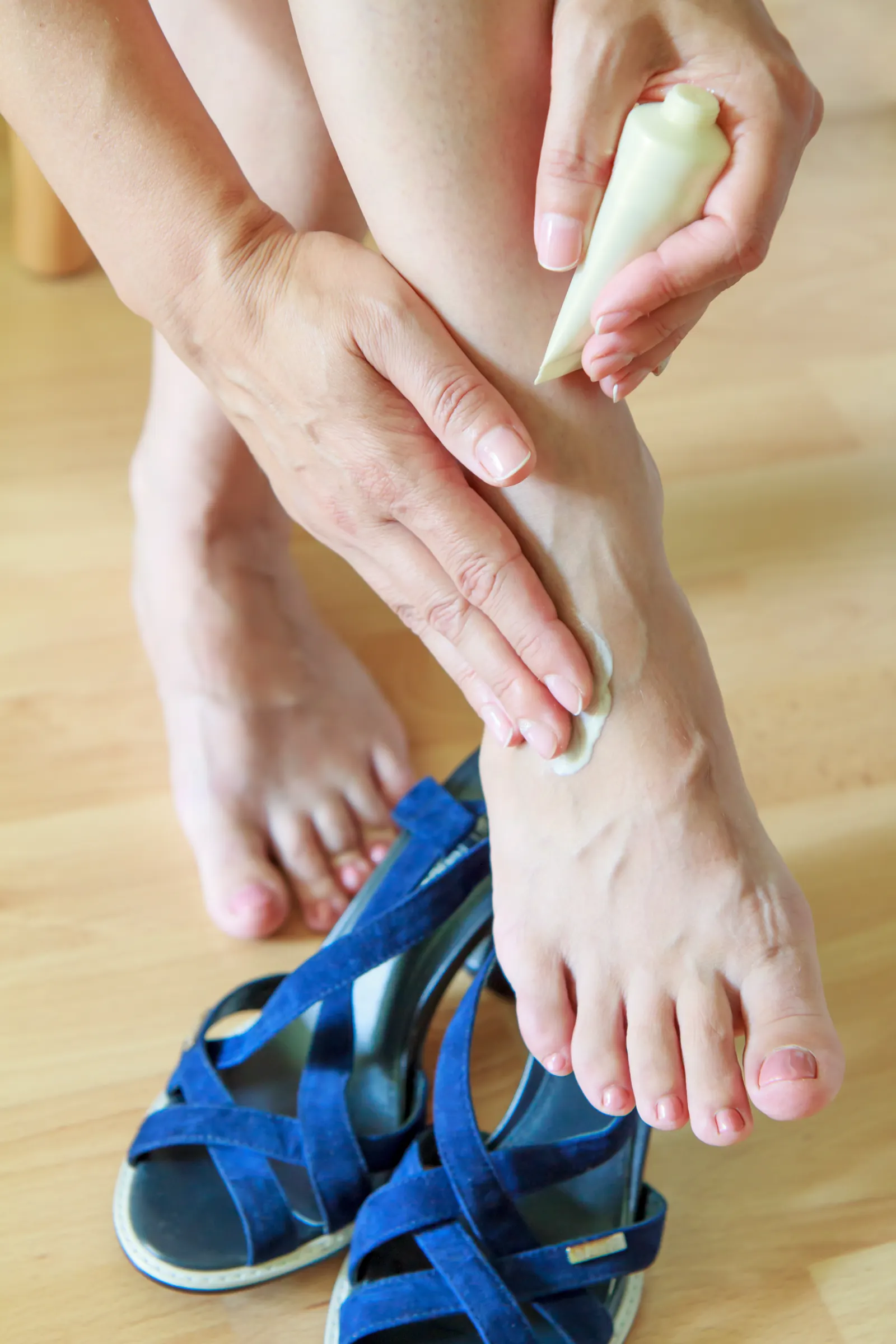
A rich night balm for heels and hands
- Pick a ready-made myrrh balm, or blend myrrh into a shea butter base at no more than 2%.
- Patch test on your inner arm first, and stop if you see redness or itching.
- At night, massage it into clean, dry heels or knuckles, skipping any deep or infected cracks.
Good to know: Skip myrrh essential oil if you are pregnant or breastfeeding. Mouth ulcers or bleeding gums lasting over two weeks deserve a dentist’s visit.
At a glance
| Parts used | Oleo-gum-resin that seeps from cuts in the bark; essential oil (steam-distilled), resinoid and CO₂ extract; tincture |
|---|---|
| Key actives | Furanoeudesma-1,3‑diene, Curzerene and lindestrene (furanosesquiterpenes), β-Elemene, Triterpenes (resin fraction), Water-soluble gum polysaccharides |
| INCI names | Commiphora Myrrha Oil Commiphora Myrrha Resin Extract Commiphora Myrrha Resin |
| Skin types | dry, normal, mature |
| Pairs well with | FrankincenseCistus (Labdanum)Shea ButterCalendula |
| Evidence grade | DTraditional wisdom Traditional use, recognized for mouth care; antimicrobial, anti-inflammatory and analgesic effects are shown in lab and animal studies, with no controlled human skin trials. |
What it does for skin and hair
Traditional mouth and gum care
Diluted myrrh tincture is a long-standing remedy for mouth ulcers and inflamed gums, recognized as traditional use in Europe.
Comfort for chapped, cracked skin
Myrrh is a classic of balms for cracked lips, hands and heels, where its antimicrobial resin sits in a protective base. See Dry & Dehydrated Skin.
A rich base note and fixative
Its warm, bitter-balsamic scent anchors natural perfumes and pairs naturally with frankincense and cistus (labdanum).
Biologically active in the lab
Myrrh’s furanosesquiterpenes show antimicrobial, anti-inflammatory and pain-relieving activity in cell and animal studies — promising, but untested on skin in people.
How to use it
Start low, be consistent, and give it four to eight weeks. These are the amounts that work in real products and home recipes.
| Form | Typical use level | Notes |
|---|---|---|
| Essential oil in face and body oils | 0.5–1% on the face, up to 2% on the body | Very viscous; warm the bottle in your hand. Blends well with frankincense and Damask rose. See Essential Oil Safety: The Complete Guide. |
| Resinoid or CO₂ extract in balms and lip care | 0.5–2% of a balm; ≤ 0.5% in lip products | Use in a protective base such as shea butter for cracked hands, heels and lips. Add tocopherol to the oil phase. |
| Tincture for mouth care | As directed on a licensed product (usually dabbed onto the gum or diluted in water as a rinse) | Do not swallow large amounts. See a dentist for gum bleeding or ulcers lasting more than two weeks. |
Use it safely
Low topical risk
- Allergic contact dermatitis to myrrh is reported, including from traditional topical preparations; patch test and do not apply undiluted.
- Do not use on deep or infected wounds; see a clinician for wounds that are not healing.
- Oral myrrh has been reported in a case report to reduce the effect of warfarin; ask a pharmacist before taking myrrh internally if you use anticoagulants.
- Keep essential oils away from infants and young children.
- Pregnancy & breastfeeding
- Avoid myrrh essential oil and oral myrrh in pregnancy and breastfeeding: it was traditionally used to bring on menstruation, and safety data are lacking. Rinse-off products with traces are not a concern. Pregnancy guide
- Phototoxicity
- Not phototoxic at normal use levels.
- Declared fragrance allergens
- None expected
New to an ingredient? Patch test first. Stop and seek advice if you get burning, swelling, blistering or a spreading rash.
Buying well
Sustainability
Myrrh is almost entirely wild-harvested by pastoralist communities in Somalia, Ethiopia, Kenya, Yemen and Oman, where income is vital but traceability is poor. Overtapping, drought, grazing and conflict put pressure on Commiphora stands; research on frankincense trees in the same region has shown declining populations, a warning for resin harvesting generally. Buy from suppliers who can name the region and harvester groups. See Sustainable & Ethical Botanical Sourcing.
How to choose quality
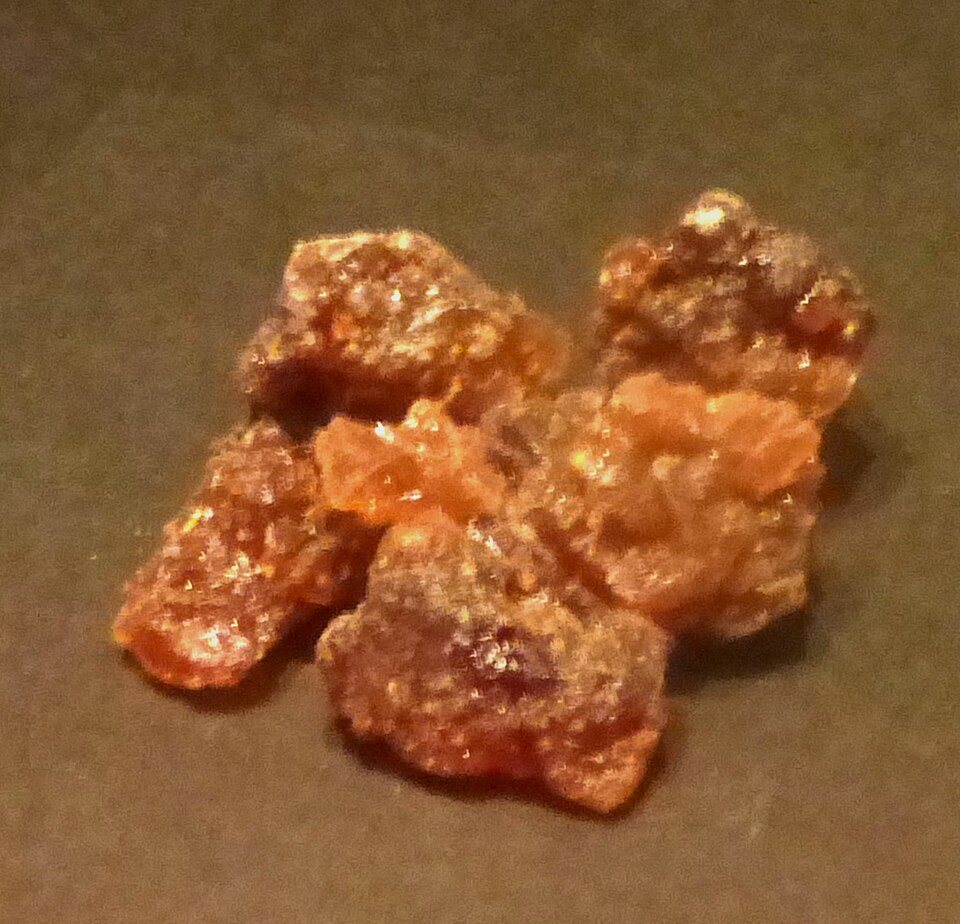
Raw myrrh tears are irregular, reddish-brown and bitter, and become stickier and darker with age. The essential oil is amber and viscous; the resinoid is thicker still. Ask for the species (Commiphora myrrha), origin and a GC-MS report showing furanosesquiterpenes. Opopanax or “sweet myrrh” is a different, sweeter material. Store tightly closed, cool and dark; the oil thickens over time.
The research For professionals
The chemistry, the studies and the evidence by concern, for practitioners, formulators and the curious.
Myrrh is an oleo-gum-resin: roughly a third to more than half water-soluble gum (polysaccharides with some protein), a substantial alcohol-soluble resin fraction rich in triterpenes, and a few percent of essential oil. The oil’s signature molecules are furanosesquiterpenes — furanoeudesma-1,3‑diene, curzerene and lindestrene — together with β-elemene and germacrenes; together they give myrrh its warm, bitter, slightly mushroomy-balsamic smell.
In the laboratory, myrrh extracts are antibacterial and antifungal and dampen inflammatory signaling. In a study published in Nature in 1996, Dolara and colleagues found that furanoeudesma-1,3‑diene and curzerene had analgesic effects in mice mediated by opioid receptors, offering a plausible basis for myrrh’s ancient reputation as a pain-relieving balm. Animal wound models also report faster healing.
Human evidence for skin is essentially absent. The best-recognized use is in the mouth: Europe’s herbal committee (EMA HMPC) lists myrrh tincture as a traditional herbal medicinal product for minor mouth ulcers and gum inflammation, a status based on long use rather than trials. Claims that myrrh oil “reverses aging” or fades scars are extrapolations from tradition and lab work. Note that guggul (Commiphora wightii, syn. C. mukul) and opopanax (“sweet myrrh”, C. guidottii and relatives) are different materials.
Key studies
Two myrrh sesquiterpenes, furanoeudesma-1,3‑diene and curzerene, produced opioid-receptor-mediated analgesia in mice. Animal data; explains traditional use as a pain-relieving balm, not a skin-care outcome.
Dolara P, et al. Nature. 1996 Read it in the bibliography Find on PubMed
MythMyrrh oil is a proven anti-aging essential oil.
EvidenceMyrrh’s anti-aging reputation comes from ancient embalming and cosmetic use and from lab studies. No controlled trial shows it reduces wrinkles or sagging in people. Daily sunscreen and retinoids have the evidence; myrrh is a beautiful, traditional addition. See Aging & Photoaging.
In tradition
Ancient Egyptians burned myrrh in temples, blended it into kyphi incense and unguents, and Queen Hatshepsut’s expedition to Punt is shown bringing back myrrh trees. The incense routes of southern Arabia carried it north; the Magi’s gifts made it a symbol of devotion; and Chinese medicine (mo yao) and Ayurveda (bola) still use it.
Frequently asked questions
What is myrrh used for in skincare?
What is the difference between myrrh and frankincense?
Is myrrh oil safe during pregnancy?
Can myrrh help gum inflammation and mouth ulcers?
Cite this page
Herbs.Beauty. Myrrh (Commiphora myrrha (T.Nees) Engl.): evidence-based monograph. Updated 26 November 2026. https://herbs.beauty/ingredients/myrrh.html