The ingredient encyclopedia · oil
Baobab Oil
Adansonia digitata L. (Formerly placed in Bombacaceae, now subfamily Bombacoideae of Malvaceae) · Malvaceae
Cushiony comfort from the savanna’s upside-down tree: a soft oil for dry hands, lips and curls.
FR Huile de baobabES Aceite de baobabAR زيت بذور التبلدي (الباوباب)Tabaldi (Sudanese Arabic); mbuyu (Swahili); kuka (Hausa); bouye (Wolof, fruit pulp and drink)
- How well proven
- CPromising
- Safety
- Low topical risk
- Sun-sensitive
- No
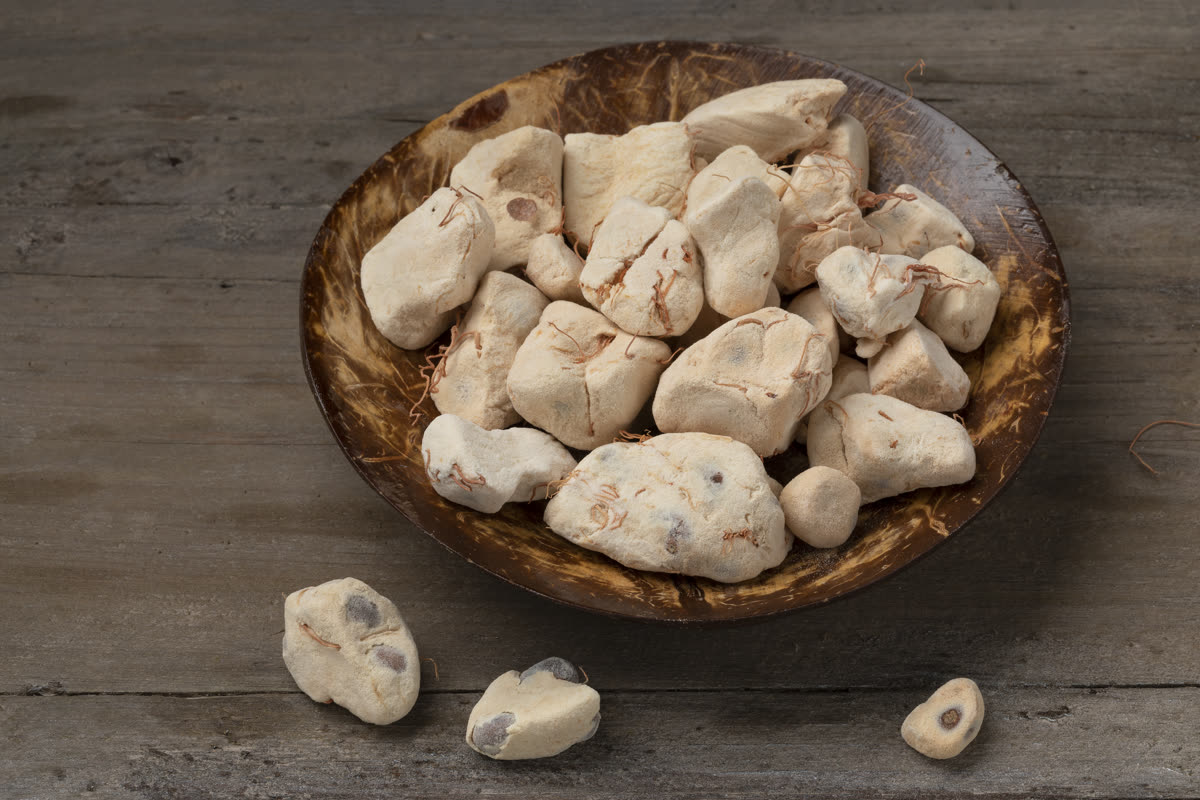
Also known as Adansonia digitata L. (Formerly placed in Bombacaceae, now subfamily Bombacoideae of Malvaceae)
FR Huile de baobabES Aceite de baobabAR زيت بذور التبلدي (الباوباب)Tabaldi (Sudanese Arabic); mbuyu (Swahili); kuka (Hausa); bouye (Wolof, fruit pulp and drink)
What the evidence says
A small pilot study found baobab seed oil non-irritating and moisturizing; there are no controlled trials of specific skin or hair benefits.
- What it does
- Cushiony comfort for dry skin. Its palmitic and oleic content gives a richer, more cushioned feel than most liquid oils, helpful on dry hands, elbows and dry facial skin.
- How to use it
- Face or body oil · Neat, or 10–50% of a blend
- Watch out for
- Irritation and allergy are uncommon; patch test before wider use if your skin is reactive.
Checked against 1 cited study and our safety review · Updated 26 November 2026 · How we grade
Why you’ll love Baobab Oil
Why you’ll love it
- A rich, cushioned feel that comforts dry hands and elbows
- Leaves curly and coily hair softer, with less friction
- Gentle and rarely irritating, even for many sensitive skins
Best forDry skin, hands and elbows, and curly or coily hair.

Try it today
A pre-wash curl treatment
- Smooth 1–2 teaspoons of baobab oil through your lengths, focusing on the ends.
- Leave it on for 30–60 minutes while you get on with your evening.
- Shampoo and condition as usual for softer, smoother hair.
Good to know: Cloudy or half-solid in the cold? That is normal; just warm the bottle gently. The vitamin C is in baobab fruit, not the oil.
At a glance
| Parts used | Seed oil, cold-pressed (unrefined) or refined; fruit pulp and leaves (food) |
|---|---|
| Key actives | Oleic acid, Linoleic acid, Palmitic acid, Cyclopropenoid fatty acids (malvalic, sterculic, dihydrosterculic acids), Tocopherols, Phytosterols (mainly β-sitosterol) |
| INCI names | Adansonia Digitata Seed Oil |
| Skin types | dry, normal, mature, sensitive |
| Hair & scalp | curly, thick, dry scalp |
| Pairs well with | Marula OilShea ButterJojobaCalendula |
| Evidence grade | CPromising A small pilot study found baobab seed oil non-irritating and moisturizing; there are no controlled trials of specific skin or hair benefits. |
What it does for skin and hair
Cushiony comfort for dry skin
Its palmitic and oleic content gives a richer, more cushioned feel than most liquid oils, helpful on dry hands, elbows and dry facial skin.
Balanced barrier support
A meaningful share of linoleic acid supplies the fatty acid skin uses to build barrier ceramides, while the saturated fraction adds occlusion — see The Skin Barrier, Explained.
Softness and slip for textured hair
Used on damp lengths or as a pre-wash treatment, it reduces friction and helps dry, curly hair feel softer.
Generally gentle
Patch testing in the pilot study found it non-irritating, and allergy reports are rare — a reasonable choice for many sensitive-skin formulas.
How to use it
Start low, be consistent, and give it four to eight weeks. These are the amounts that work in real products and home recipes.
| Form | Typical use level | Notes |
|---|---|---|
| Face or body oil | Neat, or 10–50% of a blend | Apply to damp skin after bathing. Blend with lighter oils such as jojoba if you prefer a drier finish. |
| Creams, lotions and balms | 3–10% of a cream; 10–30% of an anhydrous balm | Adds cushion to the oil phase. Add tocopherol at 0.1–0.5%. |
| Hair | A few drops on ends, or 1–2 teaspoons as a pre-wash treatment | Leave on lengths 30–60 minutes before shampooing; useful for curly and coily hair. |
Use it safely
Low topical risk
- Irritation and allergy are uncommon; patch test before wider use if your skin is reactive.
- Cyclopropenoid fatty acids are a food-safety consideration rather than a known skin hazard; use oil sold for food if you intend to eat it.
- Do not confuse the oil with baobab fruit powder: the vitamin C is in the pulp, not the oil.
- Discard oil that smells sharp or paint-like; oxidized oils are more irritating.
- Pregnancy & breastfeeding
- No specific concerns for topical use in pregnancy or breastfeeding. Patch test new products. Pregnancy guide
- Phototoxicity
- Not phototoxic at normal use levels.
- Declared fragrance allergens
- None expected
New to an ingredient? Patch test first. Stop and seek advice if you get burning, swelling, blistering or a spreading rash.
Buying well
Sustainability
Baobab is wild-harvested from trees on farmland and communal land, often by women, and the oil is a co-product of the fast-growing fruit-pulp trade. The trees themselves face pressures: a 2018 study in Nature Plants (Patrut and colleagues) reported that many of Africa’s oldest and largest baobabs had died or lost their oldest stems since 2005, possibly linked to climate change. Prefer suppliers with documented community benefit and sustainable harvest plans. See Sustainable & Ethical Botanical Sourcing.
How to choose quality
Unrefined cold-pressed baobab oil is golden-yellow with a mild, slightly nutty smell; refined oil is paler and odorless. It may turn cloudy or partly solid when cold — warm it gently, this is not spoilage. Check that the INCI reads Adansonia Digitata Seed Oil. Store cool and dark and use within about 12–18 months.
The research For professionals
The chemistry, the studies and the evidence by concern, for practitioners, formulators and the curious.
Baobab seed oil has a mixed fatty-acid profile: roughly 30–40% oleic acid, 25–35% linoleic acid and 18–30% palmitic acid, with small amounts of stearic and α-linolenic acid. The relatively high palmitic share makes it slightly cloudy or semi-solid in a cold room and gives a richer skin feel. Its minor fraction includes tocopherols and phytosterols, mainly β-sitosterol.
Baobab oil also contains cyclopropenoid fatty acids (CPFAs) — chiefly malvalic and sterculic acids, typically at a few percent, varying with origin and processing. CPFAs are characteristic of the mallow family (they also occur in cottonseed oil). In animal feeding they inhibit stearoyl-CoA desaturase, the enzyme that converts saturated into monounsaturated fat; this is why they are scrutinized in edible oils. Deodorization and heat treatment reduce them substantially. There is no evidence that CPFAs in topical baobab oil harm the skin, but refined oil or suppliers that report CPFA content are sensible choices for food-grade use.
Oxidative stability is moderate: better than high-linoleic oils such as evening primrose oil, thanks to the saturated and monounsaturated share, but below very oleic oils such as marula oil. Human evidence is thin. A pilot study from South Africa (Komane and colleagues, 2017) found the oil non-irritating and reported moisturizing and occlusive effects; claims that baobab oil “regenerates” skin or boosts collagen rest on its general composition, not on trials.
Key studies
Pilot study (“Beauty in baobab”): baobab seed oil was non-irritating on patch testing and showed moisturizing and occlusive effects on the skin of healthy volunteers. Small and short-term.
Komane B, et al. Rev Bras Farmacogn. 2017 Read it in the bibliography Find on PubMed
MythBaobab oil is packed with vitamin C.
EvidenceBaobab fruit pulp is rich in vitamin C, but vitamin C is water-soluble and does not carry into the seed oil. The oil’s value lies in its fatty acids and tocopherols.
In tradition
Across the Sahel and East Africa the baobab feeds and shelters: the leaves go into soups such as Hausa miyan kuka, the tangy pulp into drinks such as Senegalese bouye and Sudanese tabaldi juice, and in parts of Sudan hollow trunks have been used to store water. The seed oil is used locally on skin and hair.
Frequently asked questions
Is baobab oil comedogenic?
Is baobab oil good for eczema?
Why has my baobab oil gone cloudy?
Are cyclopropenoid fatty acids in baobab oil dangerous?
Cite this page
Herbs.Beauty. Baobab Oil (Adansonia digitata L.): evidence-based monograph. Updated 26 November 2026. https://herbs.beauty/ingredients/baobab-oil.html