Head to head
Squalane versus Jojoba
 vs
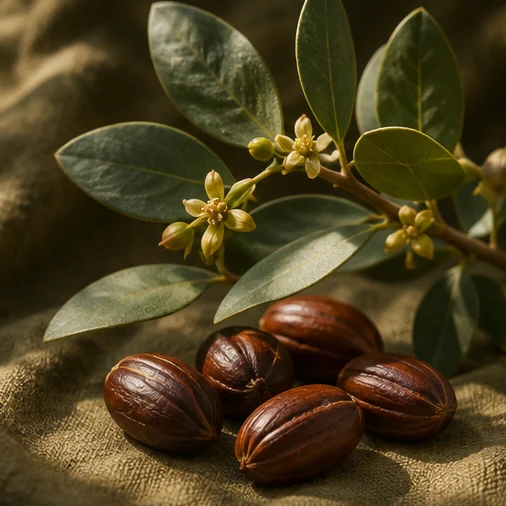
The verdict
These are the two easiest oils to wear and both suit oily, acne-prone and sensitive skin. Choose squalane if you want the lightest, most inert, scent-free option; choose jojoba if you prefer a plant-pressed, slightly more cushioning oil. Evidence for both is about emollience, not special powers, so let texture and price decide.
| Attribute | Squalane | Jojoba |
|---|---|---|
| Evidence grade | C — well-understood emollient chemistry and excellent tolerability; few trials of squalane alone | C — strong chemical rationale and small uncontrolled studies |
| What it is | A saturated hydrocarbon made by hydrogenating squalene (from olive, sugarcane-derived fermentation or, historically, shark liver) | Liquid wax esters pressed from jojoba seed |
| Link to sebum | Squalene makes up roughly a tenth of human sebum; squalane is its stable, saturated form | Wax esters make up about a quarter of human sebum |
| Feel | Very light, silky, almost weightless; absorbs fast | Light, slightly richer and more cushioning |
| Stability | Excellent; fully saturated, so does not oxidize in normal use | Excellent; resists oxidation for years |
| Best for | Oily, acne-prone, sensitive and reactive skin; as a light last step or hair finish | Oily, combination and acne-prone skin; scalp; base for blends |
| Comedogenic risk | Very low | Low |
| Allergy | Very rare; one of the best-tolerated emollients | Rare |
| Pregnancy | No known concerns | No known concerns |
| Cost | Moderate | Moderate |
Choose Squalane if
Choose squalane if you want the lightest, most neutral oil available, your skin is very oily, sensitive or reactive, or you want an oil that layers invisibly under makeup and sunscreen. Pick one with a stated plant or sugarcane source.
Choose Jojoba if
Choose jojoba if you prefer a pressed plant oil with a little more cushion, your skin is combination or only slightly oily, or you want a long-lasting base for your own blends and scalp oils.
Squalane is not squalene
Squalene is a natural lipid made by our own skin and found in olive oil and shark liver oil. It is highly unsaturated, so it oxidizes easily; oxidized squalene in sebum is thought to contribute to irritation and comedones. Squalane is squalene with hydrogen added to saturate every double bond. The result is a clear, odorless, inert oil that does not go rancid. Check labels: Squalane with an “a” is the stable cosmetic ingredient; Squalene with an “e” is the fragile one.
Plant, sugar or shark?
Squalane was once made mainly from shark liver oil, which drove the killing of deep-sea sharks, several of them threatened. Today most cosmetic squalane comes from olive-oil processing residues or from sugarcane, via fermentation that produces a precursor which is then converted to squalane. Both are chemically identical to the shark version. Reputable brands and suppliers state the source; if it is not stated, ask. See Sustainable & Ethical Botanical Sourcing.
Jojoba is a desert shrub crop, grown commercially in the Americas, Israel and Australia, and needs relatively little water. It is a good choice if you prefer a minimally processed, pressed plant oil.
How they feel and where they fit
On skin, squalane almost disappears: it leaves a soft, silky finish without shine, which makes it excellent under makeup or for very oily skin that still feels tight. Jojoba is slightly more substantial and can feel more nourishing on combination or slightly dry skin.
- As a moisturizer for oily skin: two or three drops of either on damp skin can be enough.
- Sensitive or reactive skin: squalane is the most inert choice, with almost no reported allergy.
- Hair: squalane is a weightless smoother for fine hair; jojoba suits the scalp.
- Formulating: both stabilize blends of fragile oils such as rosehip oil.
What they will not do
Neither treats acne, fades pigmentation or reverses wrinkles on its own. Claims that they “regulate sebum” or “balance” skin are not supported by controlled trials. They are excellent, gentle emollients, which is genuinely useful: keeping the barrier supple and comfortable supports every other part of your routine. See The Skin Barrier, Explained and Oily Skin & Pores.
It is also worth remembering that oily skin can still be dehydrated. Harsh cleansers and over-use of drying acne products can leave skin both shiny and tight, and a few drops of a light oil can make that combination more comfortable. If you dislike the feel of any oil, a light gel moisturizer with humectants such as glycerin may suit you better; there is no rule that says you must use one. And if oiliness comes with many spots, blackheads or scarring, a dermatologist can offer treatments that genuinely reduce sebum, such as retinoids, which no cosmetic oil can do. For most people who simply want a comfortable, light oil, though, one of these two is the easiest place to start.
Labels, textures and formulating
On an ingredient list, squalane appears simply as Squalane, whatever its source. Jojoba appears as Simmondsia Chinensis (Jojoba) Seed Oil. You may also see Hydrogenated Jojoba Oil, a harder wax used for structure, or Jojoba Esters, made by blending and rearranging jojoba oil with its hydrogenated form to give textures from fluid to waxy. Jojoba esters are also made into gentle, round exfoliating beads that biodegrade, unlike plastic microbeads.
- Spreading: squalane is a fast-spreading, low-viscosity emollient with a dry, almost powdery after-feel, often used to lighten heavier oils and butters. Jojoba spreads a little more slowly and leaves a more noticeable but still non-greasy film.
- Stability: both are useful anchor oils that extend the shelf life of a blend. They need little antioxidant protection themselves, but a blend containing fragile oils still does.
- Use levels: either can be used from a few percent in an emulsion up to 100% as a single-ingredient oil.
- Purity: lower grades of squalane may contain residual unsaturated hydrocarbons; ask for a certificate of analysis. Golden jojoba should smell faintly nutty; a sharp or rancid note suggests age or adulteration.
- Value: prices per milliliter are similar, and because a few drops are enough, a 30 ml bottle of either lasts most people two to three months of daily facial use.
Both are good choices for people who react to fragrance or plant extracts, because the pure ingredients contain no EU-labeled fragrance allergens. For how oils, butters and waxes differ, see Carrier Oils: The Formulator’s Guide, and use our Compare Two Ingredients tool to set ingredients side by side.
Using them together
Yes; they blend seamlessly and both extend the life of more fragile oils. A 50:50 mix makes a balanced, light face oil for most skin types. Patch test before full use (How to Patch Test).