Head to head
Rhassoul clay versus Kaolin clay
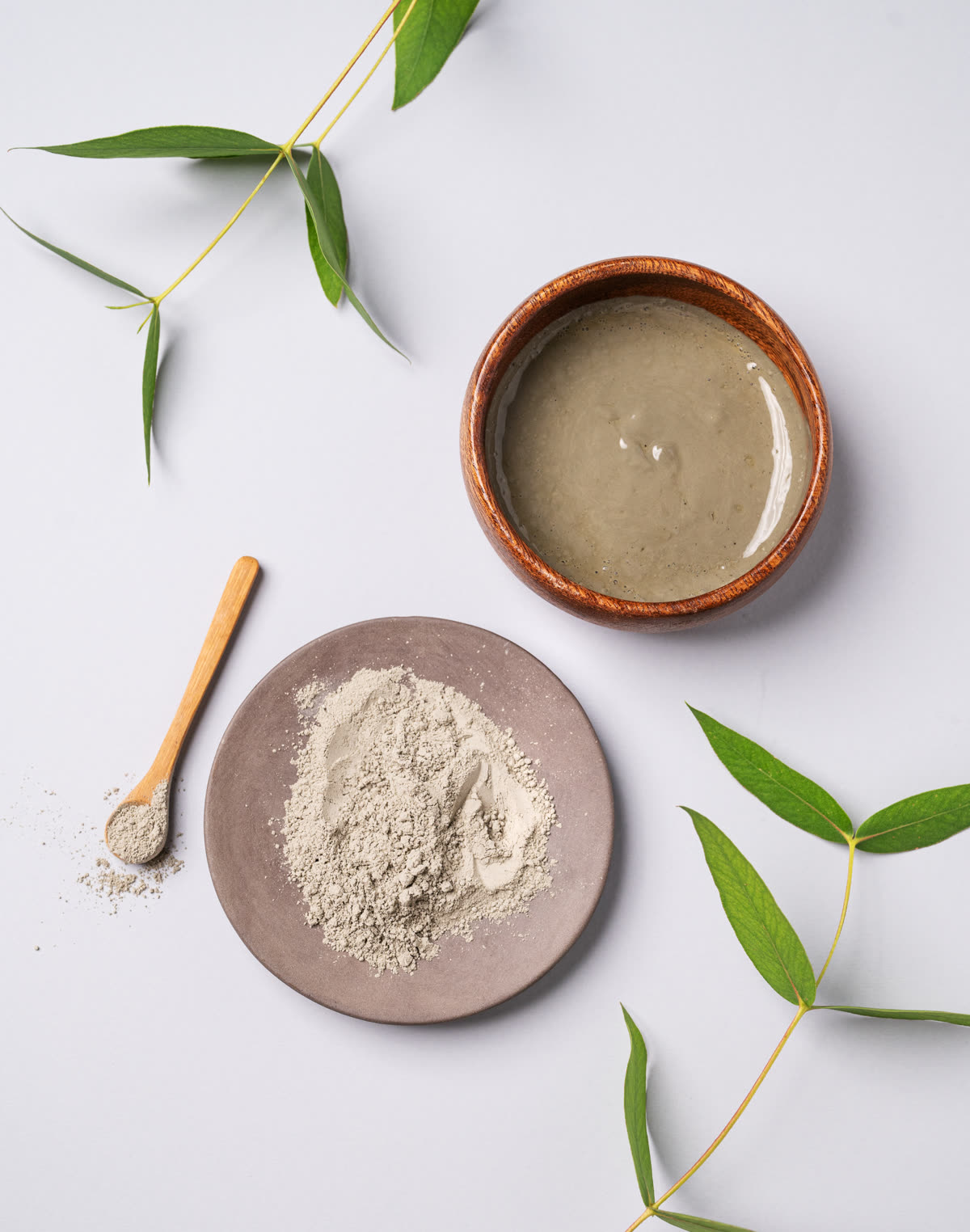 vsKaolin clayLaboratory active
The verdict
Choose rhassoul if your skin or scalp is oily and you want a deeper-cleansing clay that also washes hair; choose kaolin if your skin is dry, sensitive or easily irritated and you want the gentlest mask. Neither has meaningful clinical trial evidence; both are about oil absorption and a pleasant ritual, so choose by skin type and buy tested, clean clay.
| Attribute | Rhassoul clay | Kaolin clay |
|---|---|---|
| Evidence grade | D — mineralogy, lab adsorption data and long traditional use; no controlled skin trials | D for skin benefits; well established as a safe, inert cosmetic and pharmaceutical ingredient |
| Mineralogy | Magnesium-rich smectite (stevensite) with silicon; swelling clay with high exchange capacity | Kaolinite, a non-swelling aluminum silicate with low exchange capacity |
| What it does | Absorbs oil and dirt; swells into a slippery paste that cleanses without foaming | Gently absorbs oil; adds mattifying slip; mild |
| Best for | Oily, combination and congested skin; oily scalp; as a no-lather hair wash | Dry, sensitive, mature and normal skin; a base for gentle masks |
| Feel and finish | Silky, smooth; can feel tight on dry skin | Soft, creamy, light; least drying |
| pH in water | Mildly alkaline | Near-neutral to slightly acidic, depending on grade |
| Drying risk | Moderate; limit to once or twice a week | Low |
| Safety | Buy heavy-metal and microbiologically tested clay; do not eat; avoid inhaling dust; not on broken skin | Same: tested, cosmetic grade only; avoid inhaling dust; not on broken skin |
| Pregnancy | External use generally considered fine; never eat clay | External use generally considered fine; never eat clay |
| Cost | Moderate | Low |
Choose Rhassoul clay if
Choose rhassoul clay if your skin or scalp is oily or congested, you want a silky, deep-cleansing mask or a no-lather hair wash, and you are drawn to the Moroccan hammam ritual.
Choose Kaolin clay if
Choose kaolin if your skin is dry, sensitive, mature or easily irritated, or you want a gentle, mattifying base for masks you can use more often.
Why one swells and the other does not
Clays are layered minerals, and the structure of those layers explains their personality. Rhassoul is a magnesium-rich smectite (mostly the mineral stevensite). Water slips between its layers, so it swells into a smooth, slippery paste, and its charged surfaces can hold on to oils and positively charged particles. That gives it a genuinely cleansing feel, enough that it is traditionally used to wash hair and body without soap.
Kaolin’s layers are tightly bound, so it barely swells and has a low exchange capacity. It absorbs a modest amount of oil, adds a soft, matte slip, and is one of the least reactive ingredients in cosmetics, which is why it is also used in baby powders, mineral makeup and pharmaceuticals.
Matching clay to skin
- Oily or congested skin: rhassoul once or twice a week mops up surface oil and leaves skin feeling clean. See Oily Skin & Pores and Moroccan Rhassoul & Orange Blossom Mask.
- Dry, sensitive or mature skin: kaolin is the safer choice; even then, rinse before it dries completely and moisturize straight afterwards.
- Combination skin: use rhassoul on the T-zone and kaolin on the cheeks, or blend them.
- Eczema-prone skin: skip clay on active patches; it can dry and irritate. See Sensitive Skin & Redness.
- Hair: rhassoul makes a gentle, low-lather wash for oily scalps; kaolin is rarely used for hair.
Safety: clean clay and sensible habits
Clays are dug from the earth, so quality varies. Natural clays can contain lead, arsenic and other metals, and they can carry bacterial spores. Buy cosmetic-grade clay from suppliers who provide heavy-metal and microbiological test results, and never eat clay; eating it (geophagy) has caused lead poisoning, and a craving for clay or earth in pregnancy is something to tell your midwife or doctor. Mix gently to avoid breathing in fine dust, do not apply to broken skin, and treat a wet clay paste as a fresh, single-use product. Hydrosols such as orange blossom (neroli) water are lovely for mixing, but leftovers should be discarded.
A popular myth says clay must never touch metal. Brief contact with a stainless-steel spoon does not “deactivate” clay; simply use clean utensils.
The hammam tradition
In Morocco, rhassoul is part of the hammam ritual: after steam and a black-soap scrub, the clay is mixed with water or orange-blossom or rose water and spread over skin and hair, then rinsed. It is a ritual of care rather than a treatment, and it is best enjoyed that way. See Moroccan Beauty Rituals: Hammam, Rhassoul & Argan and Moroccan Hammam Ritual at Home.
Kaolin has its own long history: the name comes from Gaoling, a hill near Jingdezhen in China whose white clay made Chinese porcelain famous, and white clays have been used as cosmetic powders in many cultures. Today kaolin is one of the most common clays in commercial masks, dry shampoos and mineral makeup because it is so mild and consistent. Rhassoul, by contrast, comes from a small number of deposits in the Middle Atlas, and genuine Moroccan rhassoul is a distinctive regional product. Buying from suppliers who name the source and provide test certificates protects both your skin and the reputation of the real thing.
How to use clay well
Clay masks are simple, but a few details make them gentler and more effective.
- Mix: one to two teaspoons of clay with enough water or hydrosol to make a smooth, yogurt-like paste. Rhassoul absorbs more liquid and thickens as it stands; kaolin mixes quickly. A few drops of a light oil or a little honey can make either less drying.
- Apply: to clean, slightly damp skin, avoiding the eye area and lips. A thin, even layer works as well as a thick one.
- Time: 5–10 minutes for most skin; rinse while the mask is still slightly damp.
- Rinse and moisturize: use lukewarm water and a soft cloth, then follow with your usual moisturizer to restore comfort.
- Frequency: once or twice a week for rhassoul; kaolin can be used a little more often on oily skin. If skin feels tight or flaky, cut back.
- Hair (rhassoul): a thinner, pourable paste worked into wet hair and scalp, left a few minutes and rinsed very thoroughly. Clay residue can make hair feel dull, so rinse for longer than you think you need to.
Ready-made clay creams and masks are preserved and stable; homemade pastes are not. Mix fresh each time and discard leftovers, as described in DIY Safety: Water, Microbes & Preservatives. Our Moroccan Rhassoul & Orange Blossom Mask gives a tested single-use formula.
Using them together
Yes. A 50:50 blend softens rhassoul’s pull and gives kaolin more cleansing power, a good middle ground for combination skin. Mix only what you need with water or a hydrosol, apply for 5–10 minutes, rinse before it cracks and moisturize afterwards. Patch test first (How to Patch Test).