Does it work?
Sea Buckthorn for Sun Care & After-Sun
What the research says about sea buckthorn for sun care & after-sun, how to use it at home and how to stay safe.
The short answer: Rich in carotenoids and antioxidants and used in after-sun products; no clinical evidence for protection or recovery, and it offers no SPF.
What it does
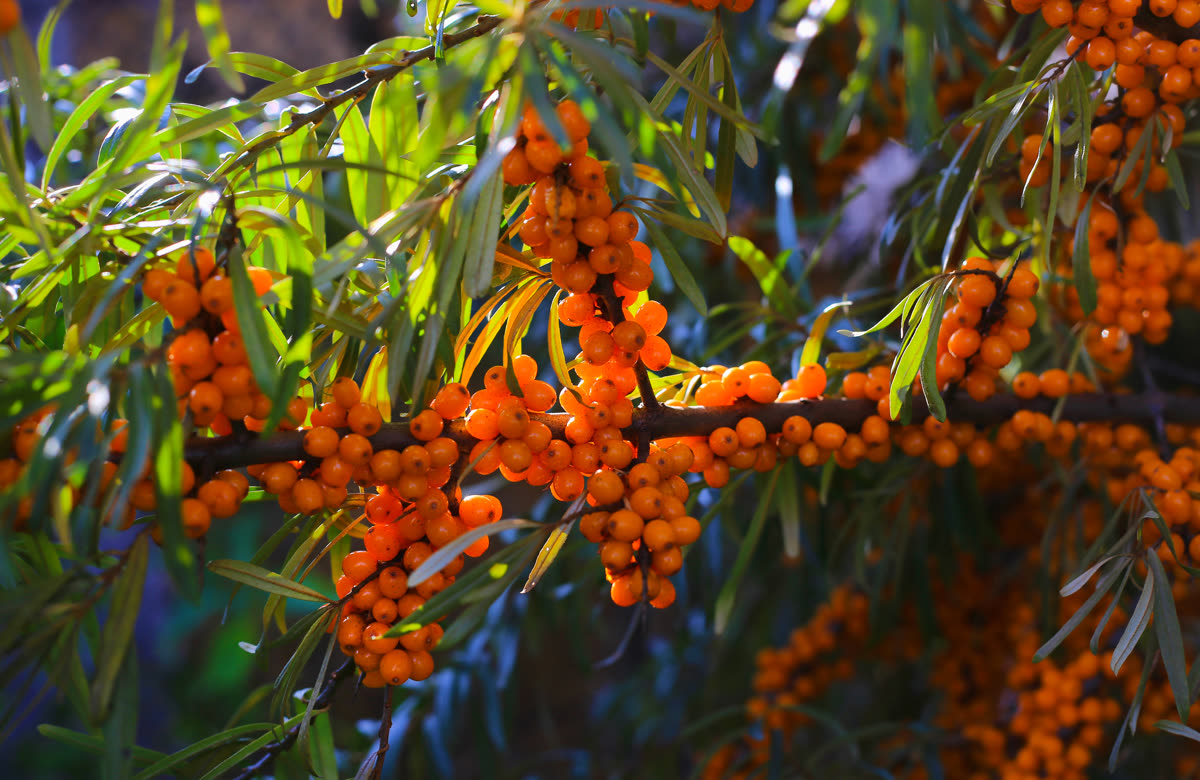
Sea buckthorn is a thorny shrub whose bright orange berries yield two very different oils: a deep orange pulp oil rich in palmitoleic acid (omega-7) and carotenoids, and a pale seed oil rich in omega-3 and omega-6. Both are used in skin care, mostly in small amounts because the pulp oil stains. Human evidence is limited, coming mainly from oral studies.
Why people reach for it
- Rich in carotenoids and antioxidants. The pulp oil’s carotenoids and tocopherols give its color and help protect skin lipids from oxidation in lab models.
- Comfort for dry, stressed skin. Used at low levels in face oils and balms for dry and weathered skin.
- Traditional wound and burn care. Long used in Russian and Central Asian practice on burns and healed scars; animal studies support wound-healing effects, human data are limited.
- Two oils, two profiles. Seed oil provides essential fatty acids for the barrier; pulp oil provides omega-7 and pigments — together they make a well-rounded blend.
How to use it
| Form | Typical use | Notes |
|---|---|---|
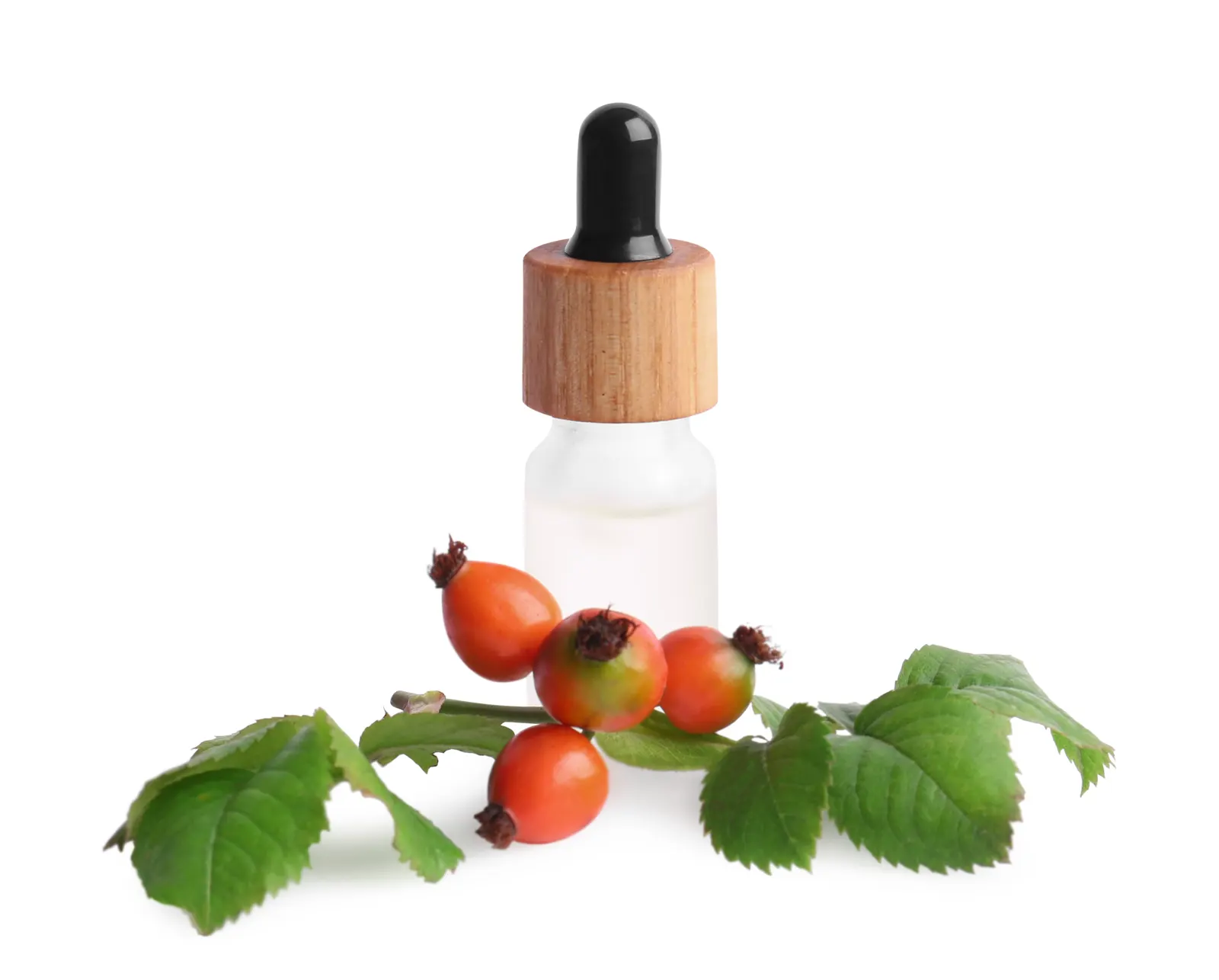
| Pulp/fruit oil in face oils | 0.5–5% of a blend | Higher levels stain skin, towels and pillowcases orange. See Rosehip & Sea Buckthorn Glow Oil. |
| Seed oil | 5–20% of a face oil or cream | Pale and non-staining; very polyunsaturated, so add tocopherol and refrigerate. |
| Balms | 1–3% pulp oil | Gives a natural golden tint and carotenoid content to healing or lip balms. |
| Oral supplements | As directed on standardized capsules | Discuss with a doctor if you take anticoagulants or have upcoming surgery. |
Recipes with Sea Buckthorn
Daily rituals with Sea Buckthorn
Use it safely
- Pulp oil stains: undiluted, it can temporarily tint skin orange and permanently mark fabrics.
- Allergic reactions are uncommon; patch test, especially on sensitive skin.
- Seed oil oxidizes quickly; rancid oil irritates. Buy small and refrigerate.
- It is not a sunscreen — see Sun Care & After-Sun.
Pregnancy and breastfeeding: Topical use is considered safe in pregnancy and breastfeeding. Oral supplements have not been studied in pregnancy; food amounts are fine.
New to an ingredient? Patch test first.
When to see a doctor
- Severe sunburn with large areas of blistering, intense pain, fever, chills, headache, confusion, fainting or signs of dehydration or heatstroke — seek urgent care.
- Any sunburn in a baby under one year old.
- A new mole or a mole that changes in size, shape or color, or shows ABCDE signs, or an “ugly duckling” that looks different from your others.
- A sore that does not heal, a pearly bump, or a scaly patch that persists or bleeds.
- An unusual rash after sun exposure, especially after starting a new medicine or touching plants (photosensitivity or phytophotodermatitis).
Other plants for Sun Care & After-Sun
| Ingredient | Grade | What the evidence shows |
|---|---|---|
| Green Tea | B | Topical green tea polyphenols reduced UV-induced redness and DNA damage in human skin studies — an antioxidant adjunct under sunscreen, never a substitute. |
| Aloe Vera | C | Soothing and cooling on sunburn, but controlled trials found aloe gel did not prevent sunburn or speed sunburn recovery compared with placebo; its value is comfort. |
| Colloidal Oatmeal | C | Soothes itch and discomfort on irritated, sun-exposed skin; evidence comes from its broader use as a skin protectant. |
| Calendula | D | Traditional for minor burns and has some evidence in radiation skin reactions, but not tested for sunburn; daisy-family allergy is possible. |