The ingredient encyclopedia · flower
Arnica
Arnica montana L. · Asteraceae
The golden mountain daisy of the Alps and Pyrenees, a classic herbal comfort for bruises and tired muscles.
FR Arnica des montagnesES ÁrnicaAR أرنيكا (نقل صوتي؛ لا يوجد اسم عربي شائع غيره)Bergwohlverleih (German); leopard’s bane, mountain tobacco (English folk names)
- How well proven
- CPromising
- Safety
- Use with care
- Sun-sensitive
- No
- Best for
- Scars, Wounds & Stretch Marks
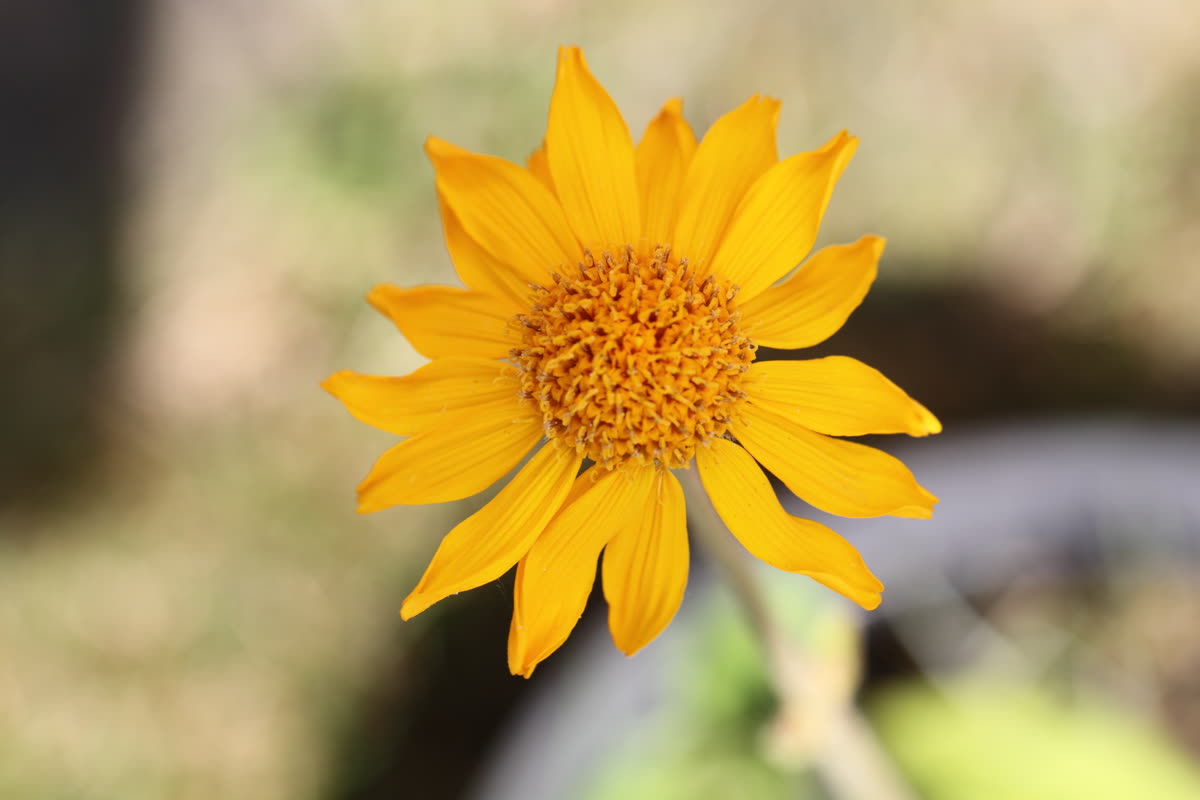
FR Arnica des montagnesES ÁrnicaAR أرنيكا (نقل صوتي؛ لا يوجد اسم عربي شائع غيره)Bergwohlverleih (German); leopard’s bane, mountain tobacco (English folk names)
What the evidence says
A small rater-blinded randomized trial found 20% herbal arnica ointment sped resolution of laser-induced bruises and a larger trial found arnica gel comparable to ibuprofen gel for hand osteoarthritis, while trials of homeopathic arnica are largely negative.
- What it does
- May speed fading of bruises. In a small randomized trial, a 20% herbal arnica ointment applied twice daily reduced laser-induced bruising faster than a placebo ointment.
- How to use it
- Herbal arnica gel or ointment · Products typically equivalent to 10–25% arnica tincture or infused oil; apply a thin layer 2–3 times daily for up to 1–2 weeks
- Watch out for
- Never on broken skin.
Checked against 4 cited studies and our safety review · Updated 26 November 2026 · How we grade
Why you’ll love Arnica
Why you’ll love it
- May help minor bruises fade faster on intact skin
- Soothes sore muscles and achy joints after a long day
- A traditional addition to massage oils for tired legs
Best forMinor bruises, sprains and sore muscles on unbroken skin, for short-term use.
Try it today
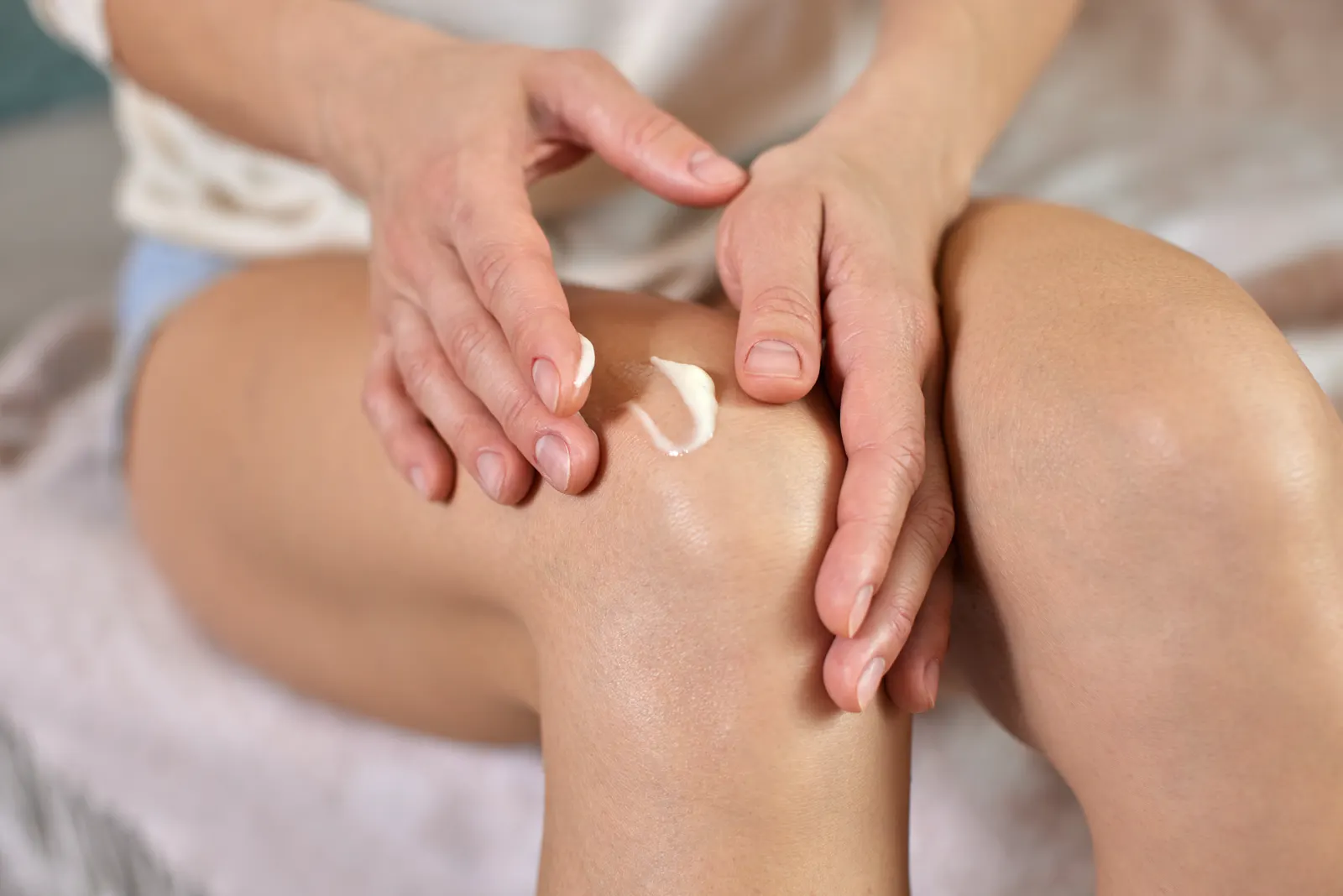
A post-workout leg rub
- Check your skin first: no cuts, grazes, scratches or eczema anywhere you plan to apply it.
- Massage a thin layer of herbal arnica gel or ready-made arnica massage oil into sore muscles.
- Wash your hands afterwards, keep it away from eyes and mouth, and stop if skin itches or reddens.
Good to know: Never use arnica on broken skin and never swallow it. Daisy-family allergy (chamomile, ragweed)? Patch test first or skip it.
At a glance
| Parts used | Flower heads, used as tincture, infused oil, gels and ointments; homeopathic preparations are separate products made by extreme dilution |
|---|---|
| Key actives | Helenalin and 11α,13-dihydrohelenalin esters (sesquiterpene lactones), Flavonoids, Thymol derivatives, Carotenoids, Phenolic acids |
| INCI names | Arnica Montana Flower Extract Arnica Montana Extract |
| Skin types | normal, dry, oily, combination |
| Pairs well with | CalendulaSt. John’s WortComfreySunflower Oil |
| Evidence grade | CPromising A small rater-blinded randomized trial found 20% herbal arnica ointment sped resolution of laser-induced bruises and a larger trial found arnica gel comparable to ibuprofen gel for hand osteoarthritis, while trials of homeopathic arnica are largely negative. |
What it does for skin and hair
May speed fading of bruises
In a small randomized trial, a 20% herbal arnica ointment applied twice daily reduced laser-induced bruising faster than a placebo ointment. It is a reasonable option for minor bruises on intact skin.
Soothes sore muscles and joints
Herbal arnica gel performed similarly to ibuprofen gel for hand osteoarthritis pain in a randomized trial, and European herbal monographs recognize it for bruises, sprains and localized muscle pain.
A classic massage-oil ingredient
Arnica-infused oil is a traditional addition to sports and massage oils for tired legs and aching muscles, used on unbroken skin for short periods.
How to use it
Start low, be consistent, and give it four to eight weeks. These are the amounts that work in real products and home recipes.
| Form | Typical use level | Notes |
|---|---|---|
| Herbal arnica gel or ointment | Products typically equivalent to 10–25% arnica tincture or infused oil; apply a thin layer 2–3 times daily for up to 1–2 weeks | Use only on unbroken skin over bruises, sprains or sore muscles. Wash hands afterwards and keep away from eyes and mouth. Stop if the skin itches, reddens or blisters. |
| Arnica-infused oil in a massage blend or balm | 10–20% of a massage oil or balm | Infuse dried flowers in a stable oil such as sunflower oil (see Infused Oils, Hydrosols & Extracts) or buy ready-made. Combine with calendula oil for a gentler post-exercise blend. Not for daily long-term use. |
| Compress with diluted tincture | Tincture diluted roughly 1:3 to 1:10 with cool water | Soak a cloth and apply to a fresh bruise or sprain for 10–15 minutes. Never use undiluted tincture on skin, and never on cuts, grazes or open blisters. |
Use it safely
Use with care
- Never on broken skin. Open wounds, grazes, ulcers and eczema increase absorption of helenalin, which is toxic, and greatly raise the risk of allergic dermatitis.
- Daisy-family allergy: people allergic to Asteraceae (chamomile, calendula, marigold, ragweed, chrysanthemum) may react to arnica. Patch test, and stop at the first sign of itching or rash (How to Patch Test). Prolonged use can cause eczematous dermatitis even in people who tolerated it at first.
- Do not swallow herbal arnica. Ingestion can cause vomiting, severe gastrointestinal irritation, heart rhythm disturbances and, in large amounts, death. Keep away from children.
- Low-potency homeopathic products may contain meaningful arnica. Treat any arnica product with care, and seek medical advice for bruises that appear without injury, are very large or painful, or occur while taking anticoagulants.
- Pregnancy & breastfeeding
- Avoid herbal arnica by mouth. For topical use in pregnancy and breastfeeding, data are lacking; limit to brief use on small areas of intact skin, keep it off the breasts when nursing, and ask your midwife or doctor. Pregnancy guide
- Phototoxicity
- Not phototoxic at normal use levels.
- Declared fragrance allergens
- None expected
New to an ingredient? Patch test first. Stop and seek advice if you get burning, swelling, blistering or a spreading rash.
Buying well
Sustainability
Wild Arnica montana grows in nutrient-poor mountain meadows and is declining in much of Europe as grasslands are fertilized or abandoned. It is listed in Annex V of the EU Habitats Directive, protected in several countries, and much supply still comes from regulated wild harvests, notably in Romania’s Apuseni Mountains. Cultivation is difficult; some pharmacopoeias accept Arnica chamissonis as a cultivated alternative. Choose suppliers that document sustainable harvest or cultivation (Sustainable & Ethical Botanical Sourcing).
How to choose quality
Decide which product you want: a herbal gel, ointment or infused oil (which contains the active plant compounds) or a homeopathic product (labeled with dilutions such as 6C, 30C, which contain little or none). For bruises, the trial evidence favors herbal products. Check the INCI for Arnica Montana Flower Extract, prefer fragrance-free bases, and avoid products sold as “Mexican arnica” (Heterotheca inuloides), which is a different plant.
The research For professionals
The chemistry, the studies and the evidence by concern, for practitioners, formulators and the curious.
Arnica’s pharmacology centers on sesquiterpene lactones of the pseudoguaianolide type: helenalin, 11α,13-dihydrohelenalin and their esters. In Central European arnica, helenalin esters dominate; Iberian populations, including the Spanish subspecies A. montana subsp. atlantica, tend toward the dihydrohelenalin type. These molecules carry a reactive α-methylene-γ-lactone group that binds to proteins. That reactivity explains both their benefit and their risk: helenalin blocks the inflammatory transcription factor NF-κB by directly alkylating its p65 subunit (Lyss, J Biol Chem, 1998), and the same chemistry makes it a potent contact sensitizer. Flavonoids, thymol derivatives and phenolic acids contribute to the extract’s overall effect.
Herbal vs homeopathic. Herbal arnica products (tinctures, infused oils, gels and ointments) contain measurable amounts of these lactones. Homeopathic arnica is made by serial dilution: a 30C preparation has been diluted 1:100 thirty times, far beyond the point at which any molecule of the original plant is likely to remain. Low-potency homeopathic products (mother tincture, 1X–3X) can still contain meaningful arnica, so “homeopathic” on a label does not automatically mean inert — or safe to swallow.
What trials show. For bruising, the most cited study (Leu, Br J Dermatol, 2010) induced small standardized bruises with a laser and found that 20% herbal arnica ointment reduced bruising more than placebo over two weeks, while vitamin K preparations did not. For pain, a randomized trial of about 200 people with hand osteoarthritis found arnica gel comparable to ibuprofen gel (Widrig, Rheumatol Int, 2007). Trials of oral homeopathic arnica after surgery, including facelifts, have mostly shown no meaningful difference from placebo, and an early systematic review (Ernst and Pittler, Arch Surg, 1998) concluded that the claim of efficacy was not supported by rigorous trials.
The honest picture: herbal arnica has modest, plausible evidence for minor bruises and muscle or joint pain on unbroken skin. Its main drawbacks — allergy, and toxicity on broken skin or if swallowed — are real and well documented.
Key studies
Rater-blinded randomized trial in a small group of volunteers with laser-induced bruises: 20% arnica ointment reduced bruising more than placebo over two weeks; 1% vitamin K alone did not.
Leu S, et al. Br J Dermatol. 2010 Read it in the bibliography Find on PubMedRandomized double-blind trial in about 200 people with hand osteoarthritis: arnica gel was comparable to ibuprofen gel for pain and function over three weeks.
Widrig R, et al. Rheumatol Int. 2007 Read it in the bibliography Find on PubMedRandomized placebo-controlled trial of oral homeopathic arnica after facelift surgery: no statistically significant reduction in bruising compared with placebo.
Seeley BM, et al. Arch Facial Plast Surg. 2006 Read it in the bibliography Find on PubMedSystematic review of placebo-controlled trials of homeopathic arnica: the evidence did not support efficacy beyond placebo.
Ernst E, Pittler MH. Arch Surg. 1998 Read it in the bibliography Find on PubMed
MythHomeopathic arnica pills prevent bruising after surgery or fillers.
EvidenceControlled trials of oral homeopathic arnica after surgery have mostly shown no meaningful difference from placebo, and high dilutions contain essentially no arnica. Herbal arnica applied to intact skin has modest evidence. Follow your surgeon’s advice, use cold compresses, and ask before stopping any medicine.
In tradition
Arnica has been a household remedy in the Alps and Central European mountains for centuries — Goethe is said to have valued it — and it remains a staple of German, Swiss and Austrian herbal medicine. In northern Spain, it grows wild in the Cantabrian and Pyrenean meadows and appears in local folk remedies for blows and sprains.
Frequently asked questions
Does arnica really work for bruises?
Can you put arnica on an open wound or cut?
What is the difference between homeopathic and herbal arnica?
Who should avoid arnica?
Cite this page
Herbs.Beauty. Arnica (Arnica montana L.): evidence-based monograph. Updated 26 November 2026. https://herbs.beauty/ingredients/arnica.html