The ingredient encyclopedia · food
Yuzu
Citrus junos Siebold ex Tanaka · Rutaceae
Sparkling, floral citrus from Japan’s winter-solstice bath: a bright scent that feels like a fresh start.
FR YuzuES YuzuAR يوزو (نقل صوتي؛ لا يوجد اسم عربي معياري)Yuzu 柚子 (Japanese); yuja 유자 (Korean); xiāngchéng 香橙 (Chinese)
- How well proven
- DTraditional wisdom
- Safety
- Use with care
- Sun-sensitive
- Yes
FR YuzuES YuzuAR يوزو (نقل صوتي؛ لا يوجد اسم عربي معياري)Yuzu 柚子 (Japanese); yuja 유자 (Korean); xiāngchéng 香橙 (Chinese)
What the evidence says
Skin claims rest on composition and lab antioxidant data; the only human work concerns the psychological effects of its aroma, not skin outcomes.
- What it does
- A bright, uplifting fragrance. Yuzu peel oil gives a fresh, sparkling citrus note that is softer and more floral than lemon.
- How to use it
- Yuzu peel essential oil in leave-on face products · Up to 0.5% (cold-pressed) unless the supplier certifies it furocoumarin-free; up to 1% for distilled or FCF oil
- Watch out for
- Possible phototoxicity: cold-pressed yuzu oil may contain furocoumarins.
Checked against the available literature and our safety review · Updated 26 November 2026 · How we grade
Why you’ll love Yuzu
Why you’ll love it
- A bright, uplifting citrus scent, softer than lemon
- Turns an ordinary bath into a cozy seasonal ritual
- Gentle fruit extracts add antioxidant flavonoids to toners
Best forCitrus-scent lovers, rinse-off body care and relaxing winter baths.

Try it today
A winter-solstice yuzu bath
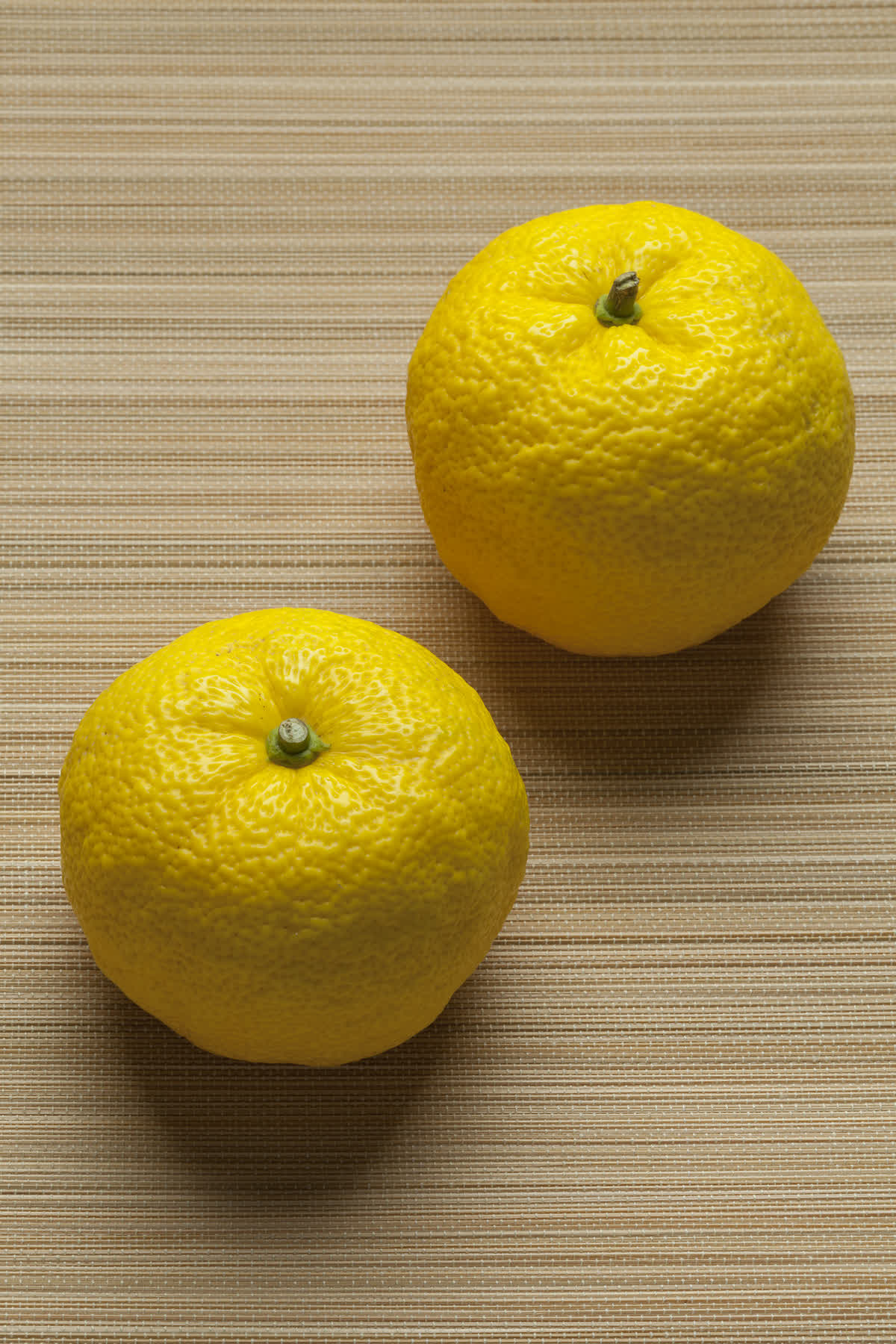
- Wash 3–6 whole yuzu and float them, uncut, in a hot bath; cut fruit stings more.
- Soak and breathe in the aroma; skip it if your skin is broken, very sensitive or flaring.
- Rinse off afterwards if your skin feels tingly.
Good to know: Cold-pressed yuzu oil may make skin sun-sensitive. In leave-on products keep it low or choose distilled oil, and avoid strong sun afterwards.
At a glance
| Parts used | Peel essential oil (cold-pressed or distilled); fruit and peel extracts; seeds in Japanese home preparations; whole fruit for the traditional bath |
|---|---|
| Key actives | Limonene (dominant), γ-Terpinene, Linalool, β-Phellandrene and myrcene, Trace odorants (e.g. yuzunone), Peel flavonoids (hesperidin, naringin), Vitamin C (juice), Pectin (seeds and pith) |
| INCI names | Citrus Junos Peel Oil Citrus Junos Fruit Extract Citrus Junos Peel Extract |
| Skin types | normal, oily, combination |
| Pairs well with | Camellia Oil (Tsubaki Oil)Rice BranGreen TeaTremella (Snow Mushroom) |
| Evidence grade | DTraditional wisdom Skin claims rest on composition and lab antioxidant data; the only human work concerns the psychological effects of its aroma, not skin outcomes. |
What it does for skin and hair
A bright, uplifting fragrance
Yuzu peel oil gives a fresh, sparkling citrus note that is softer and more floral than lemon. Small Japanese studies suggest inhaling yuzu aroma can have short-term relaxing effects — pleasant, but not a skin benefit.
Antioxidant fruit extracts
Yuzu fruit and peel extracts contain flavonoids such as hesperidin and naringin that are antioxidant in lab tests. They are supporting ingredients in toners and essences, not a replacement for proven antioxidants or sunscreen.
A seasonal bath ritual
A few whole yuzu floating in a hot bath scent the water and the room. The warmth and ritual are the real comforts; the fruit adds aroma, and some people find it slightly tingly on the skin.
How to use it
Start low, be consistent, and give it four to eight weeks. These are the amounts that work in real products and home recipes.
| Form | Typical use level | Notes |
|---|---|---|
| Yuzu peel essential oil in leave-on face products | Up to 0.5% (cold-pressed) unless the supplier certifies it furocoumarin-free; up to 1% for distilled or FCF oil | Blend into a carrier oil or cream and avoid applying to skin that will see strong sun within 12–18 hours if furocoumarin content is unknown. Use the Essential Oil Dilution Calculator and our Essential Oil Safety: The Complete Guide guide. |
| Yuzu oil in body and rinse-off products | Body leave-on: up to 1%; rinse-off (shower gel, shampoo): up to 1–2% | Rinse-off products carry negligible phototoxic risk. Keep away from eyes and mucous membranes; citrus oils can sting. |
| Yuzu fruit or peel extract | 0.5–3% of a toner, essence or cream | Water-soluble extracts contain flavonoids rather than much essential oil, so they are gentler and not phototoxic. They need a preserved formula. |
| Traditional yuzu bath (yuzu-yu) | 3–6 whole fruits in a full bath | Float whole, washed fruits; cutting or squeezing them releases far more oil and makes stinging more likely. Rinse off afterwards if your skin feels tingly, and skip it on broken or very sensitive skin. |
Use it safely
Use with care
- Possible phototoxicity: cold-pressed yuzu oil may contain furocoumarins. Flagged here as a precaution because data are limited; distilled or certified furocoumarin-free (FCF) oil avoids the issue.
- Sensitization from oxidized oil: limonene hydroperoxides form as citrus oils age. Buy small bottles, refrigerate, and discard oil that smells sharp, turpentine-like or stale.
- Contains limonene and linalool, both EU-labeled fragrance allergens. Patch test before wider use (How to Patch Test).
- Yuzu baths can cause temporary stinging or redness in some people, especially with cut fruit; avoid on eczema flares and broken skin.
- Pregnancy & breastfeeding
- Properly diluted yuzu oil in cosmetics and an occasional yuzu bath are generally considered acceptable in pregnancy; keep essential-oil use low and avoid high-concentration blends (Skincare in Pregnancy & Breastfeeding). Pregnancy guide
- Phototoxicity
- Yes. Avoid sun and UV on treated skin for 12–18 hours or use a bergapten-free (FCF) grade.
- Declared fragrance allergens
- Limonene, Linalool
New to an ingredient? Patch test first. Stop and seek advice if you get burning, swelling, blistering or a spreading rash.
Buying well
Sustainability
Yuzu is a cultivated orchard crop, grown mainly in Japan (Kōchi Prefecture is the largest producer), Korea and China, and increasingly in Spain, France and Australia for the gastronomy trade. It is not threatened. Peel oil is a by-product of juice production, which makes it a relatively efficient material. Adulteration with cheaper citrus oils and synthetic “yuzu” accords is common; ask suppliers for GC analysis.
How to choose quality
Yuzu oil is expensive; very cheap “yuzu oil” is often a blend or a fragrance oil. Look for the botanical name Citrus junos, the extraction method (cold-pressed or distilled), country of origin and, for leave-on use, a furocoumarin statement. Buy small amber bottles, keep them in the fridge and use within about a year of opening.
The research For professionals
The chemistry, the studies and the evidence by concern, for practitioners, formulators and the curious.
Yuzu is thought to be an ancient hybrid between a mandarin-type citrus and the cold-hardy Ichang papeda, which explains its frost tolerance and its unusually aromatic, seedy fruit. Like other citrus oils, yuzu peel oil is mostly limonene, with γ-terpinene, β-phellandrene, myrcene and linalool. Its distinctive character comes from trace compounds — including the potent odorant yuzunone and various sulfur-containing and aldehyde notes — present at very low levels but with very low odor thresholds. The peel and pith also contain flavanone glycosides (hesperidin, naringin) and pectin; the juice provides vitamin C and citric acid.
The phototoxicity question. Some cold-pressed citrus peel oils — notably bergamot, lime, lemon, bitter orange and grapefruit — contain furocoumarins such as bergapten that can cause blistering, pigmented burns when treated skin meets sunlight. Others, such as sweet orange and mandarin, have little or none. Published furocoumarin data for yuzu are limited and generally suggest lower levels than in bergamot or lime, but content varies with variety, ripeness and processing, and many small suppliers do not test. Steam-distilled yuzu oil should contain essentially no furocoumarins, because they do not distill over. Until a supplier gives you test data, the prudent approach is to treat cold-pressed yuzu oil as potentially phototoxic in leave-on products for sun-exposed skin, keep levels low, and use it freely in rinse-off products — see Essential Oil Safety: The Complete Guide.
A second, more certain risk is oxidation. Limonene reacts with air to form hydroperoxides that are well-documented skin sensitizers; an old, oxidized citrus oil is far more likely to cause allergy than a fresh one. That is why fragrance-industry standards require low peroxide levels in citrus materials and why citrus oils should be stored cold, full and tightly capped.
There are no clinical trials showing that yuzu brightens, firms or clarifies skin. The vitamin C in yuzu juice is unstable, low in concentration and at the wrong pH for reliable skin effects; formulated ascorbic acid or its derivatives are the evidence-based route for Dark Spots & Hyperpigmentation.
MythYuzu is packed with vitamin C, so yuzu skincare brightens dark spots.
EvidenceThe vitamin C in yuzu juice is a food benefit. In cosmetics, juice-derived vitamin C is too dilute and unstable to brighten skin, and yuzu oil contains essentially none. If you want vitamin C for Dark Spots & Hyperpigmentation, choose a stable, well-formulated ascorbic acid or derivative serum.
In tradition
On the winter solstice (tōji), many Japanese households and public bathhouses float whole yuzu in the bath — yuzu-yu — for warmth and good health through the cold months, a custom often traced to Edo-period bathhouses and fondly explained by puns linking tōji with a curative hot-spring stay and yuzu with flexibility. In Japanese homes, yuzu seeds steeped in water or spirit to make a pectin-rich homemade skin lotion is a cherished folk recipe.
Frequently asked questions
Is yuzu essential oil phototoxic?
What is a yuzu bath and is it good for your skin?
Does yuzu brighten skin?
What does yuzu smell like?
Cite this page
Herbs.Beauty. Yuzu (Citrus junos Siebold ex Tanaka): evidence-based monograph. Updated 26 November 2026. https://herbs.beauty/ingredients/yuzu.html