Head to head
Aloe vera versus Centella asiatica
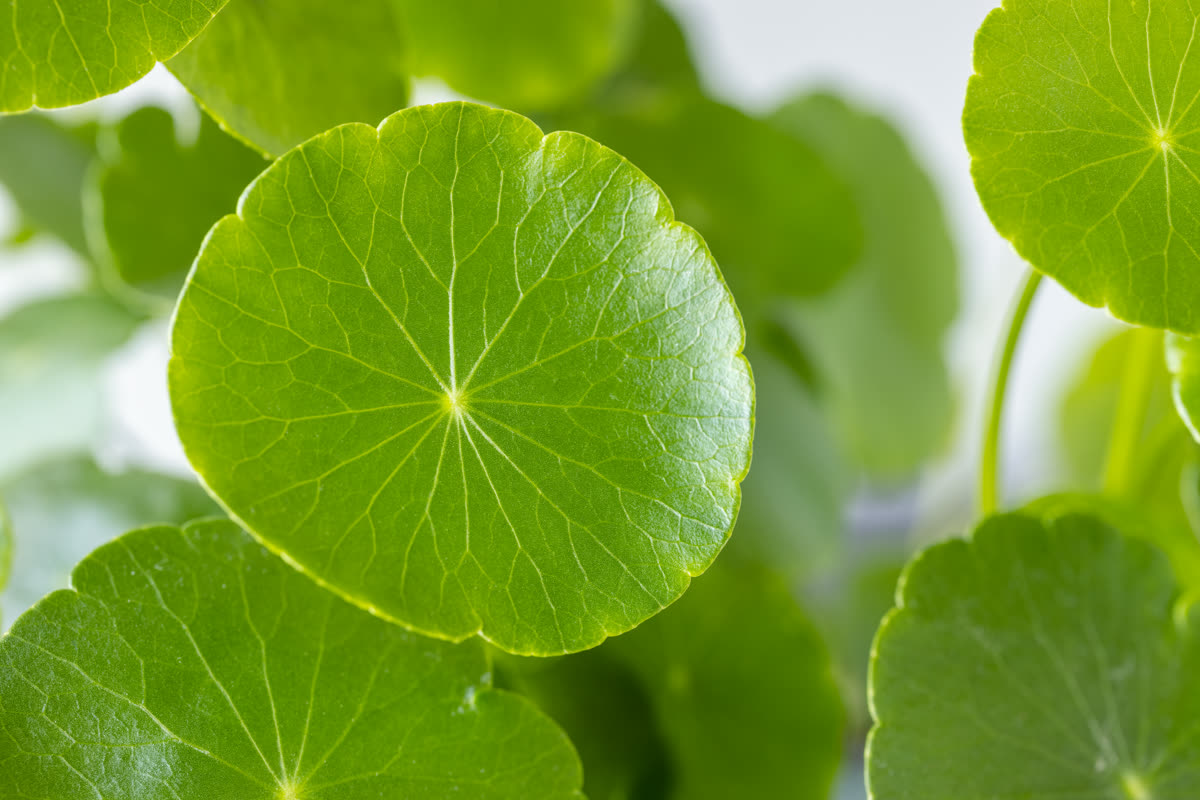
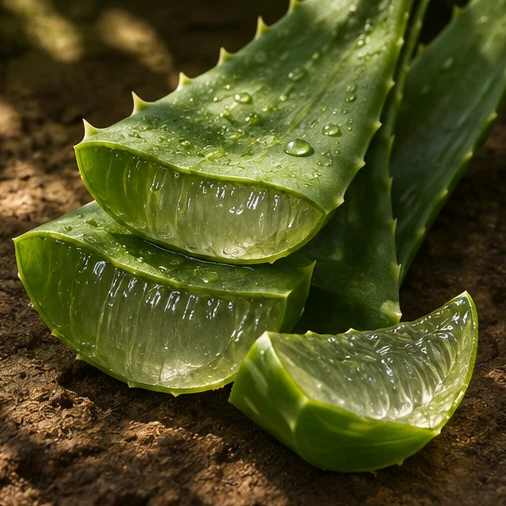 vs
The verdict
Choose aloe for cooling, hydrating relief on minor burns and freshly irritated skin; choose centella for longer-term calming and barrier support in sensitive, redness-prone skin. Aloe has more human data for minor burns; centella’s strengths lie more in lab data and multi-ingredient creams. Neither replaces medical care for serious burns, wounds or rashes.
| Attribute | Aloe vera | Centella asiatica |
|---|---|---|
| Evidence grade | B — small controlled trials and a systematic review support faster healing of minor burns; mixed results elsewhere | C — strong lab data and wound-care history; cosmetic human trials small and often multi-ingredient |
| What it is | Inner-leaf gel of Aloe vera: mostly water with polysaccharides (acemannan), glycoproteins | Leaf extract of Centella asiatica (gotu kola): triterpenes madecassoside, asiaticoside, asiatic and madecassic acids |
| What it does | Cools, hydrates, soothes; may speed healing of minor burns | Calms irritation; supports barrier and wound repair; stimulates collagen in lab work |
| Best for | Minor sunburn and first-degree burns, after-shave, hot and irritated skin | Sensitive and redness-prone skin, post-procedure creams, compromised barrier |
| Typical form | Gel at 10–99% (preserved); juice or powder reconstituted in formulas | Extract or purified triterpenes at about 0.1–1% (TECA or madecassoside) or 1–5% of an extract |
| Feel | Watery, cooling, can feel tacky as it dries | Depends on the cream; centella itself adds no particular texture |
| Irritation and allergy | Contact allergy uncommon; the yellow latex (aloin) irritates | Contact dermatitis uncommon but reported |
| Pregnancy | Topical inner-leaf gel considered safe; avoid oral latex and whole-leaf products | Topical use considered low risk; avoid oral supplements |
| Cost | Low | Low to moderate |
Choose Aloe vera if
Choose aloe vera if you want immediate, cooling relief for minor sunburn, a small kitchen burn or skin hot from shaving, or a light hydrating gel for oily skin in summer.
Choose Centella asiatica if
Choose centella asiatica (cica) if your skin is sensitive, easily red or recovering from over-exfoliation or a procedure (with your clinician’s approval), and you want a daily calming cream to support the barrier over weeks.
Aloe: best on fresh, minor heat damage
Aloe’s best evidence is for minor burns. A 2007 systematic review by Maenthaisong and colleagues in Burns pooled small trials and found that aloe preparations shortened healing time for first- and second-degree burns, though the trials were of low quality. For other uses the picture is mixed: trials have not shown a reliable benefit for radiation-induced skin reactions, evidence for chronic wounds is weak, and results in psoriasis are inconsistent.
Practically, aloe gel feels wonderful on hot, tight skin because it is mostly water and evaporates as it cools. Choose a preserved gel made from decolorized inner leaf, with aloe high on the ingredient list. Raw gel straight from the leaf is a fresh product: use once and discard, and avoid the yellow sap under the rind, which irritates. See Cooling Aloe After-Sun Gel.
Centella: the “cica” calmer
Centella has been used for wounds in Ayurveda, traditional Chinese medicine and across Southeast Asia for centuries, and its triterpenes are some of the best-characterized compounds in botanical skincare. In lab and animal studies they stimulate collagen synthesis, support wound closure and dampen inflammation. Human studies are smaller: some show improved hydration and barrier function or reduced redness, but most test centella inside multi-ingredient creams, so its own contribution is hard to isolate. Korean “cica” products popularized it for sensitized skin; many also contain panthenol, ceramides or madecassoside.
One practical difference is texture. Aloe is a water-based gel: it cools instantly but provides little lasting occlusion, so on dry skin it is best followed by a moisturizer. Centella is almost always delivered in a cream, serum or ointment, so the base does much of the barrier work and centella adds its calming triterpenes on top. When comparing two cica creams, the rest of the formula, such as ceramides, panthenol, glycerin and the absence of fragrance, often matters as much as how much centella it contains. Aloe has its own long history too, recorded in ancient Egyptian, Greek and Arabic medicine, and it still grows in courtyards and on windowsills around the Mediterranean.
Safety and when to see a doctor
- Burns: aloe is only for minor burns. Seek medical care for burns that blister over an area larger than the person’s palm; involve the face, hands, feet, genitals or joints; are chemical or electrical; or occur in babies or older adults.
- Sunburn is not a reason to skip sunscreen. Neither ingredient protects against UV. See Sun Care & After-Sun.
- Oral use: avoid drinking homemade aloe; aloe latex is a stimulant laxative and non-decolorized whole-leaf extract is classed as possibly carcinogenic when taken orally. Oral centella supplements have been linked to rare liver injury.
- Allergy: both can cause contact dermatitis occasionally. Patch test, especially on damaged skin (How to Patch Test).
Reading the label
Aloe products vary enormously. A gel labeled “aloe” may contain only a few percent of aloe in a water-and-thickener base, colored green and fragranced. Look for Aloe Barbadensis Leaf Juice near the top of the ingredient list, ideally from decolorized inner leaf. Powders labeled “200x” are concentrates meant to be reconstituted with water. Because aloe is mostly water and sugars, any aloe product must be preserved; an unpreserved “pure” aloe gel sold at room temperature is a red flag.
For centella, the names to look for are Centella Asiatica Extract, Centella Asiatica Leaf Extract, Madecassoside, Asiaticoside, Asiatic Acid and Madecassic Acid. Standardized extracts (often called TECA, titrated extract of Centella asiatica) contain defined amounts of the triterpenes; generic extracts may contain very little. A product that lists centella near the end, after fragrance, is unlikely to contain much. Our Ingredient List Decoder can help you read a full label.
Building them into a routine
- After sun or heat: cool the skin first with a cool shower or compress, then apply chilled aloe gel generously and reapply as it dries. Stay out of the sun while skin recovers.
- Everyday calming: a centella cream morning and night after a gentle cleanser, with sunscreen in the morning. Give it two to four weeks.
- After over-exfoliation: stop acids, retinoids and scrubs; use a bland cleanser, a centella or ceramide cream and sunscreen until skin no longer stings, then reintroduce actives one at a time.
- Oily skin in summer: aloe gel alone may be moisturizer enough; add centella if skin is also red or reactive.
If redness persists for weeks, comes with pimples or visible blood vessels, or flares with heat, alcohol or spicy food, it may be rosacea, which responds to specific prescription treatments. See The Skin Barrier, Explained for how the barrier recovers.
Using them together
Yes; they suit each other well and appear together in many calming products. Use aloe gel first on damp skin for hydration, then a centella cream to seal it in. Our Green Tea & Centella Soothing Toner is a simple way to add centella; see Sensitive Skin & Redness for a full routine.