Head to head
Tea tree oil versus Benzoyl peroxide
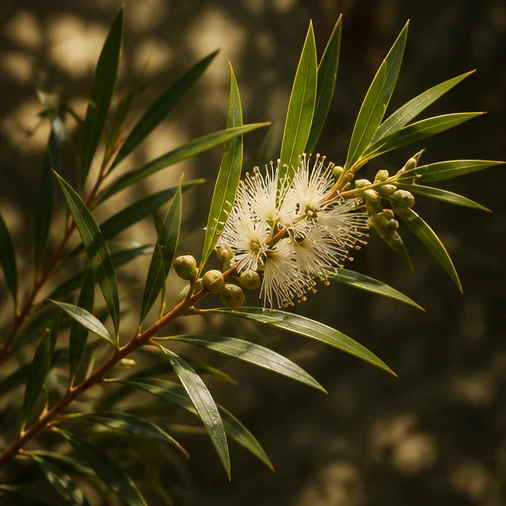 vsBenzoyl peroxideLaboratory active
The verdict
Benzoyl peroxide is faster, better studied and the dermatologist’s standard for inflamed spots, so it is the first choice for most people with acne. Tea tree oil at 5% is a reasonable, gentler alternative for mild acne if you can be patient, keep the oil fresh and avoid sensitization. Moderate, scarring or persistent acne needs a doctor, not either product alone.
| Attribute | Tea tree oil | Benzoyl peroxide |
|---|---|---|
| Evidence grade | B — randomized trials versus placebo and versus benzoyl peroxide, all small | A — many randomized trials; guideline first-line treatment for acne |
| What it is | Essential oil of Melaleuca alternifolia; terpinen-4-ol is the main active | An oxidizing agent that releases free radicals in the follicle |
| What it does | Antimicrobial and anti-inflammatory; reduces inflamed and non-inflamed lesions in mild–moderate acne | Kills Cutibacterium acnes, mildly comedolytic; bacteria do not develop resistance to it |
| Speed | Slower onset | Faster; improvement often within 2–4 weeks |
| Typical use level | 5% in a gel or cream (never neat) | 2.5–10%; 2.5% is often as effective as higher strengths with less irritation |
| Irritation and allergy | Less dryness at 5%; but a known contact allergen, especially when oxidized | Dryness, peeling and stinging common at first; true allergy uncommon |
| Pregnancy | Diluted topical use generally considered acceptable; never oral | Generally considered acceptable in pregnancy and breastfeeding (minimal absorption); confirm with your clinician |
| Practical quirks | Strong medicinal smell; degrades with air and light | Bleaches towels, pillowcases, clothing and hair; store cool |
| Cost | Low | Low |
Choose Tea tree oil if
Choose tea tree if your acne is mild, benzoyl peroxide has been too drying for you, you dislike bleached pillowcases, and you are willing to wait longer for results and to use a fresh, properly diluted 5% product.
Choose Benzoyl peroxide if
Choose benzoyl peroxide if you want the faster, better-proven option for inflamed spots, especially as part of a dermatologist-style routine with a retinoid or topical antibiotic. Start at 2.5% and use white bedding.
The 1990 head-to-head
Bassett and colleagues (Medical Journal of Australia, 1990) randomized 124 people with mild to moderate acne to a 5% tea tree oil gel or 5% benzoyl peroxide lotion. Both significantly reduced inflamed and non-inflamed lesions (open and closed comedones). Benzoyl peroxide worked faster, while tea tree caused fewer side effects such as dryness, itching and stinging.
A later placebo-controlled trial of 5% tea tree gel supported a genuine effect in mild to moderate acne. So tea tree oil is one of the better-supported botanicals in all of skincare. But the trials are small and old by modern standards, and there are far more data for benzoyl peroxide.
Why dermatologists reach for benzoyl peroxide
Benzoyl peroxide has three big advantages. It works quickly on inflamed spots. It is cheap and widely available. And, unlike antibiotics, bacteria do not become resistant to it, which is why guidelines pair it with topical antibiotics such as clindamycin and often with a retinoid such as adapalene.
Its downsides are dryness and irritation (start with 2.5%, or a wash-off product left on for a minute or two), and its bleaching action on fabric and hair. In 2024–2025, independent and FDA testing found benzene in some benzoyl peroxide products, particularly after storage in heat; a small number were recalled and the FDA judged the risk to consumers to be very low. Sensible precautions: keep products cool, close them tightly and do not use old tubes past their date.
Using tea tree oil safely
- Never neat. Undiluted tea tree oil is a common cause of irritant and allergic dermatitis. Use a ready-made 5% product, or dilute carefully: see Tea Tree Blemish Spot Gel and the Essential Oil Dilution Calculator.
- Keep it fresh. Oxidized tea tree oil is a much stronger sensitizer. Buy small bottles, keep them cool, dark and tightly closed, and discard after about 6–12 months or if the smell turns harsh.
- Never swallow it, and keep it away from children and pets; cats are especially sensitive.
- Patch test before using it widely, as in our guide: twice daily for 7 days, read at 48 and 96 hours.
Where each fits in an acne plan
For mild acne, either can be a reasonable single treatment for 8–12 weeks. If you are not clearly better by then, or you have deep, painful nodules, scarring, dark marks that linger, or acne that is affecting your mood, see a doctor: prescription combinations and, for some, oral treatments work far better. Whatever you choose, keep the rest of the routine simple: a gentle cleanser, a non-comedogenic moisturizer and daily sunscreen. See Acne & Breakouts for a full routine.
Two groups deserve special mention. Teenagers can use either treatment, but tea tree oil must be kept out of reach of younger children, who are at risk of poisoning if they swallow it; there are also case reports linking repeated use of products containing tea tree and lavender oils to breast enlargement in prepubertal boys, which resolved after stopping. And acne often flares in pregnancy; benzoyl peroxide and azelaic acid are the usual options, while retinoids and some oral treatments are off the table. A short conversation with your midwife, doctor or pharmacist before you start is worthwhile. See Skincare in Pregnancy & Breastfeeding.
Using benzoyl peroxide without the misery
Most people who give up on benzoyl peroxide do so because of dryness in the first few weeks. A few habits make a big difference.
- Start at 2.5%. Lower strengths have been found to work about as well as 5% or 10% for many people, with less irritation.
- Try short contact. A benzoyl peroxide wash, left on for a minute or two before rinsing, is gentler than a leave-on gel and well suited to the chest and back.
- Moisturize. A plain, fragrance-free, non-comedogenic moisturizer reduces dryness without reducing benefit.
- Go slowly. Use it every other day for the first week or two, then daily as tolerated.
- Protect fabric. Use white towels and pillowcases, and let it dry before getting dressed.
- Watch combinations. Benzoyl peroxide can break down some retinoids, notably conventional tretinoin, if applied at the same time; use them at different times of day unless a product is designed as a combination.
For tea tree oil, the equivalent habits are patience and freshness: use a 5% product consistently for at least 12 weeks, store it cool and dark, and replace it rather than keep an old bottle. Our tea tree spot gel contains a preservative because it contains water; homemade water-based gels without one can grow microbes within days. See DIY Safety: Water, Microbes & Preservatives.
Using them together
It is possible but rarely necessary, and stacking two potential irritants raises the chance of dryness and dermatitis. If you want both, use them at different times of day or on different nights, never layered on broken skin, and stop if the skin becomes raw or itchy.