Serum · Make it at home
Tea Tree Blemish Spot Gel
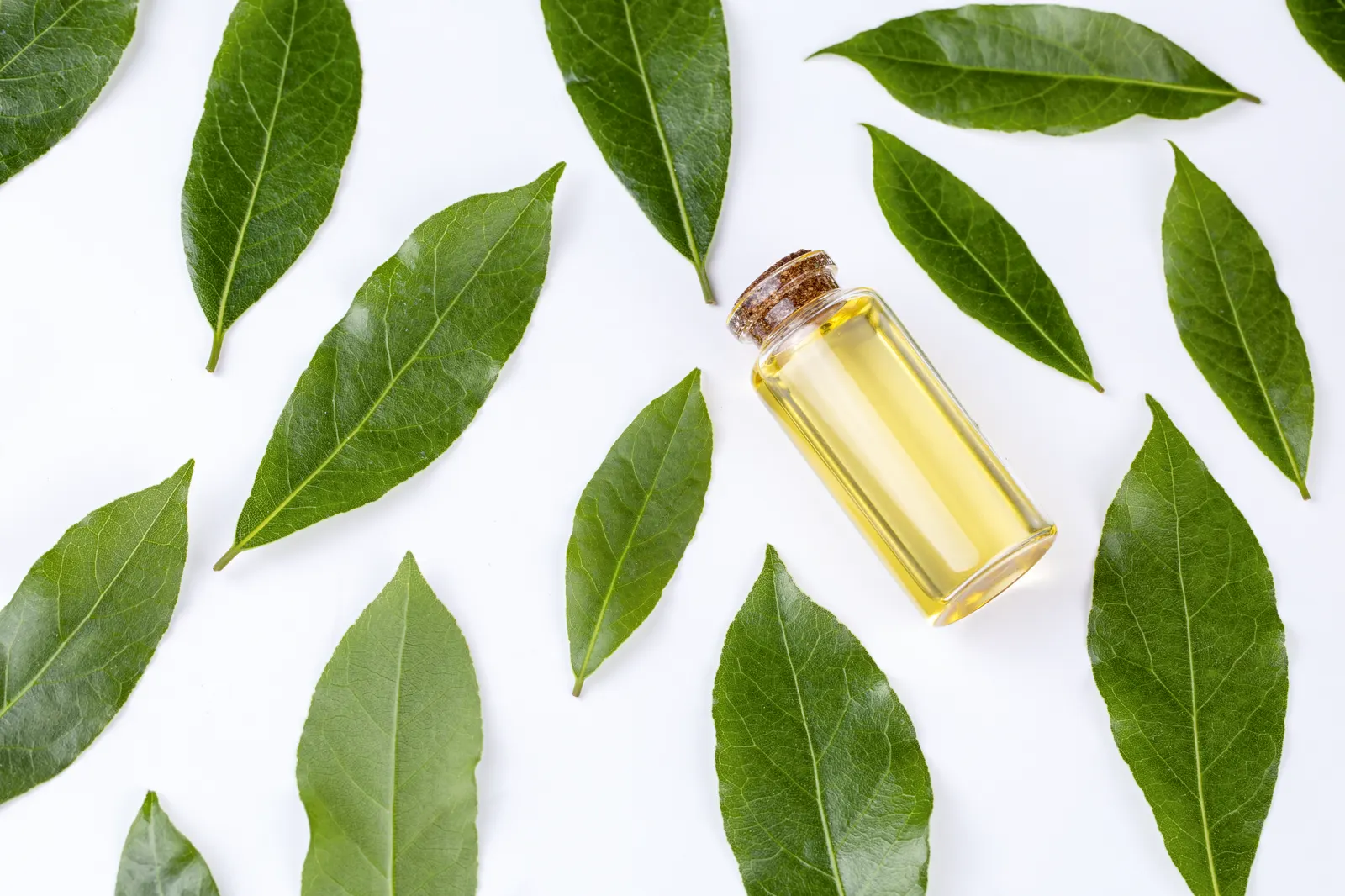
A 5% tea tree oil spot gel — the strength used in the classic acne trial — solubilized and preserved for dabbing on individual blemishes.
- Time
- 40 min
- Level
- Intermediate
- Makes
- 30 g
- Type
- Water-based · preserved
- Keeps
- Up to 3 months (home-made and untested)
What you need
- Distilled water
- Aloe vera leaf juice
- Glycerin
- Xanthan gum
- Sodium phytate
- Polysorbate 20
- Tea tree oil
- Phenoxyethanol & Ethylhexylglycerin
- Citric acid
Formula
| Phase | Ingredient | % | Grams |
|---|---|---|---|
| A | Distilled water (Aqua) | 50 | 15.00 |
| A | Aloe vera leaf juice (inner leaf, decolorized) | 30 | 9.00 |
| A | Glycerin | 3 | 0.90 |
| A | Xanthan gumDisperse in the glycerin first | 0.8 | 0.24 |
| A | Sodium phytate (chelator) | 0.1 | 0.03 |
| B | Polysorbate 20 (solubilizer)2:1 to the tea tree oil; a natural polyglyceryl-based solubilizer can be used at its supplier’s ratio | 10 | 3.00 |
| B | Tea tree oil (Melaleuca alternifolia leaf oil, ISO 4730 grade)1.5 g in 30 g — the concentration used by Bassett et al., 1990 | 5 | 1.50 |
| C | Phenoxyethanol & Ethylhexylglycerin (broad-spectrum preservative) | 1 | 0.30 |
| D | Citric acid, 10% solution (pH adjuster)As needed for pH 4.5–5.5; balance with water | 0.1 | 0.03 |
| Total | 100.0 | 30.00 |
Weigh everything on a 0.01 g scale; volume measures are not accurate enough for actives or preservatives. Open in the formula & cost calculator.
Equipment
- Digital scale (0.01 g)
- Two small glass beakers
- Mini whisk or milk frother
- Glass rod
- pH strips (narrow range 4.0–7.0) or a calibrated pH meter
- Pipettes
- 30 ml airless pump or squeeze tube
- 70% isopropyl alcohol
- Nitrile gloves
Method
- Sanitize all equipment and the container with 70% isopropyl alcohol and let it evaporate; wear gloves.
- Phase A: stir 0.24 g xanthan into 0.9 g glycerin to a lump-free slurry. Add 15 g water, 9 g aloe juice and 0.03 g sodium phytate while whisking for 2–3 minutes, then rest 10 minutes to thicken and de-bubble.
- Phase B: in a small beaker, weigh 1.5 g tea tree oil and 3 g polysorbate 20 and stir until completely uniform.
- Add Phase B to the gel slowly, stirring steadily (not whisking hard, to avoid foam). The gel should be clear to slightly hazy with no oily streaks; a 3:1 or 4:1 solubilizer ratio gives a clearer gel but feels tackier.
- Phase C: stir in 0.3 g preservative.
- Phase D — pH: test with a strip or meter; target 4.5–5.5. Adjust with drops of 10% citric acid solution, or 10% sodium bicarbonate solution if too low.
- Fill an airless pump or tube (limits contact with air and fingers) and label with the name, “5% tea tree oil”, ingredients and date.
- To use: after cleansing, dab a tiny amount onto individual spots with a clean fingertip or cotton bud, once or twice a day, and leave on.
Why it works
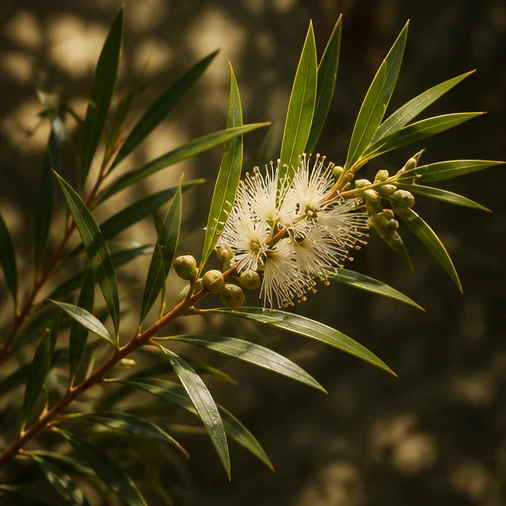
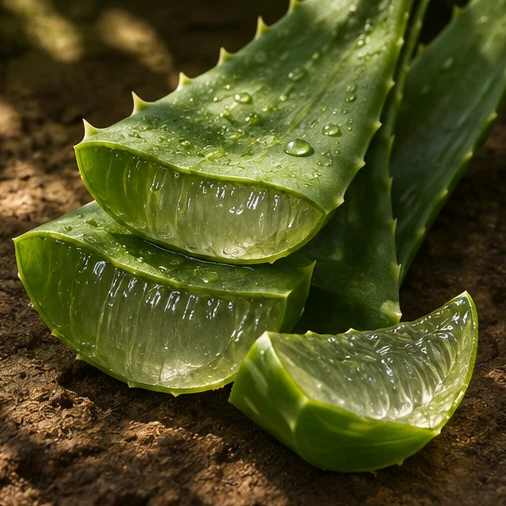
Terpinen-4-ol, the main active in tea tree oil, is antibacterial against Cutibacterium acnes and anti-inflammatory. In a single-blind randomized trial of 124 people (Bassett et al., Medical Journal of Australia, 1990), 5% tea tree oil gel reduced inflamed and non-inflamed lesions — more slowly than 5% benzoyl peroxide, but with fewer side effects. A later placebo-controlled trial (Enshaieh et al., 2007) also found a 5% gel helpful in mild-to-moderate acne. Aloe vera juice and glycerin keep the gel soothing rather than drying.
Safety notes
- Patch test as in our guide: twice daily for 7 days, read at 48 and 96 hours.
- Oxidized tea tree oil (old, warm or air-exposed) sensitizes far more readily. Buy a fresh, sealed ISO-grade oil, store it cold and dark, and discard the gel after 3 months.
- Spot use only — not all over the face, near the eyes or lips, or on broken skin. Stop if it stings, reddens or peels.
- Tea tree oil is toxic if swallowed: keep the gel and the neat oil away from children and pets, especially cats.
- Home-made aqueous products are not stability- or challenge-tested; discard at once if the gel thins, separates, discolors or smells off (DIY Safety: Water, Microbes & Preservatives).
- See a doctor for painful nodules or cysts, scarring, or acne not improving after 8–12 weeks — benzoyl peroxide, adapalene, azelaic acid and prescription treatments are more effective (Acne & Breakouts).
Read DIY safety & preservation before making water-based products.
Variations
- With niacinamide: add 4% niacinamide, reducing water to match, and aim for pH 5.0–6.0.
- Toning: replace 10% of the water with alcohol-free witch hazel distillate.
- Sensitive skin: use 2.5% tea tree oil and 5% polysorbate 20, adding 7.5% water.
Featured ingredients
Formulator
Selling what you make? Get the batch record, label template and cost sheet for this formula, plus a regulatory checklist for the EU, UK and US.
See Formulator membership