Head to head
Argan oil versus Jojoba
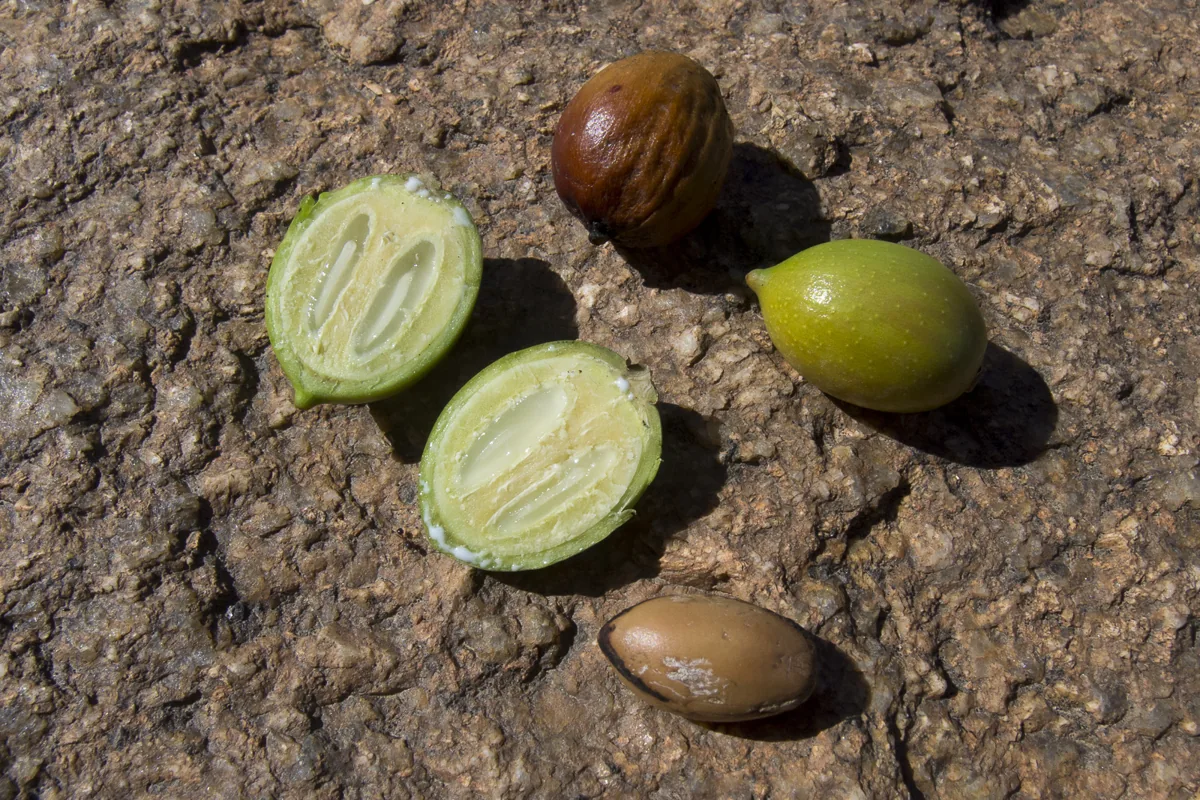 vs
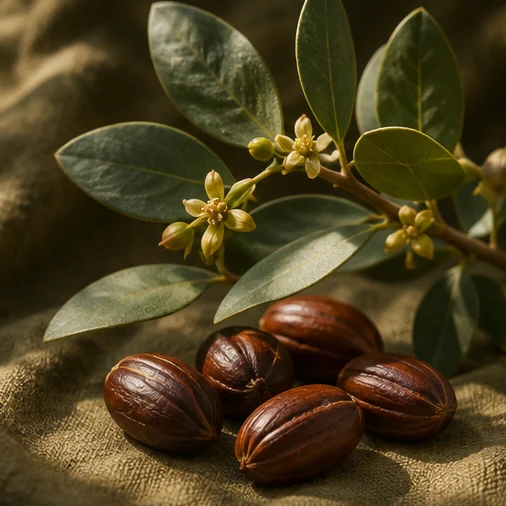
The verdict
Choose argan if your skin or hair is dry and wants a richer, cushioning oil; choose jojoba if you are oily, acne-prone or want something that will not go rancid. Neither has strong clinical evidence for specific claims, so pick on feel, skin type and freshness rather than marketing.
| Attribute | Argan oil | Jojoba |
|---|---|---|
| Evidence grade | C — small, mostly unblinded human studies plus general emollient data | C — strong chemical rationale and small uncontrolled studies; no robust RCTs of jojoba alone |
| What it is | Triglyceride oil pressed from argan kernels (Argania spinosa) | Liquid wax esters from jojoba seed (Simmondsia chinensis), not a true oil |
| Key chemistry | Roughly balanced oleic and linoleic acids; tocopherols (mainly gamma); sterols | Long-chain wax esters (mostly C40–C42) similar to the wax esters in human sebum |
| Best for | Dry and mature skin, dry or coarse hair ends, nails and cuticles | Oily, combination and acne-prone skin; scalp; a stable base for blends |
| Feel | Silky, slightly richer; absorbs in a few minutes | Light, dry-touch, non-greasy |
| Comedogenic risk | Low to moderate | Low |
| Shelf life | Moderate; use within about a year, sooner once opened. Keep cool and dark | Excellent; wax esters resist oxidation for years |
| Allergy and safety | Rarely reported contact allergy; patch test | Very well tolerated; allergy is rare |
| Pregnancy | No specific concerns for topical use | No specific concerns for topical use |
| Cost and sourcing | Higher; look for cooperative-sourced, cold-pressed cosmetic grade | Moderate; grown commercially in the Americas, Israel and Australia |
Choose Argan oil if
Choose argan oil if your skin is dry, mature or tight after cleansing, or you want a classic finishing oil for dry ends and frizz, and you will use the bottle within about a year.
Choose Jojoba if
Choose jojoba if your skin is oily, combination or breakout-prone, you prefer a lightweight dry-touch finish, or you want an oil that keeps for years as a base for your own blends.
Oil versus wax: why it matters
Argan oil, like most plant oils, is made of triglycerides: three fatty acids on a glycerol backbone. Its fatty acids are roughly half oleic (a monounsaturated acid that softens and can loosen the skin barrier) and a third linoleic (an essential fatty acid that the barrier uses to make ceramides). That mix gives a nourishing, cushioning finish that dry skin tends to love.
Jojoba is not technically an oil. It is a liquid wax: long fatty acids joined to long fatty alcohols. Human sebum contains about a quarter wax esters, which is why jojoba is often described as “sebum-like.” The practical upshots are a lighter, drier feel and remarkable stability. Because it contains very few easily oxidized double bonds, jojoba keeps for years where many oils go stale in months.
What the evidence says
Honest answer: not a lot for either, specifically. Argan has a small study in postmenopausal women by Boucetta and colleagues (Clinical Interventions in Aging, 2015) that found improved skin elasticity with daily argan oil, but it was not blinded and combined dietary and topical use. Jojoba has small studies, including one using jojoba in a clay mask for acne-prone skin, but none are large, controlled trials of the oil alone.
What is well established is that both are effective emollients and occlusives in the general sense: they soften skin and slow water loss, as plant oils do. Claims that either “balances sebum,” “regulates oil production” or “repairs hair” go beyond the data. See Carrier Oils: The Formulator’s Guide for how oils compare more broadly.
Skin type is the decider
- Dry, mature or weathered skin: argan’s richer feel and higher linoleic content make it a comfortable last step at night, pressed onto damp skin.
- Oily and combination skin: jojoba’s light finish is easier to wear, and its low comedogenic risk makes it the safer single oil to try.
- Acne-prone skin: start with jojoba, a few drops only, and stop if new bumps appear. Oils are optional, not required, for Acne & Breakouts.
- Hair: argan is the classic finishing oil for dry ends and frizz; jojoba suits the scalp and fine hair that goes limp with heavier oils.
Buying, freshness and sourcing
Argan is often adulterated or diluted with cheaper oils, and culinary (roasted) argan smells nutty and toasted, whereas cosmetic argan is pressed from unroasted kernels and smells faint and slightly nutty. Buy cold-pressed cosmetic grade, in dark glass, from suppliers who can name their source. Much argan is still cracked by hand by women’s cooperatives in Morocco; buying from a fair, transparent cooperative supports the communities whose knowledge it is. The argan forest is protected as a UNESCO biosphere reserve.
A word on hair. Argan’s reputation as a hair oil rests mostly on feel: a small amount smooths the cuticle, adds shine and reduces friction when brushing, which helps limit breakage. It does not repair split ends, which can only be trimmed. Jojoba behaves similarly but is lighter, which is why it often appears in scalp products. See Dry, Damaged & Frizzy Hair.
Golden jojoba is unrefined; clear jojoba is refined and has less scent. Both work. Because it is so stable, jojoba is the better choice if a bottle will sit on your shelf for a long time.
How to use them well
A face oil works best as the last step of the evening, after any water-based serum or moisturizer, or pressed onto skin that is still damp from cleansing or toner. Oils soften skin and slow evaporation, but they do not add water on their own, so applying them to bone-dry skin gives less benefit.
- Face: two to four drops is plenty. Warm them between your fingertips and press, rather than rub, over the face.
- Body: either oil can be massaged into damp skin after a shower; jojoba spreads further and leaves less residue on clothing.
- Hair: one or two drops of argan smoothed over the lengths of damp or dry hair tames frizz. For an oily scalp, jojoba can be used as a light pre-wash scalp oil, then shampooed out.
- Nails and cuticles: a drop of either, massaged in nightly, softens ragged cuticles.
For acne-prone skin, introduce any oil slowly, every other night for two weeks, and watch for new closed comedones (small, skin-colored bumps). If they appear, stop. Always patch test a new oil on the inner forearm first, then on a small spot on the jawline, as in our guide: twice daily for 7 days, read at 48 and 96 hours. If you are judging a finished product rather than a pure oil, our Ingredient List Decoder helps you see where the oil sits in the formula.
Using them together
Yes. They blend well: a 50:50 mix gives a medium-weight facial oil, and adding jojoba to argan improves the blend’s oxidative stability. Our Argan & Prickly Pear Night Serum shows argan in a simple serum. Patch test any new oil first (How to Patch Test).