· Body & bath · 5 min
Dry Brushing, Without the Myths
Dry brushing can leave skin smoother and feel invigorating. It does not drain your lymph or erase cellulite. Here is a gentle way to do it.
- Time
- 5 min
- Evidence
- DTraditional wisdom
- Time
- 5 min
- Evidence
- DTraditional wisdom
You’ll need
- A body brush with soft-to-medium natural or plant-fiber bristles
- Dry skin, before your shower
- A body oil or cream for afterward, such as sunflower oil
Traditional wisdom: No clinical studies of dry brushing; the exfoliation and comfort effects are plausible but untested.
Formulator’s tip
If your skin is pink for more than a few minutes afterward, you are pressing too hard. The goal is a light whoosh, not a scrub.
Step by step
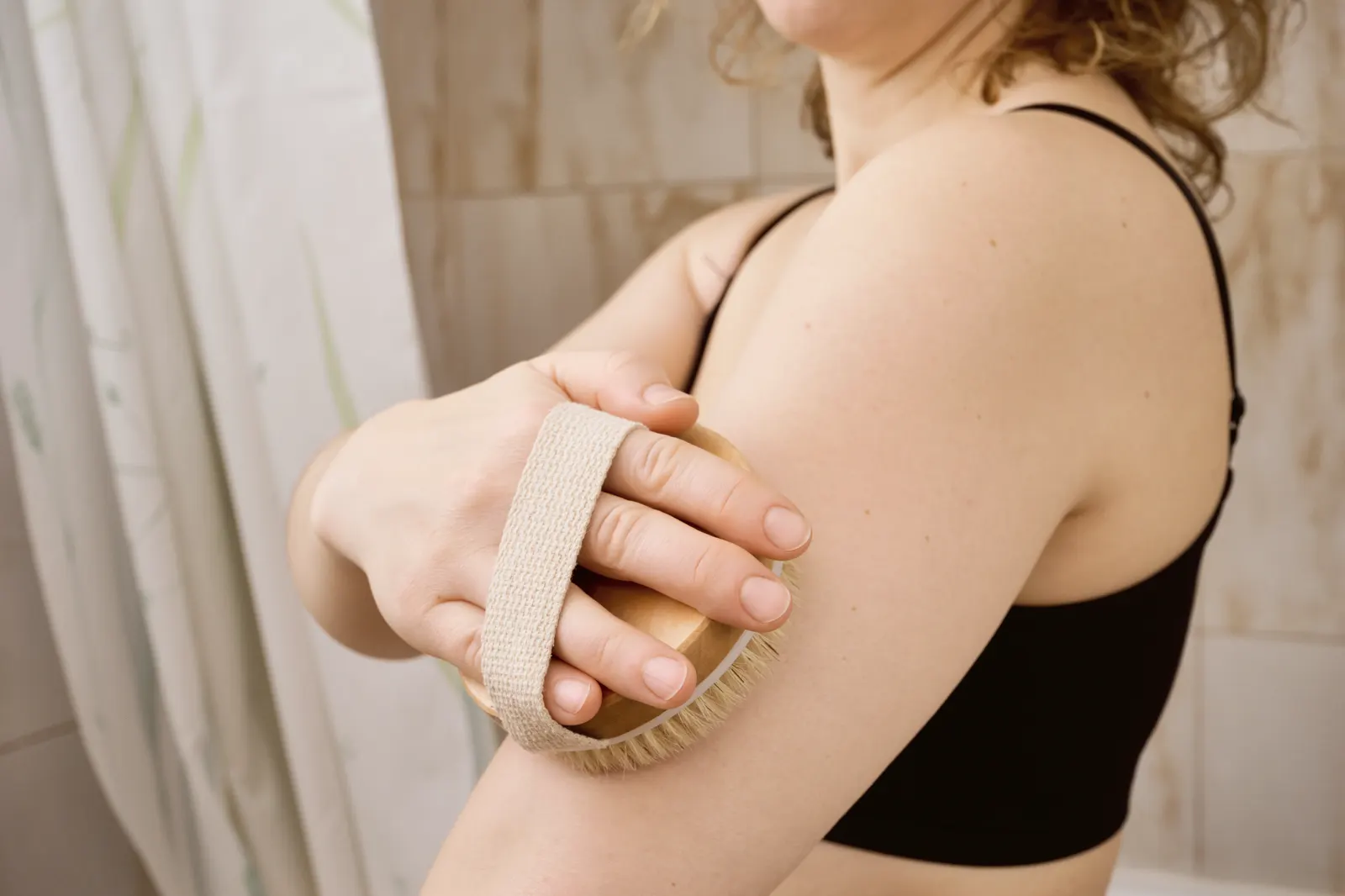
- Test the brush on the inner forearm: it should feel brisk, not scratchy.
- Standing on a mat, start at the feet with short, light, sweeping strokes, working up the legs.
- Move to the hands and arms, then the torso and back. Lighter still on thinner skin.
- Skip the face, chest if sensitive, and any broken or irritated skin.
- Spend two to five minutes in total, then shower in lukewarm water.
- Moisturize damp skin straight after. Brush two or three times a week, not every day.
Why it works
The bristles lift loose cells from the surface, so rough areas such as elbows and the backs of the arms may feel smoother. Brushing also brings a temporary flush and a sense of alertness. But the lymphatic system is not cleared by brushing the skin surface, and there is no evidence that dry brushing purges anything from the body or reduces cellulite. The direction of strokes (often “towards the heart”) is tradition, not science. Over-brushing can weaken the skin barrier, so follow with an emollient. See The Skin Barrier, Explained.
Where it comes from
Ayurveda has a similar practice, garshana, a dry massage with raw-silk gloves before bathing.
Enjoy it safely
- Avoid eczema, psoriasis, rosacea, sunburn, broken skin, active acne, varicose veins, and freshly shaved or waxed areas.
- If you have diabetes, neuropathy or fragile skin, skip it or ask your clinician first.
- Don’t share brushes; wash yours weekly in soapy water and let it dry fully.