· Evening · 2 min
A Gentle Ponytail and a Satin Pillowcase
Loosen your nighttime hair, vary your ponytail position and consider a satin pillowcase: small habits that protect the hairline from traction.
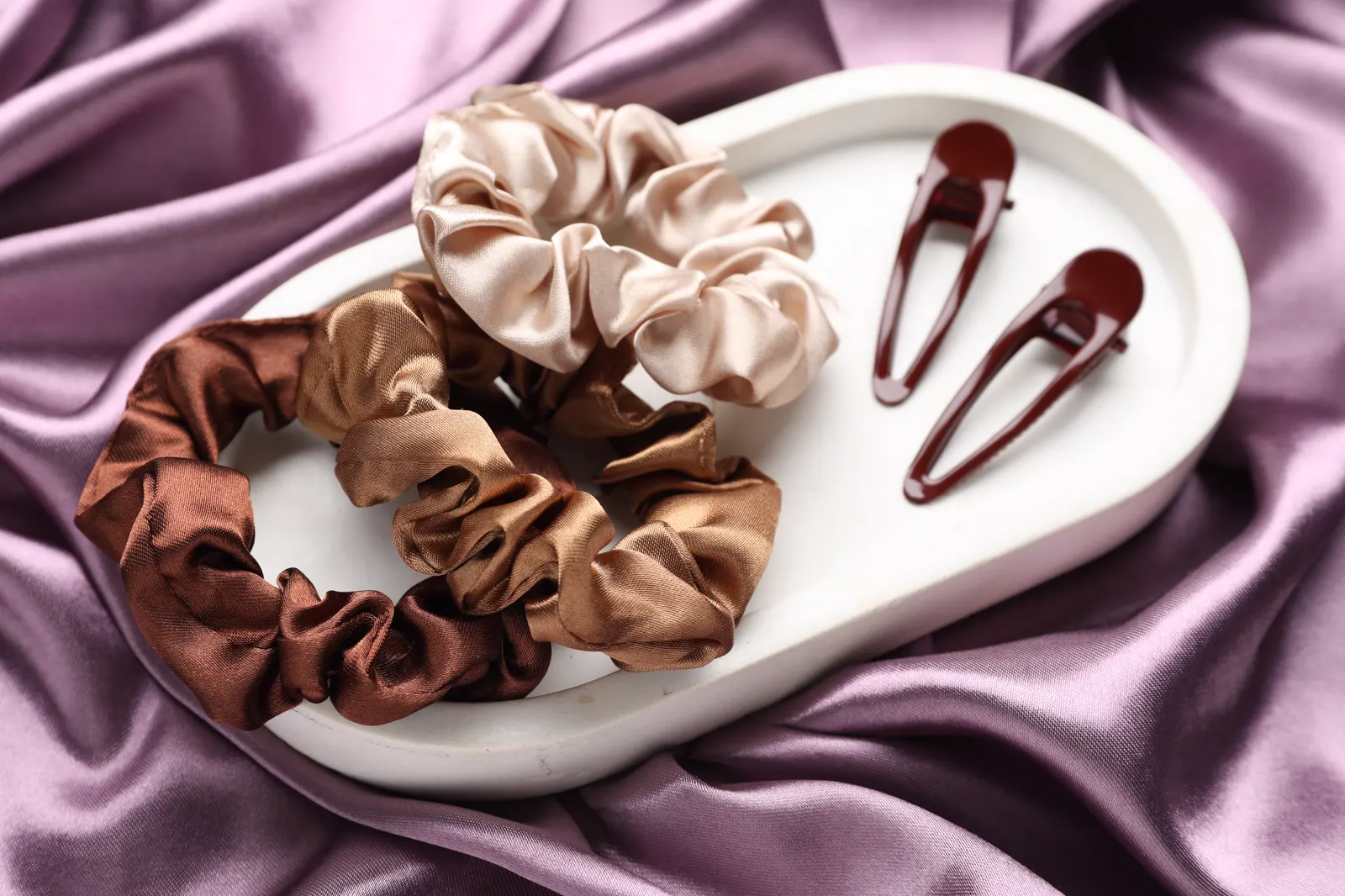
- Time
- 2 min
- Evidence
- CPromising
- Time
- 2 min
- Evidence
- CPromising
You’ll need
- Soft fabric scrunchies or spiral ties (no metal joins or bare rubber bands)
- A satin or silk pillowcase, or a satin bonnet or scarf for curly hair
- A wide-tooth comb
Promising: The link between tight styles and traction alopecia is well documented in observational studies; the pillowcase benefit is anecdotal.
Formulator’s tip
A simple rule: if a style needs painkillers or keeps you awake at night, it is too tight. Ask for it to be loosened or redone.
Step by step
- Take your hair down as soon as you get home. Notice any soreness at the hairline; that is your cue.
- Detangle gently from the ends up, then gather hair in a loose, low ponytail or loose braid for sleep.
- Secure with a soft scrunchie, loose enough that you can slide two fingers under it.
- For curls, gather hair loosely on top of the head (a “pineapple”) or wear a satin bonnet; for straight hair, a satin pillowcase is enough.
- Tomorrow, wear your ponytail or bun in a different position than today.
- If you wear braids, weaves or extensions, ask for them to be installed without pain, and take breaks between styles.
Why it works
Traction alopecia is hair loss caused by persistent pulling on the follicle. It is well documented with tight braids, weaves, extensions, buns and ponytails, especially at the temples and edges. Early on it is reversible if the tension stops; after years it can become permanent. The American Academy of Dermatology advises loosening styles, changing them often and avoiding styles that hurt.
Satin pillowcases are a different story: they may reduce friction and frizz, which many people notice, but there are no meaningful trials. Read more in Thinning Hair & Hair Loss and Hair Science for Natural Hair Care.
Where it comes from
Covering hair with a soft scarf at night is a long-standing practice in many African, Afro-Caribbean and North African households to keep styles intact and hair protected.
Enjoy it safely
- Pain, tiny bumps or tenderness around the hairline after styling are early warning signs: loosen at once.
- Thinning at the edges or temples that does not recover within a few months should be seen by a dermatologist.