· Hair & scalp · 5 min
The Heat-Styling Minimum
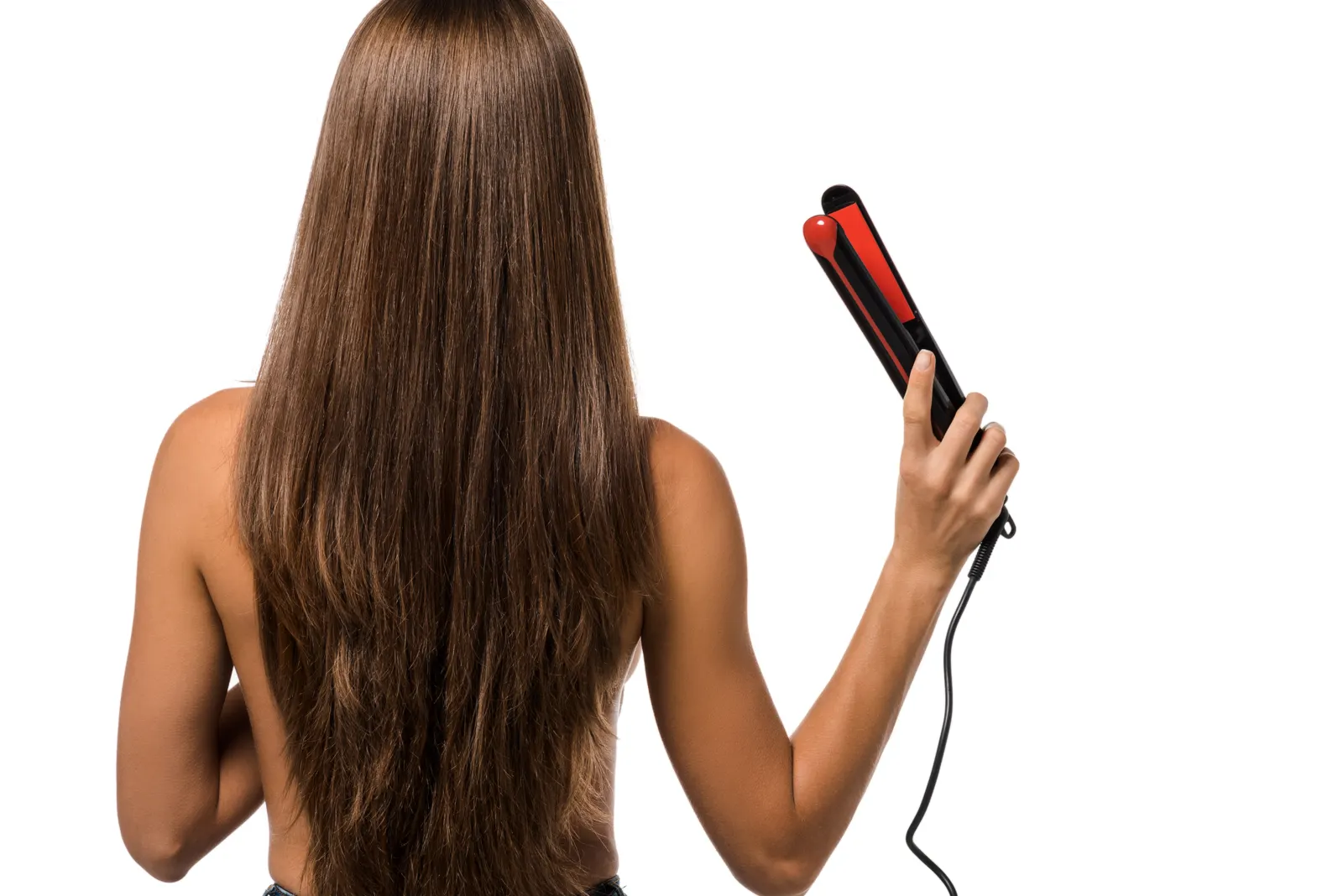
Towel-blot first, use a heat protectant, keep the dryer moving and the iron cool enough: four small habits that limit heat damage.
- Time
- 5 min
- Evidence
- CPromising
- Time
- 5 min
- Evidence
- CPromising
You’ll need
- A soft towel or microfiber wrap
- A heat-protectant spray or cream
- A hairdryer with a low or medium heat setting, ideally with a nozzle
- A flat iron or curling tongs with a temperature dial (if you use them)
Promising: Rests on laboratory hair-fiber studies; no clinical trials of heat-styling routines.
Formulator’s tip
Plain oils such as argan are lovely after styling, but they are not heat protectants. Use them as a finish when hair is cool.
Step by step
- Blot (don’t rub) excess water out with a towel. Let hair air-dry to about 70–80% dry if you have the time.
- Apply heat protectant evenly, combing it through mid-lengths and ends.
- Blow-dry on medium heat, nozzle pointing down the shaft, keeping the dryer about 15 cm away and constantly moving.
- Only use a flat iron on completely dry hair. Start at the lowest setting that works; many stylists stay below about 180 °C, lower for fine, bleached or color-treated hair.
- One slow pass per section is better than several fast ones.
- Give hair at least one or two heat-free days a week.
Why it works
Heat changes the outer cuticle and, at high temperatures, the keratin inside. Heating wet hair is particularly risky: water in the shaft can boil, forming the bubbles seen in “bubble hair”. In a lab study by Lee and colleagues (Annals of Dermatology, 2011), hair dried with a dryer showed more surface damage than air-dried hair, yet a dryer used at 15 cm with continuous motion caused less damage than letting hair stay wet for long, and damage rose with temperature. Heat protectants mostly work by forming a film that spreads heat; that evidence is largely from lab testing. More in Hair Science for Natural Hair Care.
Enjoy it safely
- Never use a hot tool on wet hair, and never leave it on one spot.
- Keep hot tools away from the scalp, ears and neck, and unplug them after use.
- Breakage that keeps getting worse, or bald patches, deserve a dermatologist visit.