· Weekly reset · 2 min a day for 7 days
The One-New-Product Patch-Test Week
New serum, new cream, new face oil? Introduce one product at a time with a seven-day patch test, so you always know what your skin is reacting to.
- Time
- 2 min a day for 7 days
- Evidence
- BGood evidence
- Time
- 2 min a day for 7 days
- Evidence
- BGood evidence
You’ll need
- One new product (only one)
- A washable pen or a calendar note
- A clean cotton bud
- Optional: the Ingredient List Decoder to scan the label for known allergens first
Good evidence: Repeated open application testing is an established dermatology method for detecting contact reactions, though home use is less controlled and no test catches everything.
Formulator’s tip
Write the date opened on the product while you are at it. You will thank yourself at your next shelf audit.
Step by step
- Day 0: read the ingredient list. Note any fragrance allergens or botanicals you have reacted to before; How to Read a Cosmetic Ingredient List (INCI) explains what to look for.
- Choose a test site: the inner forearm for body products; for face products, the inner forearm first and later a small spot along the jawline or just below the ear.
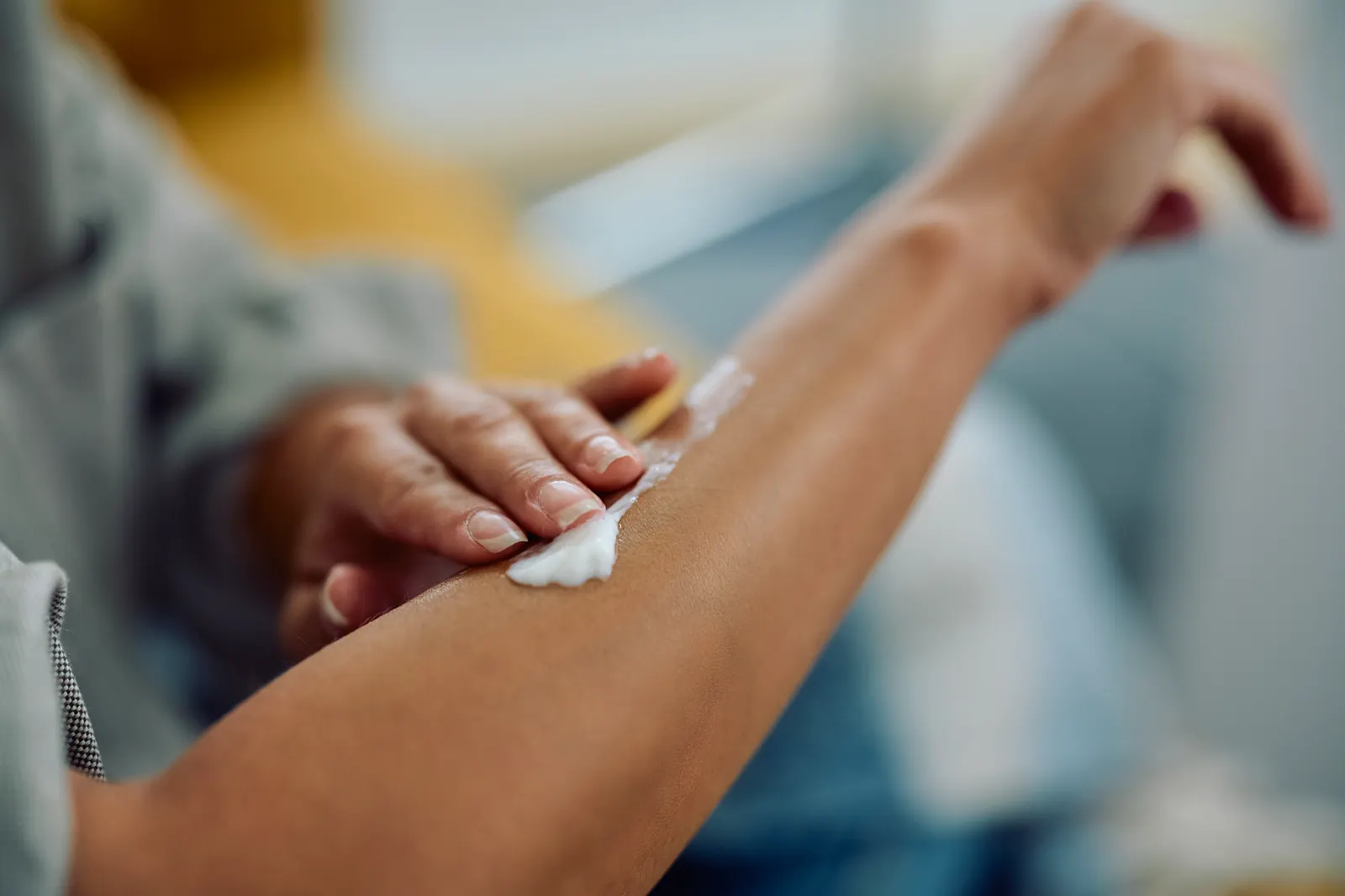
- Mark a circle about 2–3 cm wide. Apply a thin layer of product with a cotton bud, twice a day, morning and evening.
- Leave it on as you would normally use it. For rinse-off products such as cleansers, apply and rinse after a minute to mimic real use.
- Check the site each evening for redness, itching, small bumps or swelling. Note it in one word.
- Continue for seven days. Allergic reactions can appear two to four days after contact, which is why one afternoon is not enough.
- If day 7 is clear, use it on your face two or three times in week two before moving to daily use. Keep the rest of your routine unchanged.
Why it works
Repeating the application on the same spot mimics a method dermatologists use, the repeated open application test, which picks up both irritation (stinging and redness that appear quickly) and true contact allergy (a delayed immune reaction that builds over days). Testing one product at a time also means a reaction has only one suspect.
It is not a guarantee: facial skin is thinner than the forearm and can react to something the arm tolerated, which is why the second-week introduction is gradual. Botanical products deserve the same care as any other: essential oils, propolis and some plant extracts are well-known sensitizers. The full method is in How to Patch Test (and Read the Result).
Enjoy it safely
- Wash the area and stop immediately at any reaction. Swelling of the lips, eyes or face, hives elsewhere, or difficulty breathing needs urgent medical help.
- If you react to several products, ask for formal patch testing with a dermatologist rather than testing endlessly at home.
- Do not patch test on broken, sunburned or eczema-affected skin.