Investigations · · 4 min read
Moroccan argan: follow the kernel, not just the story
A practical sourcing guide from fruit to cosmetic formula, with questions about processing, traceability and who benefits.
An agricultural landscape, not simply a beauty ingredient
FAO describes the argan-based system of Ait Souab and Ait Mansour as an agricultural landscape combining trees, crops, livestock and local water management. UNESCO records the practices and knowledge associated with argan. These references provide context, not an audit of a bottle in your basket. For a shopping decision, separate three questions: where the botanical came from, how the oil was prepared, and what is documented about the people and organizations supplying it. A compelling answer to one does not settle the other two.
The route you should be able to ask about
Use this sequence as a sourcing worksheet: fruit collection, drying and pulp removal, shell cracking and kernel selection, any kernel treatment, oil extraction, filtration or refining, storage, then formulation and filling. The sequence is a map for questions, not a claim that every supplier performs each operation in the same place or by the same method. Ask which organization handles each stage and where. A cooperative may supply kernels, oil or a finished product; those are different roles. Record the role actually described rather than assuming the label tells the whole chain.
Roasted and unroasted kernels are a meaningful distinction
Published argan-processing work distinguishes oil prepared from roasted kernels for culinary use from cosmetic oil prepared from unroasted kernels. A shopper should still check the stated intended use of the actual product. Ask whether the kernels were roasted and how the oil was extracted. Do not choose by color or aroma alone, and do not treat a culinary bottle as a substitute for a cosmetic formula. The useful information is a preparation specification attached to a named material, not the phrase liquid gold.
What cold-pressed leaves unanswered
Cold-pressed is one processing claim. Ask whether the oil was subsequently filtered, deodorized or otherwise refined, and whether the brand is describing the raw material or the finished blend. A 2024 laboratory study examined physical refining and accelerated storage of a particular argan-oil batch. That experimental setting does not establish the shelf life of your cream. For the shopper, the lesson is to retain processing and storage details together. Neither refined nor unrefined, on its own, provides a complete assessment of a product’s quality or suitability.
Connect the oil lot to the cosmetic
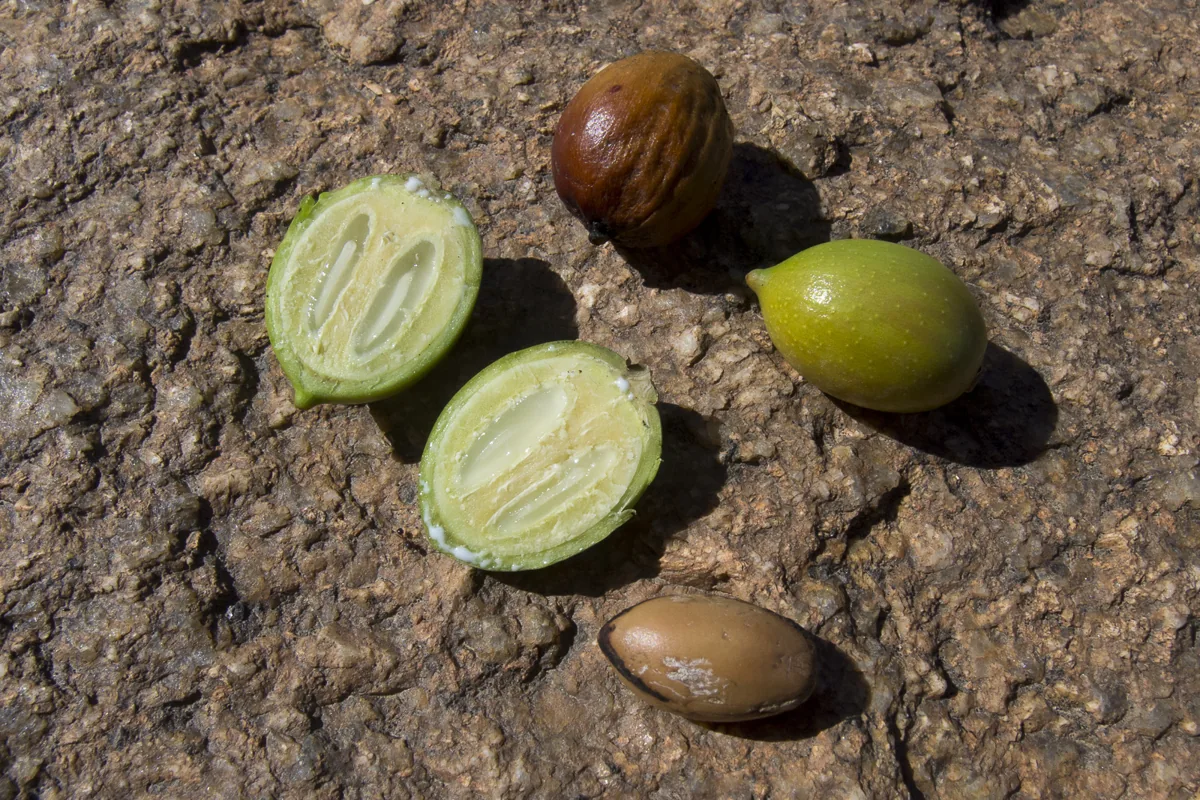
Look for an ingredient name such as Argania Spinosa Kernel Oil in the full list, then record whether you are buying a single-ingredient oil or a formula containing it. A photograph of a nut does not disclose a concentration. If a batch certificate is offered, check whose material it describes, the lot identifier, the test date, the methods and the issuing laboratory. Ask how that raw-material lot relates to the finished product you can purchase. A quality document without a traceable link may be informative while still leaving your bottle unverified.
Read a cooperative claim with respect and specificity
Ask for the organization’s name, location and actual role in the supply relationship. If the claim is that buying the product supports producers, ask what arrangement supports that statement and when it was documented. A brand may publish sourcing contracts, program descriptions or third-party assessments; note what is available and what remains private. Do not infer wages, ownership or working conditions from a group photograph. Do not treat an absence of public detail as proof of misconduct either. The honest outcome can be “relationship described by the brand, independently unverified”.
Heritage recognition is not a product certificate
An agricultural or cultural designation recognizes a place, system or practice. It does not automatically authenticate the contents of an individual retail bottle. Keep heritage, geographical-origin claims, organic certification and social claims in separate fields. When a product carries a specific certificate, check that scheme’s scope and the product or operator named on the document. Avoid replacing the precise wording with a broader ethical score. A sourcing story can deserve attention while its particular commercial claims still need documentation.
A worked reading of a fictional label
Imagine a serum labeled “with Moroccan argan oil, supporting a women’s cooperative”. Its ingredient list includes Argania Spinosa Kernel Oil, but the page gives no supplier name or percentage. What you know: the brand declares an argan ingredient and makes two sourcing claims. What you do not know: its concentration, the specific origin evidence and the arrangement with the cooperative. Your next request is focused: ask for the named supplier, role, origin documentation and explanation of support. You have not disproved the story; you have identified the evidence required to evaluate it.
Copy this sourcing checklist
Product and selling market; ingredient name and format; declared collection region; kernel supplier; extraction location and method; roasting statement; subsequent processing; raw-material lot; finished-product lot; certificate scope and date; named cooperative and role; source of the social claim; unanswered questions; purchase decision. Mark each entry as documented, brand-declared or unknown. This article is based on published sources and desk research. We have not visited these suppliers, conducted interviews or audited a supply chain, and we cannot verify a particular retailer’s argan from these general references alone.
Sources
- FAO · Argan-based agricultural heritage system in Morocco
- UNESCO · Argan practices and know-how, heritage record
- Asbbane et al. · Physical refining and argan-oil stability, 2024
- Harhar et al. · Kernel roasting and argan-oil composition, 2011 PubMed
First published in the original Herbs.Beauty edition on 11 November 2026. Sources were checked on that date; see our corrections register.