Skin & body · · 3 min read
A field guide to cosmetic textures
Learn to describe what a product feels like, then use those observations to make a more precise shopping brief.
Start with a job, not a texture ranking
Gel, lotion, cream and oil are useful shopping words, but they are not a universal ladder from weak to strong. A product name alone does not tell you how the complete formula will behave for you. Before comparing, write the job you want the product to do and the experience you prefer. Examples include a quick morning application, a format that packs neatly, or a finish that works with products you already own. Keep performance claims as a separate question.
Build a vocabulary you can actually use
Choose ordinary descriptive pairs: thin or thick, quick or slow to spread, light or substantial in feel, glossy or matte in appearance, strongly scented or not noticeable to you. These are observations, not evidence that one formula is safer or more effective. Replace “luxurious” with a description you could recognize again. If you enjoy a slow, deliberate application, say that. If you dislike a lingering film on your hands, record that instead of calling every rich texture bad.
Gel and lotion: ask what the words mean here
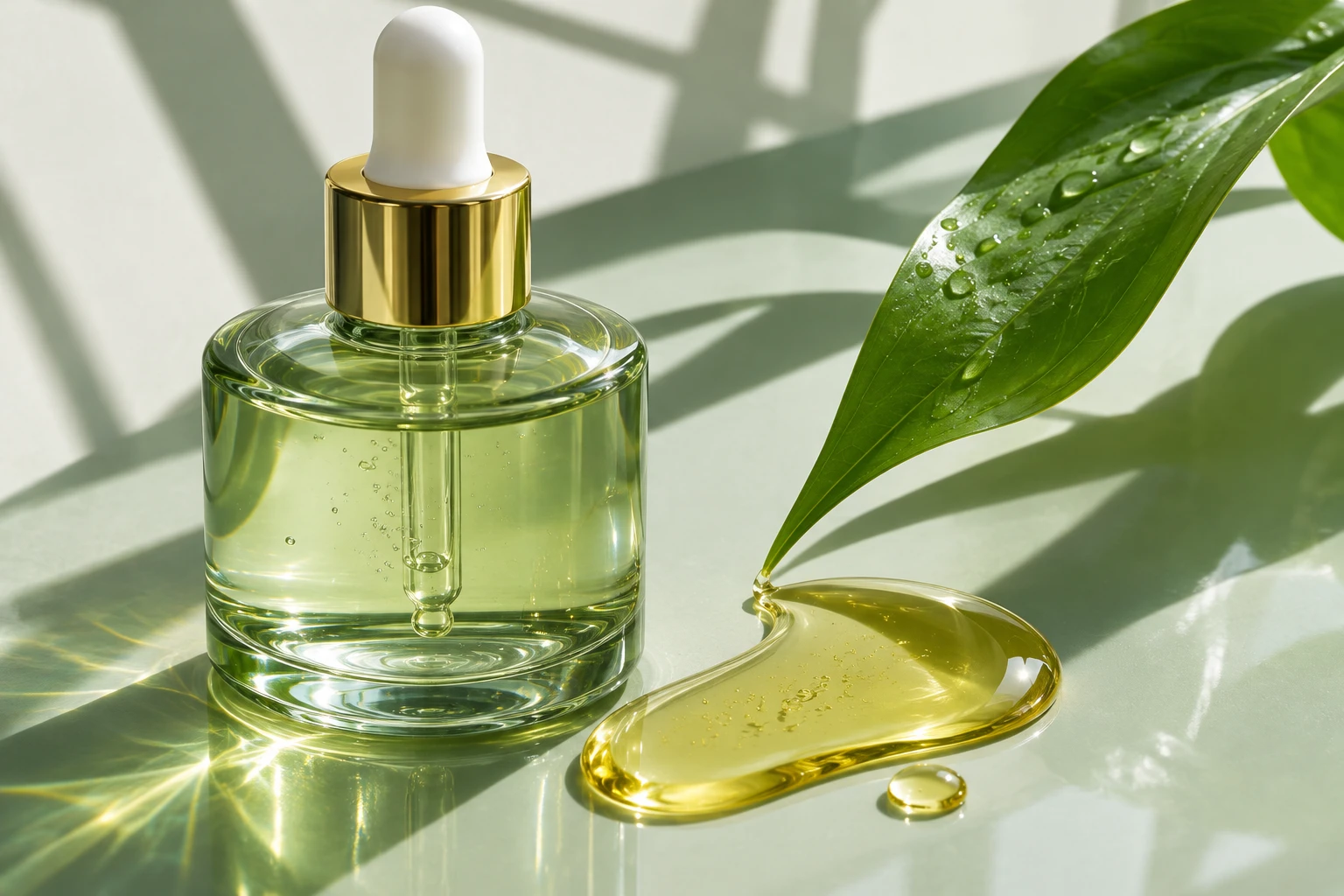
Read the maker’s description and directions rather than assuming every product labeled gel behaves alike. A pump, tube or jar can also change the experience of using a formula. For a lotion, ask yourself whether the dispensing method is convenient and whether the product fits the pace of your routine. When a retailer provides only a still photograph, mark texture as unconfirmed. A transparent-looking product in an image does not let you feel its spread or finish.
Cream and oil: separate feel from the promise
A cream or an oil may be attractive because of the experience it offers, but the plant featured on the packaging cannot describe that experience on its own. An oil blend and a single named plant oil are different purchase descriptions. Record the full product name and directions. If your question concerns moisturization or the skin barrier, use the relevant evidence guide rather than treating a rich feel as a measured result. Texture preference is useful precisely when its limits remain visible.
Use a repeatable observation note
When you are already using a product according to its instructions, record the context: amount as directed, time of day, other products in the routine and your immediate impression. Do not deliberately change instructions or create a skin experiment for this exercise. A note such as “easy to dispense; finish feels glossy to me; inconvenient bottle for travel” is more useful than a star rating with no explanation. Keep an uncertainty field for anything you cannot confidently attribute to that product.
Compare formats without collecting more bottles
Begin with products you already know. If you consider a sample, check that it is the same formula and market as the larger product. Do not assume a miniature dispenser gives exactly the same experience as the full-size packaging. Ask the retailer for practical descriptions where available, and remember that someone else’s favorite finish may not be yours. Your comparison can end with “not enough information” instead of a purchase. The exercise is designed to sharpen a choice, not create a collection.
Turn your notes into a shopping sentence
Finish this template: “I am looking for a [format] for [existing routine step], with [preferred feel], in [useful packaging], within [budget]. I still need to check [one question].” Save it and revisit it before your next purchase. When your preferences change, update the sentence rather than treating the old choice as a mistake. This simple brief gives meaning to a product recommendation and helps you recognize when an appealing advertisement is answering a different question.
Sources
First published in the original Herbs.Beauty edition on 11 November 2026. Sources were checked on that date; see our corrections register.